

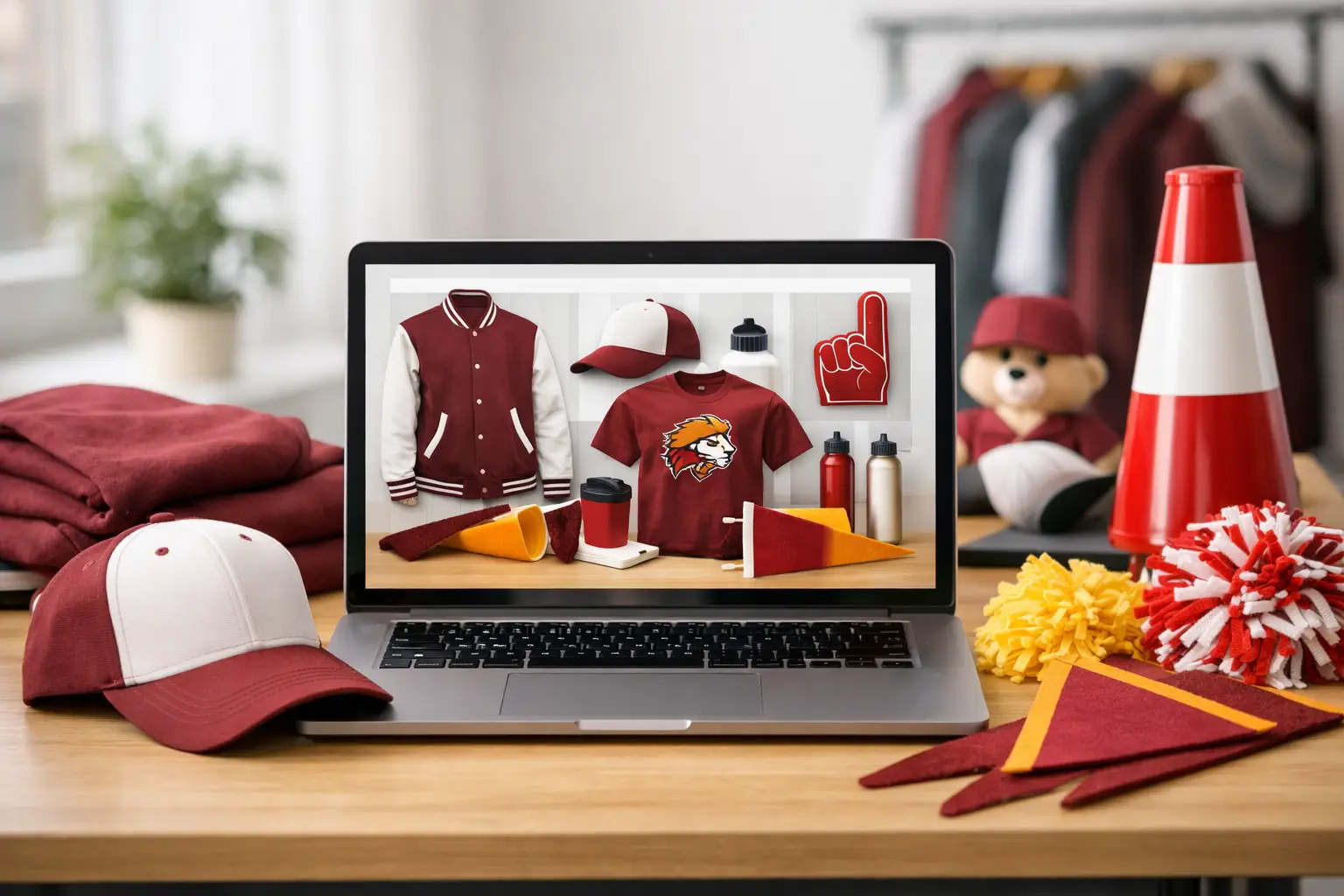
A spirit wear sale should not create a spreadsheet problem for the volunteer running it. Yet many schools still manage paper order forms, cash collections, size exchanges, and late payments after every fundraiser. Knowing where to get an online store for school spirit items can turn that annual scramble into a well-organized program that supports school pride all year.
The best option is rarely just a website with products on it. Schools need a store that fits their community, protects their brand, keeps ordering simple for families, and does not place a heavy administrative burden on staff, booster clubs, or PTO volunteers.
Where to Get an Online Store for School Spirit Items
Schools generally have three routes: a print-on-demand spirit wear provider, a general e-commerce platform, or a full-service branding and promotional products partner. Each can work, but the right choice depends on who will run the store, how often items will be offered, and what the school hopes to accomplish.
A print-on-demand provider can be a good starting point for a small school or a one-time campaign. These providers typically supply a catalog of shirts, hoodies, hats, and accessories, then produce items only after an order is placed. That removes the need to buy inventory upfront. The trade-off is less control over product quality, branding details, customer service, and pricing.
General e-commerce platforms provide more flexibility. A school or booster organization can build its own storefront, add products, collect payments, and manage promotions. However, someone still needs to source merchandise, manage inventory, coordinate decoration, handle fulfillment, and answer parent questions. For organizations with an experienced staff member or a dedicated volunteer team, this model may make sense. For many schools, it creates more work than expected.
A full-service partner is often the most practical path for schools that want a professional store without taking on the operational details. The provider can help select merchandise, prepare school-approved artwork, build the online store, process orders, decorate products, and arrange delivery or pickup. This model is particularly useful when multiple groups, such as athletics, music, PTOs, and academic clubs, need consistent branding under one school identity.
Start With the Store Model, Not the T-Shirt
It is tempting to begin by selecting colors and apparel styles. Those choices matter, but the store structure matters first. A store designed for a short fundraising window has different needs than a year-round school spirit store.
For a limited campaign, such as homecoming or a fall sports fundraiser, a time-bound group order can work well. Orders are collected during a defined period, then produced together. This approach often provides stronger pricing because items can be decorated in larger quantities. It also gives families a clear deadline, which can improve participation.
A year-round store offers convenience and keeps school merchandise available for new families, alumni, staff, and supporters. It is a strong fit for schools with active athletic programs, frequent events, or a broad community base. The trade-off is that individual-order fulfillment can affect pricing, production timelines, and the range of products available.
Some schools benefit from a hybrid model. They maintain a basic year-round store with core logo apparel, then open separate seasonal collections for events, teams, graduation, theater productions, or special fundraisers. This lets the school keep a consistent foundation while creating timely reasons for people to buy.
Features That Matter More Than a Fancy Storefront
A clean, mobile-friendly storefront is essential because many parents will order from a phone between work, practices, and family responsibilities. Still, appearance alone should not drive the decision. The practical features behind the storefront are what protect the school from unnecessary headaches.
Look for a provider that can organize merchandise by audience or purpose. Families should be able to find general school apparel separately from football gear, band jackets, staff apparel, or booster club products. Clear categories reduce incorrect orders and make the store feel easier to use.
Artwork approval is equally important. Schools often have logo usage rules, mascot standards, color requirements, and restrictions on how their name can appear. A provider should use approved artwork and maintain consistency across products. A faded mascot, the wrong school color, or a poorly reproduced logo can undermine the very pride the store is meant to build.
Payment processing should be simple and secure, with clear order confirmations and transparent policies. Ask how refunds, damaged items, sizing issues, and canceled orders are handled. A low product price is not a bargain if a volunteer ends up resolving every customer service problem.
Also ask about fulfillment. Will products ship directly to buyers? Will they be delivered in bulk to the school for distribution? Can orders be sorted by student name, classroom, or team? The most suitable answer depends on the school. Direct shipping reduces staff involvement, while bulk delivery may lower costs and create a more coordinated distribution process.
Questions to Ask Before Choosing a Provider
Before committing, have a straightforward conversation about how the store will operate. The right partner should be comfortable answering detailed questions and offering recommendations based on your school’s size, budget, and goals.
Ask whether there are setup fees, minimum order quantities, design fees, or monthly platform costs. Find out how long it takes to launch the store and how long production takes after an order closes. If the store is tied to a game, tournament, or graduation event, timing is not a minor detail.
You should also ask who owns the artwork and store content, whether the provider can work with existing school logos, and how fundraising revenue is calculated. If a portion of sales supports a booster club or school program, the financial arrangement should be clearly documented. Families are more likely to support a store when they understand where their money is going.
Finally, request product samples when possible. Fabric weight, fit, decoration quality, and color accuracy are hard to judge from a screen. A hoodie that looks great online but shrinks quickly or feels thin can discourage repeat orders.
Why Brand Consistency Pays Off
School spirit merchandise is more than a fundraiser. It is a visible extension of the school identity. Students wear it in the community, families wear it to events, and staff may use it to build a stronger sense of belonging on campus.
That is why a store should reflect the same standards as the school’s signage, website, social media, and printed materials. Consistent colors, approved logos, readable typography, and intentional product choices help the school look organized and credible. This is especially valuable for larger districts and public organizations that need to balance broad participation with established brand guidelines.
OneStop Northwest LLC approaches these projects as part of a larger brand management conversation. A school store can support fundraising, but it can also create a dependable system for promotional products, event apparel, staff recognition, and community visibility. The strongest result comes from understanding the school before selecting the merchandise.
Avoid the Common Volunteer Burden
A school store should not depend on one person remembering passwords, tracking Venmo payments, or storing boxes in a classroom. If the process only works because a volunteer is giving up evenings and weekends, it is not a sustainable system.
Choose a model with defined responsibilities. The school should know who approves designs, who manages product questions, who receives revenue reports, and who communicates order deadlines. Providers should know who their point of contact is and what brand standards apply. This clarity prevents last-minute confusion when a parent needs an answer or a major event is approaching.
It also helps to keep the first store focused. Rather than launching with 60 products, begin with a thoughtful collection of proven items: a few shirt styles, a sweatshirt, a hat, and perhaps one practical accessory. Review what sells, gather feedback, and expand based on actual demand. A smaller, well-curated store often performs better than a crowded catalog.
The right online store gives supporters an easy way to show up for their school while giving staff and volunteers more time to focus on the students and programs that matter most.