

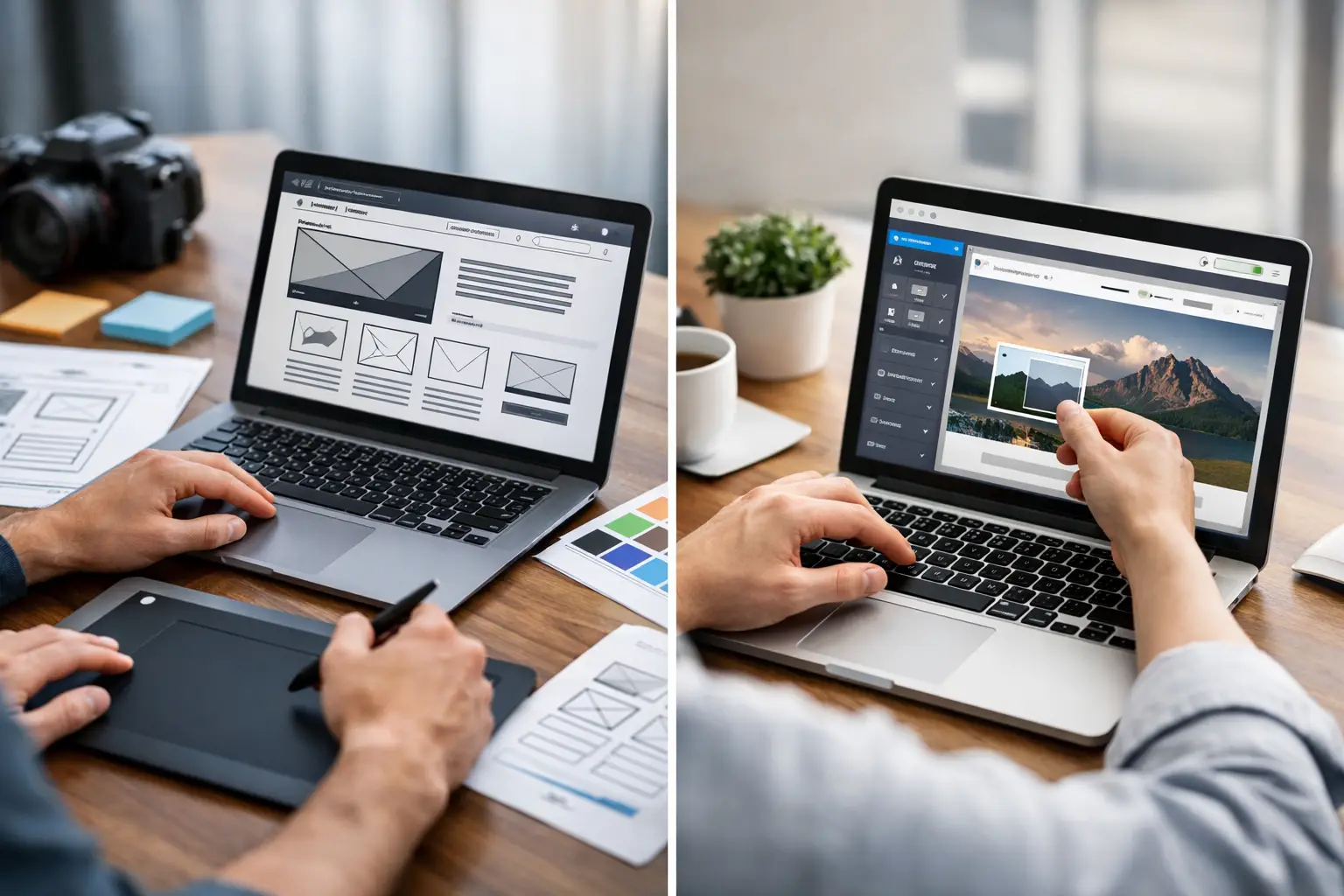
A website is often the first place a customer decides whether your organization feels credible, capable, and easy to work with. The custom website vs website builder decision is not simply about design preferences. It affects how clearly you communicate your value, how your team manages updates, and whether your digital presence can keep pace with your goals.
For a local business, that may mean helping a prospect request an estimate without calling three competitors first. For a government department, it may mean making public information easier to find while meeting higher expectations around accessibility, security, and internal approval processes. The right answer depends on what the website needs to accomplish after launch, not just how quickly it can go live.
What You Are Actually Choosing
A website builder is a platform that gives you prebuilt templates, editing tools, hosting, and common features in one subscription. It is designed to help a nontechnical user publish a functional site with limited setup. That can be a practical choice when speed, a predictable monthly cost, and simple maintenance matter most.
A custom website is planned and built around your organization’s goals, brand, content, users, and operational needs. “Custom” does not have to mean every line of code starts from scratch. It means the strategy, information architecture, visual experience, and features are intentionally selected instead of being forced into a one-size-fits-most template.
The difference becomes clearer when a business grows. A template may look polished on day one, but its limitations can show up when you need a specialized request form, better location pages, a resource library, a vendor integration, or a design that supports a new service line without feeling patched together.
Custom Website vs Website Builder: The Core Trade-Offs
The most visible trade-off is cost. Website builders generally have a lower upfront price because the platform has already done much of the technical work. You choose a template, add content, and pay for the subscription. For a new business testing a concept or a small organization that only needs a few pages, that lower barrier can be sensible.
A custom site requires a larger initial investment because it includes discovery, content planning, design, development, testing, and launch preparation. The return is greater control. Instead of adjusting your business to fit a theme, the site can be structured around how your customers make decisions and how your staff actually works.
Cost should also be considered over time. A low monthly platform fee can become more expensive when premium apps, paid integrations, template changes, outside fixes, and staff time start accumulating. A custom site still needs hosting, maintenance, and occasional improvements, but its ownership model and support plan can be clearer from the beginning.
Brand consistency is more than a logo
Website builders offer attractive templates, but those templates are available to many other organizations. You can change colors, typefaces, imagery, and sections, yet the underlying page patterns may still feel familiar. That is not automatically a problem. Familiar layouts can make a site easy to use.
The concern is whether the design communicates what makes you distinct. A company that offers specialized services, works across multiple audiences, or competes in a crowded market may need more than a clean template. It may need a content hierarchy that explains complex offerings, highlights proof, and guides different visitors toward the right next step.
Custom design gives more room to bring brand standards into everyday interactions. It can account for the way headings read, how service categories are organized, where trust signals appear, and how the experience changes for mobile visitors. That consistency helps a website support the rest of your marketing rather than operating as a separate, generic asset.
Flexibility matters when processes are specific
Most builders handle essentials well: service pages, contact forms, photo galleries, basic blogs, and simple online stores. If that is the full scope of your needs, a builder may be all you need.
The equation changes when the site needs to connect with other systems or support a more specific process. Consider a business that needs leads routed by territory, a searchable directory, protected content, custom calculators, event registration, multilingual pages, or integrations with customer relationship management software. Those needs may be possible on a builder, but often through third-party apps with limitations in design, reporting, performance, or long-term support.
A custom website gives you more options to design the process around your team. It also makes future changes easier to evaluate because the site is built with a documented purpose rather than a collection of add-ons added over time.
When a Website Builder Is a Smart Choice
A website builder is not a lesser choice. It is often the right one for organizations with straightforward needs and a reliable person who can own updates. A startup may need a professional landing page while it validates demand. A community group may need event information, donation details, and a contact form without a large web budget. A small service business with a limited menu of offerings may benefit from getting a clear, mobile-friendly site live quickly.
The key is being honest about the site’s role. If it is primarily a digital brochure and the business does not rely on advanced functionality, a builder can provide good value. Choose a platform with dependable support, strong mobile editing, reasonable export and migration options, and tools that your team can use comfortably.
Avoid choosing solely on the promise of “easy.” Easy publishing does not guarantee easy strategy. Someone still needs to write useful content, select strong images, maintain accurate information, and make decisions about what visitors should do next.
When a Custom Website Is Worth the Investment
Custom development makes the most sense when the website is expected to generate meaningful business value or carry significant public responsibility. That could mean it needs to qualify leads, support sales conversations, educate customers before they call, reduce repetitive staff questions, or serve as a central source of information for a community.
It is also a strong fit when your organization has outgrown its current site. Common signs include pages that are difficult to update, branding that no longer reflects the business, navigation that confuses visitors, and workarounds for tasks that should be simple. If staff members avoid making updates because they are afraid of breaking something, the platform is not serving the organization well.
Government entities and organizations working with public-facing information often have additional considerations. Accessibility, content governance, security practices, procurement requirements, and records policies may affect the technology choice. A custom approach allows those requirements to be addressed early, rather than treated as last-minute additions.
Start With Requirements, Not a Platform
Before comparing platforms or requesting proposals, identify what the website must do for the people who use it. The following questions can help turn a vague project into a practical plan:
- Who are the priority audiences, and what information do they need first?
- What actions should visitors take, such as calling, requesting a quote, registering, applying, or finding a location?
- Which staff members will update content, and what level of training or approvals will they need?
- What systems, forms, data, or policies must the site connect to or support?
These answers often reveal that the decision is not all-or-nothing. A simpler website can be custom-designed and built on a content management system that staff can manage. A website builder can also be improved with professional brand strategy, content development, and a carefully chosen template. The goal is not to buy the most technology. It is to invest in the right level of technology for the work ahead.
Plan for Search, Content, and Maintenance
Neither option automatically produces strong search visibility. Search engines and visitors respond to useful content, clear structure, fast-loading pages, and a site that answers real questions. A custom site can provide more control over technical details and content organization, but it still needs a thoughtful search strategy. A builder can support search fundamentals, but only if the pages are planned and maintained well.
Content deserves the same attention as design. A visually impressive homepage cannot compensate for vague service descriptions, outdated staff information, or confusing calls to action. Before launch, decide who will be responsible for keeping the site current and how often important pages will be reviewed.
At OneStop Northwest, web projects are approached as part of a larger brand and technology picture. That perspective matters because a website performs better when its messaging, visuals, marketing efforts, and internal tools are working toward the same outcome.
Make the Choice That Reduces Friction
The best website is not the one with the longest feature list or the lowest starting price. It is the one that makes it easier for the right people to understand your organization, trust your expertise, and take the next step. Choose a builder when simplicity truly matches your needs. Choose a custom website when your brand, processes, and growth plans deserve a foundation built specifically for them.