

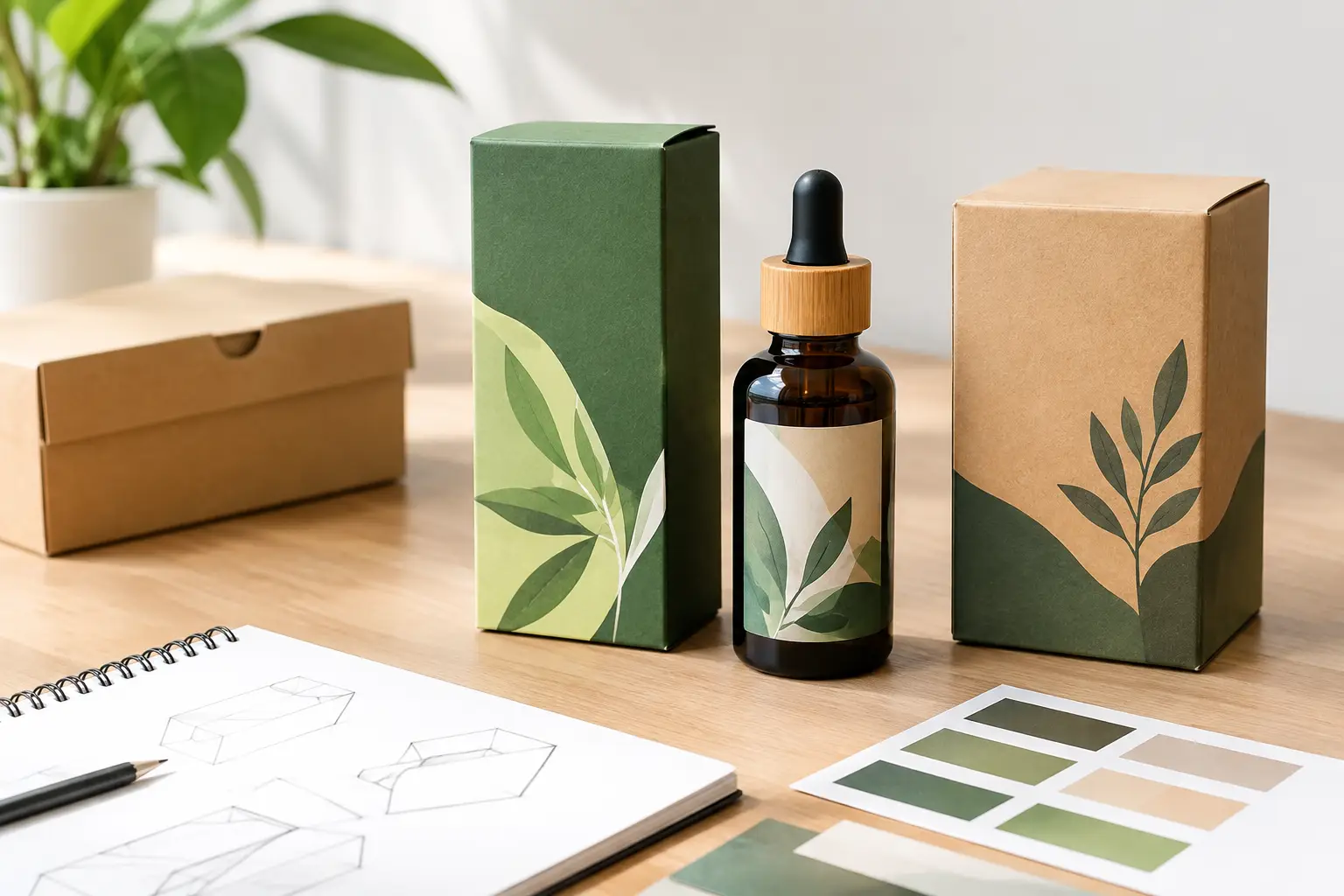
A customer may spend months deciding they need your product, then give its packaging only a few seconds of attention before making a choice. That is why learning how to create packaging design is not simply a creative exercise. It is a business decision that affects shelf appeal, shipping costs, customer confidence, and whether your brand feels consistent at every touchpoint.
For a small business, a growing manufacturer, or a public-facing organization, effective packaging has to do more than look polished. It must communicate clearly, work in real-world conditions, and make sense for the budget and production process behind it.
Start With the Job Your Packaging Must Do
Before choosing colors, materials, or a box style, define the packaging’s role. A premium skincare jar, a subscription-box product, and an item sold through a government procurement channel each have different requirements. One may need to create a high-end unboxing moment. Another may need to survive repeated handling and keep fulfillment simple. A third may require precise labeling, instructions, accessibility considerations, or compliance details.
Begin with the product itself. Consider its size, weight, fragility, shelf life, storage conditions, and whether customers need to see or touch it before purchase. Packaging for a fragile glass bottle needs structural protection that a lightweight apparel mailer does not. Food, cosmetics, supplements, electronics, and children’s products can also carry category-specific labeling and safety obligations.
Then consider where the package will be encountered. Retail packaging competes for attention among neighboring products. E-commerce packaging is judged at the doorstep and during the unboxing experience. Business-to-business packaging often prioritizes easy identification, durability, and accurate handling information. The right design depends on the context, not just the brand’s visual preferences.
Build the Design Around Your Brand Strategy
Packaging should feel like a natural extension of your brand, not a separate project with a new personality. If your website, social media, sales materials, and product packaging all tell slightly different stories, customers have to work harder to understand who you are. That confusion can weaken trust.
Start with the brand elements that should remain consistent: your logo, primary colors, typefaces, voice, visual style, and key promise. Consistency does not mean placing every element at maximum size. It means making intentional choices so customers recognize the product as yours, whether they see it online, on a shelf, or in a shipment.
Next, identify the one message that matters most at the moment of purchase. A buyer should be able to answer a few basic questions quickly: What is this? Who is it for? Why should I choose it? Product names, descriptions, benefits, and claims should be arranged in a clear hierarchy rather than competing for attention.
A common mistake is treating the front panel as a place to fit every selling point. More copy rarely creates more clarity. Give the product name and strongest benefit room to work, then use side panels, back panels, inserts, or digital product pages for supporting information.
Choose Color and Type for Recognition, Not Decoration
Color is one of the fastest signals in packaging. It can communicate value, flavor, category, energy, or trust before a customer reads a word. But colors also behave differently on screens, coated cartons, flexible films, textured paper, and corrugated shipping boxes. A bright digital mockup can look muted or darker after printing.
Typography has the same practical limits. An elegant font may look excellent at headline size but become unreadable in small ingredient lists or directions. Choose fonts that support the brand while remaining legible at the actual printed size. If the package must be read from a distance, prioritize contrast and simple visual hierarchy over decorative details.
How to Create Packaging Design With Real-World Constraints
Strong concepts must eventually become physical packages, and this is where many avoidable issues appear. A design needs to fit the package dieline exactly. A dieline is the technical layout that shows where a package will be cut, folded, glued, and printed. It is not a rough template. It is the production blueprint.
Keep critical logos, text, and product information inside the safe area. Avoid placing important elements near folds, cut lines, seals, or curved edges. Include bleed beyond the trim edge so background colors and images print cleanly without thin white gaps. Your printer or packaging manufacturer should provide specifications for bleed, safe margins, file format, color mode, and minimum line thickness.
Material selection deserves the same attention as the artwork. A rigid box can create a premium feel but may increase production, storage, and shipping costs. A flexible pouch can be lightweight and efficient but offers a different presentation and may limit certain printing effects. Sustainable materials can support your brand values, but they must also protect the product and perform reliably within your distribution system.
There is no universally best choice. The appropriate option depends on your product, order quantity, sales channel, budget, and sustainability goals. A practical packaging strategy finds the right balance rather than pursuing the most elaborate material or finish available.
Design for the Customer Journey, Not Only the Shelf
Packaging begins its work before the package is opened and continues after the sale. Think through each stage of the customer journey: browsing, selecting, purchasing, receiving, opening, using, storing, and possibly reordering.
For retail, make the front panel easy to understand from a short distance. For online sales, remember that product photography often becomes the first package interaction. The design should remain recognizable in a small thumbnail as well as in a customer’s hands. For shipped products, consider how outer packaging, packing slips, labels, and inserts work together. A branded experience can still be efficient and restrained.
The inside of the package is an opportunity, but it should have a purpose. A brief welcome message, care instructions, setup guidance, or reorder information can reduce confusion and make the experience feel more thoughtful. Avoid adding inserts just to fill space. Every extra piece adds cost, fulfillment time, and waste.
Test Before You Commit to a Full Run
A packaging design is not finished when the file looks good on a monitor. Review a physical prototype whenever possible. Print a full-size mockup, assemble it, place the real product inside, and evaluate it under normal lighting. If the product will be sold in stores, view it next to competing items. If it will ship, conduct a basic packing and transit test.
Ask people who are not involved in the project what they notice first. Can they identify the product and its main benefit quickly? Do they understand how to open it? Is any critical text too small? Their response may reveal gaps that the internal team has stopped seeing.
A useful final review includes four areas:
- Brand clarity: Is the logo and overall visual system recognizable?
- Product clarity: Can a buyer understand what the product is and why it matters?
- Production accuracy: Do the dieline, colors, materials, and finishes meet supplier requirements?
- Customer usability: Is the package durable, readable, easy to open, and appropriate for its channel?
Testing may feel like an added step, but it is less expensive than discovering a labeling error, weak seal, or hard-to-read panel after thousands of units have been produced.
Coordinate Design, Production, and Growth Plans
Packaging rarely succeeds in isolation. The best projects bring branding, marketing, web, operations, and production considerations into the same conversation early. A QR code may support a digital campaign, but only if it is large enough to scan and leads to a useful destination. A new product line may need a flexible system of colors and labels so future variations remain easy to identify. A redesigned box may improve presentation but require changes to storage or fulfillment processes.
This coordinated approach is especially valuable for organizations with limited internal resources. OneStop Northwest LLC helps businesses connect creative decisions with the broader systems that shape brand visibility, customer communication, and day-to-day operations. The goal is not packaging that looks impressive only in a presentation. It is packaging that works in the hands of customers and within the realities of the business.
When evaluating quotes, do not compare only unit price. Ask about minimum order quantities, tooling, lead times, proofing, shipping, storage, and the cost of future revisions. A lower-cost option can become expensive if it locks you into inventory that no longer fits the product or brand.
Thoughtful packaging gives customers a clear reason to trust what is inside. Start with the product and the customer, make every design element earn its place, and let the finished package carry your brand promise with confidence.