


Choosing the wrong store structure does not just slow down your launch. It can create ongoing friction for administrators, frustrate the people you are trying to serve, and leave budget on the table. Yet many organizations dive into building a branded merchandise program without fully understanding that a corporate company store, a team spirit store, and an employee merchandise portal are three distinct models built for very different goals.
On the surface, all three involve selecting products, adding a logo, and making items available to a defined audience. The differences, however, run much deeper than aesthetics. Each model has its own buyer behavior, administrative logic, fulfillment pattern, and organizational fit. Choosing the right one from the start means faster setup, lower overhead, and a program your audience will actually use.
This post breaks down each model clearly and honestly. You will learn how each structure works, which types of organizations benefit most from each, how the three models compare across key decision factors, and how to identify the right fit for your specific situation before you commit to building anything.
Why Getting the Structure Right Matters Before You Build
Most organizations shopping for branded merchandise programs arrive with a clear vision of what they want and almost no clarity on which structural model delivers it. The result: over-built portals for straightforward use cases, or under-resourced stores for complex, multi-department needs that outgrow the platform within months.
A corporate company store, a team or school spirit store, and an employee-facing branded merchandise portal may look similar on the surface. Each lives online, carries decorated apparel and branded products, and processes orders. But the three models differ fundamentally in who buys, how often, who pays, what products are needed, and how much administrative overhead the organization must carry.
Those differences compound. Choosing the wrong structure creates persistent friction in fulfillment, budget reconciliation, and day-to-day user experience that grows harder to unwind over time. Organizations that align structure to use case from the start consistently see faster adoption, lower administrative burden, and more consistent brand presentation across every touchpoint, whether they are managing a catalog of company branded merchandise or supplying gear for a trade show presence built around the right priorities.
This guide maps each model to the organizational profile and use case where it delivers the most value, so you can make a confident structural decision before any build begins.
The Three Models Defined: A Quick-Reference Overview
Each model has a distinct structural identity, and knowing which one fits your organization before scoping is the fastest path to a successful launch.
A corporate company store is a managed online storefront stocked with pre-approved branded merchandise, including apparel, promotional products, uniforms, and accessories. Buyers are typically employees, department managers, or procurement staff purchasing on behalf of the organization, not for personal use.
A team store (also called a school spirit store or spirit wear store) is a short-window or permanent storefront built around a specific group identity: a school, athletic program, booster club, or recreational league. Individual buyers such as parents, students, and fans purchase for themselves with their own payment methods.
An employee portal is a branded merchandise hub designed to standardize what employees receive or can select. It is typically tied to HR programs including onboarding kits, service awards, or allowance-based incentive budgets, where the platform enforces program rules rather than enabling open shopping.
All three models can feature branded merchandise, embroidery, printing, and fulfillment. The critical differences lie in buyer journey, checkout logic, and administrative structure. Understanding the branded merchandise benefits for teams each model is designed to deliver clarifies which one belongs in your program. Knowing this before approaching a provider prevents costly structural revisions mid-build.
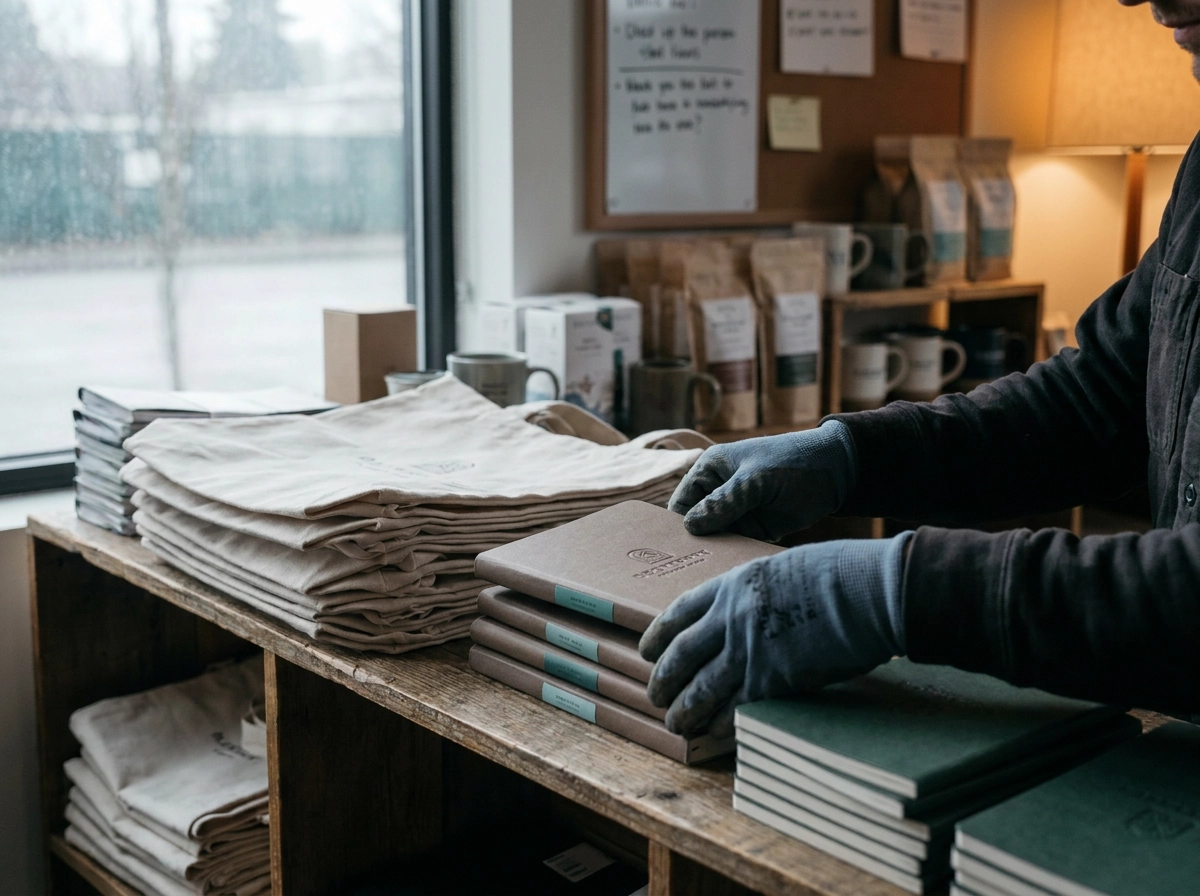
The Corporate Company Store: Built for Ongoing Organizational Purchasing
Of the three models, the corporate company store carries the broadest operational footprint and the most administrative requirements. It fits mid-size to large organizations: manufacturers, public utilities, government agencies, healthcare systems, financial institutions, and multi-location employers that need a centralized source of branded company merchandise across departments.
Order behavior is operational, not seasonal. Purchase triggers include reordering branded apparel, restocking trade show promotional items, replacing uniforms, and fulfilling new-hire kits. Demand flows year-round from multiple departments rather than spiking around a single event.
Payment structure reflects that reality. Transactions typically run through departmental purchase orders, budget codes, or manager-approved spend accounts, so the platform must support account hierarchies, approval workflows, and cost-center reporting. Individual consumer checkout is not the model here.
Product scope extends well beyond apparel. A well-built company store consolidates corporate branded merchandise across categories: signage, custom packaging, branded office supplies, safety gear, and printed materials alongside uniforms and promotional products.
On the administrative side, the strongest company stores offer inventory management or on-demand production, reliable fulfillment to single or multiple locations, and vendor consolidation. Organizations managing six to ten separate supplier relationships for branded products see significant efficiency gains when those are unified under one program.
Employers in Shelton, Olympia, Tacoma, Seattle, and throughout Washington State frequently adopt this model to replace fragmented departmental purchasing, where inconsistent branding and duplicated supplier management had become a measurable operational problem. If that pattern sounds familiar, let’s get started with a program structure built around your actual purchasing needs.
The Team Store and School Spirit Store: Built for Group Identity and Individual Buying
Where the corporate company store serves organizational buyers with operational reorder needs, the team store serves a fundamentally different audience: individuals buying branded gear to express group pride.
Best fit: K-12 schools, colleges, booster clubs, athletic departments, recreational sports leagues, youth organizations, and community groups. The buyer is a parent, student, athlete, or fan purchasing spirit wear for personal use, not a procurement manager restocking departmental inventory.
Order behavior is seasonal and event-driven. Storefronts commonly open for a defined window tied to spirit week, a sports season, or a fundraising campaign, then close when the window ends. This pop-up model suits organizations that do not need a permanent catalog and want to avoid managing unsold inventory.
Payment is direct consumer checkout. Parents and fans pay individually at checkout, which eliminates the purchase orders, budget codes, and approval workflows required by corporate store builds. The simpler payment structure also means faster setup and lower administrative overhead.
Product mix is focused but decoration-heavy. Decorated t-shirts, hoodies, hats, bags, and accessories carry the team or school identity. SKU count stays manageable, though embroidery and print specifications can vary widely across items.
Fundraising compatibility sets this model apart. Many spirit stores are structured so a portion of each sale flows back to the organization, converting the storefront from a convenience tool into an active revenue source.
Schools, athletic programs, fire departments, and law enforcement agencies from the Olympic Peninsula and Kitsap County through Oregon and Idaho use team stores to eliminate the volunteer-coordination burden that traditional group order models require.
The Employee Branded Merchandise Portal: Built for HR Programs and Structured Gifting
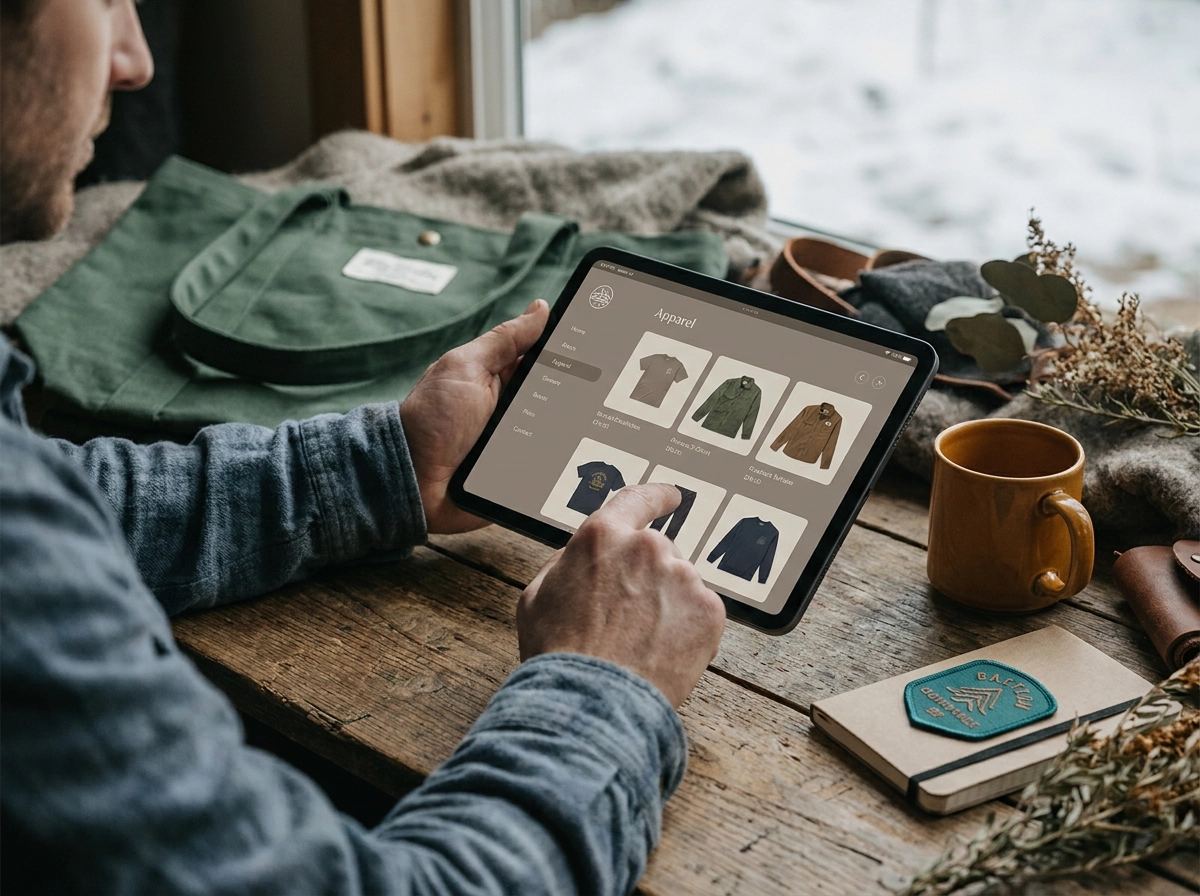
Where team stores hand decision-making to individual buyers, the employee portal inverts that model entirely. Here, HR or administration defines what employees can access, enforces program rules, and funds the transaction, and the employee simply selects within those parameters.
This model fits organizations running onboarding merchandise kits, service anniversary award programs, wellness incentive budgets, or uniform allowance programs. The goal is standardized, controlled access to branded merchandise aligned with specific HR program objectives, not an open storefront where employees browse freely.
The checkout logic reflects that intent. Rather than individual consumer payment, HR loads a credit or point balance per employee. The portal manages selection, redemption, and fulfillment without requiring the employee to pay out of pocket. That workflow eliminates reimbursement friction and keeps HR in full control of spend.
Product scope is deliberately narrow. An onboarding kit might contain a branded jacket, notebook, water bottle, and bag; a service award portal might tier the catalog so 1-year, 5-year, and 10-year milestones each unlock a different set of premium items. That intentional curation is what separates the portal from a standard company store.
The technology layer is meaningfully more complex. Integration with employee directories, HR systems, and internal communication platforms is often required, which means the provider must support both branded merchandise sourcing and technical configuration together.
Hospitals, hotel groups, credit unions, ports, and airports across Washington State and the broader Pacific Northwest increasingly use this model to standardize the new-hire experience and reduce the manual administrative burden that previously fell on HR teams managing individual merchandise orders one at a time.
Side-by-Side: How the Three Models Compare Across Key Decision Factors
With each model now defined in detail, the structural differences become clearest when viewed side by side across the decisions that matter most to buyers.
| Factor | Company Store | Team Store | Employee Portal |
|---|---|---|---|
| Audience | Internal buyers purchasing for the organization | Individual consumers buying for personal use | Employees accessing merchandise through HR programs |
| Order Frequency | Ongoing, operational | Seasonal or campaign-based | Triggered by HR lifecycle events |
| Payment Model | POs, budget codes, credit accounts | Individual consumer checkout | Allowance credits, points, or HR-funded budgets |
| SKU Complexity | Broadest range: apparel, promotional products, signage, print | Narrower; spirit wear focused | Most curated; aligned to specific program goals |
| Admin Complexity | Moderate; catalog and fulfillment coordination required | Lowest; simplest to launch and manage | Highest; HR integration and allowance logic add setup layers |
The single clearest fit indicator is the payment source. Organizational payment methods point to a company store. Individual consumer checkout points to a team store. HR-managed credits or allowances point to an employee portal.
If that test still leaves ambiguity, layer in order frequency. Recurring operational replenishment confirms a company store. Seasonal buying windows confirm a team store. Program milestone triggers confirm an employee portal.
Most mismatches happen when organizations describe their desired outcome without identifying who is actually paying and how often they are buying. Answering those two questions first eliminates the wrong models before any scoping conversation begins.
When Organizations Need More Than One Model
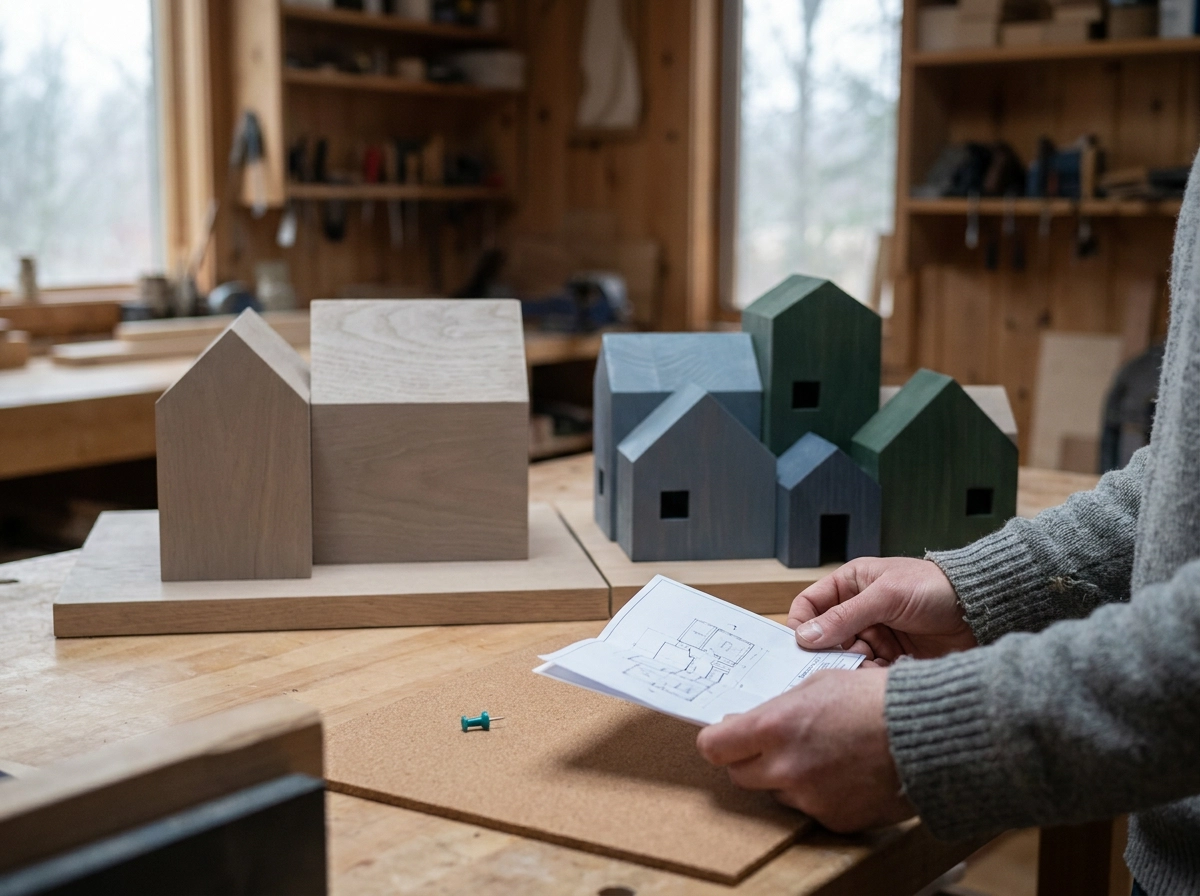
The right model for most organizations is singular and clean. But large or complex organizations frequently discover that a single structure leaves real needs unmet.
A manufacturer, for example, may run a company store for ongoing uniform reordering while also needing a separate employee portal for onboarding kits with allowance-based checkout. Those programs share branded merchandise but require entirely different platform logic. Building them as one store creates friction; managing them through separate vendors creates inconsistency.
School districts face a parallel challenge. Each campus may need a team store for individual spirit wear purchases, while district staff require an employee-facing store for uniforms and professional development items. Two audiences, two checkout experiences, one brand standard that must hold across both.
Why Government Agencies Partner With OneStop Northwest illustrates another common scenario: nonprofits and public agencies in Washington, Oregon, and Idaho often operate a public-facing fundraising or awareness store alongside an internal procurement portal for staff and volunteers. Different buyer types, different payment logic, unified branding throughout.
Managing these structures through separate vendors compounds the coordination burden and introduces brand inconsistency across programs. OneStop Northwest supports organizations across the Pacific Northwest and nationwide that run multiple branded merchandise structures simultaneously, delivering unified sourcing, consistent brand standards, and consolidated reporting through a single provider relationship.
How to Choose the Right Model for Your Organization
Four questions cut through the noise quickly.
Start with the buyer. Who places the order and who pays? Departments or managers buying on behalf of the organization point to a company store. Individuals purchasing for themselves point to a team store. HR distributing merchandise as part of a formal program points to an employee portal. That single question eliminates most ambiguity.
Audit your pain points. Fragmented vendor relationships and inconsistent branding across locations signal a company store need. Chaotic coordination for spirit wear group orders signals a team store need. Manual new-hire kit assembly and inconsistent onboarding packages signal an employee portal need.
Consider cadence. Ongoing operational replenishment favors a permanent company store. Seasonal or event-based buying favors a team store with defined open windows. Program-triggered distribution favors a portal with HR lifecycle integration.
Assess your administrative capacity. A lean team should weight toward simpler models, unless a managed service option is available. Managed company store programs handled by the provider reduce internal workload significantly.
Before committing to any build, request a structural consultation. A provider who asks about your buyer type, order cadence, and payment model before recommending a platform delivers real value. Explore Brand Solutions to see how a consultative approach shapes the right program from the start.
What to Look for in a Branded Merchandise Store Partner
Once you have identified the right model, the next decision is equally consequential: choosing the right partner to build and manage it.
The most important qualification is multi-model capability. A partner who builds only one store type will eventually become a constraint. The ability to start with a team store and expand into a company store or employee portal, without switching vendors, eliminates transition cost and preserves institutional knowledge about your brand, products, and requirements.
Catalog depth matters just as much as platform capability. A partner who consolidates corporate branded merchandise, spirit wear, promotional products, uniforms, custom packaging, signage, and print under one relationship removes the friction of multiple vendor contracts, inconsistent brand standards, and fragmented invoicing.
Fulfillment infrastructure should support both direct-to-consumer shipping for team stores and bulk or departmental delivery for company stores, with brand-consistent packaging and dependable turnaround at both scales.
Pricing flexibility is critical for schools, nonprofits, and smaller organizations. A provider backed by strong supplier relationships can offer competitive per-item pricing without high minimum order quantities.
Finally, prioritize ongoing store management over a build-and-hand-off model. Product needs change, personnel turns over, and program requirements shift. A partner who stays engaged after launch keeps the store performing.
Your Trusted Brand Management Partner, OneStop Northwest supports all three store models for businesses, schools, government agencies, healthcare organizations, nonprofits, and employers throughout Shelton, Mason County, Thurston County, Pierce County, Kitsap County, Grays Harbor County, the Olympic Peninsula, Western Washington, Oregon, Idaho, and nationwide, with more than $2 billion in collective buying power and supplier relationships scaled to programs of any size.
Choosing the Right Structure Sets Every Branded Merchandise Program Up to Succeed
The right partner matters, but only after the right structure is chosen. All three branded merchandise models share the same surface features: an online storefront, decorated products, and a fulfillment workflow. What separates them is who buys, how they pay, and what the program is designed to accomplish.
Company stores serve recurring organizational purchasing. Team stores serve individual buyers showing group pride. Employee portals serve HR-managed programs with defined eligibility and structured access. Each model demands a different platform configuration, checkout logic, and fulfillment approach. Treating them as interchangeable is where most program problems begin.
Organizations that resolve structural questions before launch consistently avoid the rebuilds, adoption failures, and administrative friction that follow a mismatched build. Structural clarity is not a delay; it is the investment that makes everything downstream faster and more reliable.
A single-model provider can execute well within a narrow lane. A full-service partner who has built all three types and understands when each fits is better positioned to support organizations as their needs grow, shift, or expand into multiple program types simultaneously.
Ready to identify which branded merchandise structure fits your organization? Contact OneStop Northwest for a consultation tailored to your buyer type, order volume, and program goals. Whether you are a business, school, government agency, or employer anywhere in the Pacific Northwest or across the country, the right structure is the place to start.
Conclusion
Choosing the right branded merchandise structure is not a minor operational detail; it is the decision that determines whether your program succeeds or stalls. Company stores, team stores, and employee portals each solve a different problem for a different buyer, and matching the model to your actual use case is what separates programs that deliver results from those that get rebuilt six months later.
The key takeaways are clear: structure drives adoption, checkout logic must match how people actually pay, and fulfillment requirements vary significantly across all three models. Organizations that get this right from the start save time, money, and frustration at every stage.
You now have the framework to make a confident, informed decision. The next step is putting it into action. Reach out to OneStop Northwest and let the right structure become the foundation your branded merchandise program deserves.