

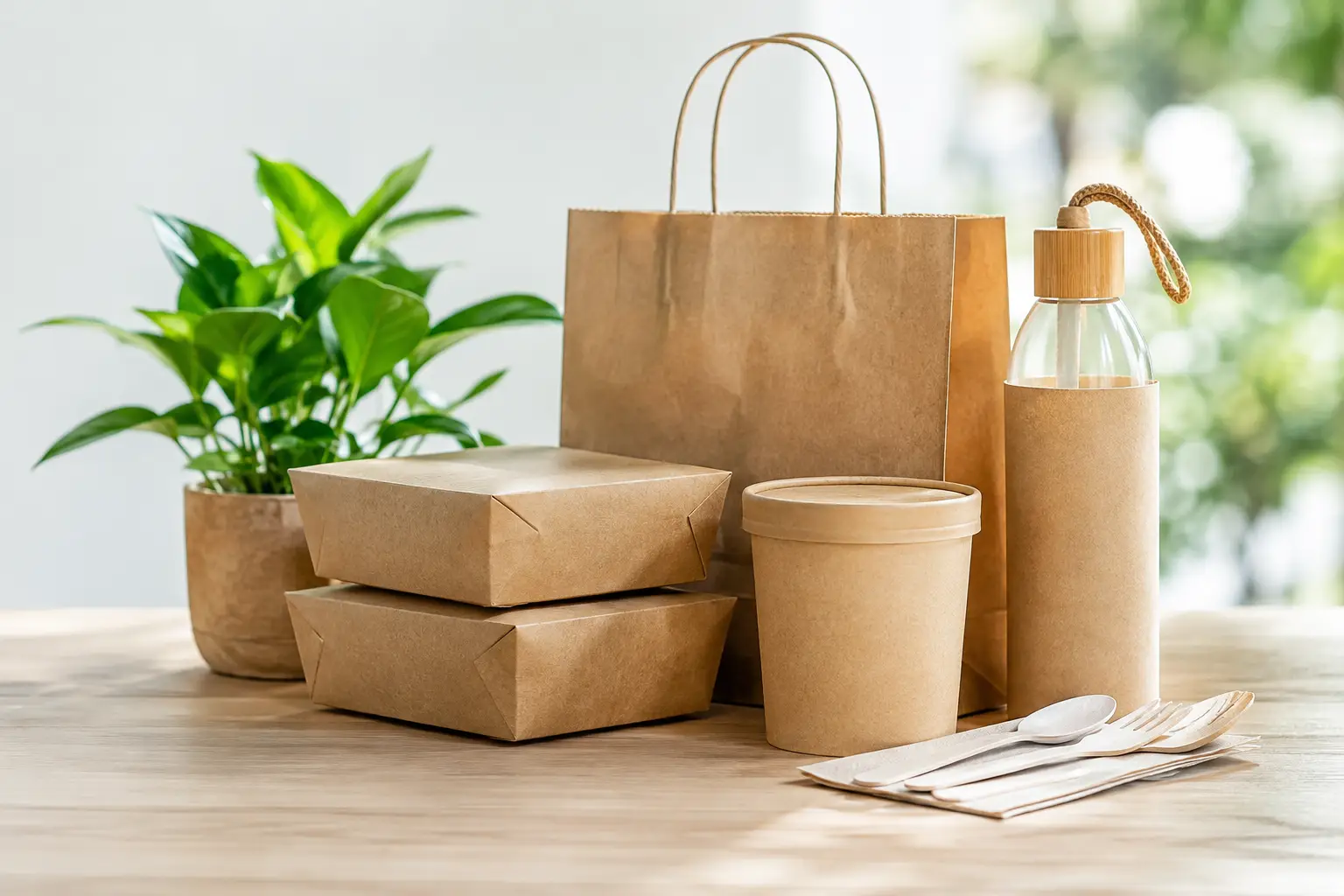
A package often speaks before a salesperson, website, or product demo gets the chance. For businesses competing for attention, sustainable packaging trends are no longer limited to swapping plastic for kraft paper. They are shaping how customers judge product quality, operational responsibility, and whether a brand’s promises feel believable.
For small and midsize businesses, the challenge is practical: make meaningful improvements without creating packaging that costs too much, fails in transit, or confuses customers at disposal. Government organizations face a similar balance, with procurement standards, public accountability, and accessibility requirements adding another layer of scrutiny. The strongest packaging decisions begin with the product, the customer, and the real-world path the package takes after use.
Sustainable Packaging Trends Moving Beyond Materials
For years, sustainable packaging conversations centered on a simple question: “What can replace plastic?” That question still matters, but it is too narrow. Plastic can be appropriate when it prevents food waste, protects sensitive medical supplies, or materially reduces shipping weight. A heavy glass container may look environmentally preferable, yet it can create higher transportation emissions and breakage risk than a lightweight alternative.
The more useful question is: “What packaging delivers the needed protection with the least waste and the clearest end-of-life path?” That shift is moving brands toward total packaging systems rather than one-material fixes.
Right-sizing is becoming a brand standard
Oversized boxes, excessive void fill, and multiple layers of wrapping are increasingly hard for customers to overlook. Right-sizing reduces material use and can lower dimensional shipping costs, making it one of the few sustainability changes that may improve both environmental and financial performance.
This does not mean stripping away protection. Fragile, high-value, and temperature-sensitive items need packaging designed for their risk profile. The goal is to test the smallest practical format that protects the product through storage, fulfillment, shipping, and returns. A well-fitted mailer or carton also feels more intentional when a customer opens it.
Recycled content is gaining ground, with important limits
Post-consumer recycled content is becoming more common in corrugated boxes, paperboard cartons, mailers, rigid containers, and some flexible packaging. It gives existing materials another useful life and helps create demand for recycling markets.
Still, recycled content is not a universal solution. Food-contact applications, color consistency, strength requirements, and supplier availability can affect what percentage is realistic. Brands should avoid treating a recycled-content claim as a finish line. The claim should be specific, accurate, and supported by supplier documentation.
Mono-material design is replacing hard-to-recycle combinations
Many packages are built from layers of different materials: plastic film bonded to paper, foil barriers, adhesives, metallic coatings, and mixed components. Those combinations can perform well, but they are often difficult for recycling systems to sort and process.
Mono-material packaging aims to simplify that equation. Examples include all-paper mailers, polyethylene pouches designed without incompatible layers, or packaging components made from the same family of materials. The trade-off is performance. Barrier protection, product shelf life, and tamper resistance can become more difficult when materials are simplified. Product testing should lead the decision, not a trend checklist.
What Customers Actually Notice
Customers do not usually conduct a life-cycle assessment at the kitchen counter. They notice whether packaging feels excessive, whether disposal instructions are understandable, and whether the brand’s message matches the experience.
A box covered in vague environmental language can create skepticism, especially if it is stuffed with mixed materials and difficult to open. By contrast, a straightforward message such as “Box is recyclable with paper curbside programs. Remove the label before recycling” gives people a useful next step. The details depend on local recycling rules, so businesses should avoid universal claims unless they can support them.
Clear communication matters most when packaging has a specialized end-of-life route. Compostable packaging, for example, may only be accepted through commercial composting facilities. Calling it simply “eco-friendly” leaves customers with little guidance and may lead to contamination in recycling or compost streams.
Reuse and Refill Are Becoming More Selective
Reusable packaging has strong appeal, particularly for subscription programs, local delivery, food service, and business-to-business distribution. A durable container can reduce single-use waste over many cycles, but only if return rates are high enough and cleaning, reverse logistics, and loss are managed well.
This is why reuse is not a fit for every product. A national e-commerce seller may find that return shipping cancels out the benefits of a reusable mailer. A local retailer with repeat customers and convenient drop-off points may see a very different outcome. The model depends on geography, customer behavior, product value, and operations.
Refill formats can be more achievable for some brands. Concentrated household products, bulk dispensers, and refill pouches can reduce material per use while giving customers a practical reason to return. The best refill systems make the behavior easy rather than asking customers to take on extra work for unclear value.
Sustainable Packaging Trends and Compliance Pressure
Packaging decisions are increasingly influenced by policies that require producers to take more responsibility for the materials they put into the market. Extended producer responsibility programs, recycled-content requirements, labeling standards, and restrictions on certain materials vary by state and continue to evolve.
For businesses selling across multiple states, that variation can be difficult to manage. A package that is acceptable in one market may require different labeling, reporting, or material choices in another. Government buyers may also include sustainability criteria in procurement requests, which makes documented specifications and supplier transparency especially valuable.
Rather than reacting late, organizations can create a basic packaging record for every product line. It should identify material types, package weight, recycled-content percentages, supplier certifications where relevant, disposal guidance, and any claims printed on the package. This does not need to be overly complicated. It gives marketing, purchasing, operations, and legal teams a shared source of truth.
How to Choose a Better Packaging Direction
A successful packaging refresh begins by identifying the specific problem to solve. Is shipping damage driving replacements? Are customers complaining about excess material? Is a product entering retailers with packaging requirements? Is the brand trying to support a sustainability commitment with evidence rather than broad language?
From there, review the full package instead of only the primary container. The shipping carton, tape, labels, inserts, protective fill, and return materials all affect waste, cost, and customer perception. Often, the easiest early win is removing an unnecessary component or switching to a more widely recyclable alternative.
Before making a broad rollout, test new packaging under actual conditions. Check how it holds up in humidity, heat, stacking, vibration, and carrier handling. Ask warehouse teams whether it slows packing, and ask customers whether disposal instructions make sense. A material that looks good in a sample room but increases product damage is not a sustainable improvement.
For brands updating both packaging and visual identity, consistency matters. Sustainable choices should feel connected to the product and the company’s values, not added as decorative messaging. OneStop Northwest LLC often approaches brand materials this way: aligning packaging, messaging, and practical production details so the finished piece supports a clearer, more credible customer experience.
Claims Need Proof, Not Hype
Words such as “green,” “earth-friendly,” and “planet safe” may sound positive, but they offer little usable information. Specific claims are stronger. State what is recycled, how much recycled content it contains, whether a package is recyclable in common systems, or what action the customer should take.
Avoid implying that a package has no environmental impact. Every material choice involves energy, resources, transportation, and end-of-life realities. Honest language builds more trust than perfection language, particularly when a business is still improving its packaging over time.
Documentation also protects the brand. Keep supplier specifications, test results, and records that support printed claims. If a material changes because of availability or cost, review the packaging copy too. A claim that was accurate last year may no longer match the current supply chain.
Start With the Next Defensible Improvement
The most effective packaging strategy is rarely the most dramatic one. It may be a smaller shipping box, a simplified material structure, better disposal instructions, or a supplier conversation that reveals a viable recycled-content option. Those changes can lower waste while making the customer experience clearer and more consistent.
Choose the improvement you can verify, test it carefully, and explain it plainly. That is how sustainable packaging becomes more than a trend – it becomes a practical expression of a brand that pays attention.