

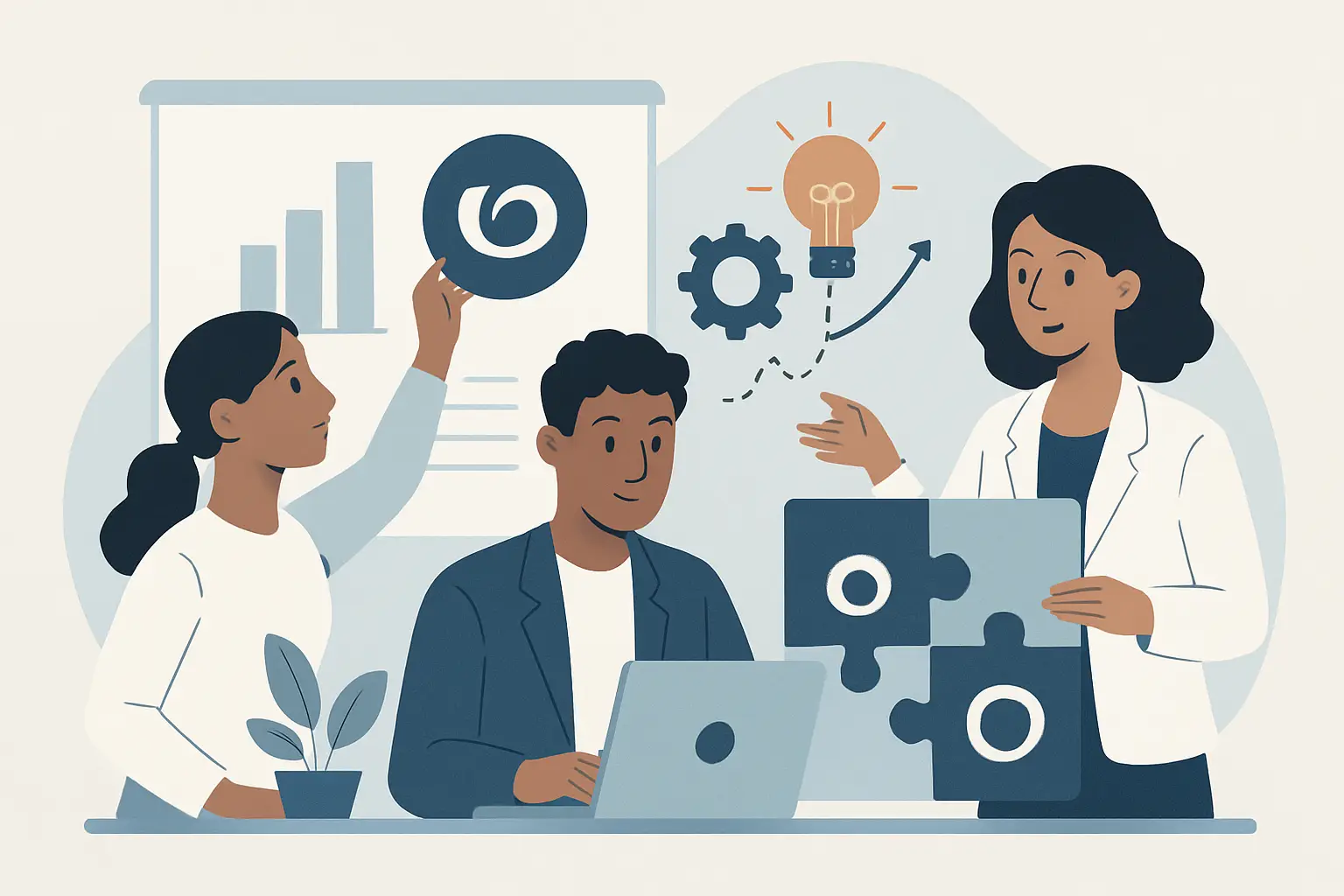
A marketing push is going great – until a customer clicks through to a dated website, can’t find the right contact info, and gets a different “version” of your logo on three different pages. Or your team lands a big opportunity, then loses time hunting for the latest deck, the right fonts, and the correct program details.
That gap between effort and impact is exactly where comprehensive brand solutions earn their keep. They connect what customers see (branding and marketing) with what your team needs to deliver consistently (tools, systems, and clear processes). Done well, they don’t just make you look better. They make it easier to sell, easier to communicate, and easier to grow.
What “comprehensive brand solutions” really means
Most organizations have pieces of branding in place: a logo, a website, maybe some social media and a brochure. Comprehensive brand solutions go a step further by treating your brand like a full operating system – not a folder of design files.
In practice, that usually includes four connected layers.
First is identity: your positioning, visual system, messaging, and the rules that keep them consistent. This is where you answer, “What do we stand for, and how do people recognize us instantly?”
Second is visibility: the channels where customers, partners, or constituents actually find you – search, social, email, print, events, signage, and even packaging. This is where you answer, “Are the right people seeing us, and are we showing up the same way everywhere?”
Third is experience: the website, landing pages, forms, proposals, onboarding, and customer support touchpoints. This is where you answer, “When someone interacts with us, does it feel clear and confident – or confusing and inconsistent?”
Fourth is enablement: the internal systems and workflows that help your team execute reliably, including IT and technology support where it affects communication and delivery. This is where you answer, “Can our team actually keep this brand consistent without heroics?”
A brand becomes “comprehensive” when these layers reinforce each other. That’s the difference between a one-time refresh and a brand that performs.
The moment you realize you need a full solution
Organizations usually don’t seek a holistic approach because they love the idea of a larger project. They seek it because the current setup starts costing real money and time.
One common trigger is inconsistent visibility. You’re “posting,” you’ve tried ads, maybe you’ve upgraded your logo – but referrals slow down, web traffic stalls, or leads aren’t qualified. The issue isn’t effort. It’s misalignment: the message doesn’t match the audience, the website doesn’t match the promise, or the follow-up doesn’t match the brand.
Another trigger is growth. Adding locations, services, programs, or new decision-makers creates pressure. Suddenly, what worked when the team was small breaks down. A brand that depends on tribal knowledge (“Ask Jen for the right logo”) becomes fragile.
A third trigger is credibility gaps. If your organization does high-quality work but your materials look inconsistent, outdated, or generic, the market assumes the same about your delivery. That’s especially true in government and B2B settings where trust and clarity matter as much as creativity.
And then there’s the technology factor. If basic infrastructure – email, file sharing, web forms, CRM integrations, user access – is unreliable, your branding can’t hold. Customers don’t separate “the brand” from “the system.” They experience it as one.
What’s typically included (and why it’s connected)
A strong comprehensive approach starts with strategy, not aesthetics. That doesn’t mean months of theory. It means getting crisp on who you serve, what you offer that others don’t, and what you want people to do next. Without that, design becomes decoration.
From there, identity work usually includes a refined logo system (not just one version), color and typography standards, messaging guidelines, and a practical brand guide your team can actually use. The goal isn’t to over-police creativity. It’s to eliminate decision fatigue and prevent drift.
Visibility work is where branding turns into demand. This might involve SEO improvements that align with real search behavior, social media content that reflects your voice instead of chasing trends, and marketing materials that support how you actually sell – like capability statements, sales sheets, event collateral, or program brochures.
Experience work almost always includes website development or improvements: clearer navigation, better calls-to-action, updated content structure, and pages built around the questions customers ask before they contact you. It may also include packaging, promotional products, or signage where those touchpoints are part of the buying journey.
Enablement is the quiet multiplier. It can include organizing digital assets so your team can find the right files fast, setting up consistent email signatures, building templates for proposals and presentations, and tightening IT foundations so your organization communicates securely and reliably.
The point is not to do “everything.” The point is to fix the connections so each investment makes the others work harder.
The trade-offs: where comprehensive can go wrong
“Comprehensive” can become code for “bloated” if it’s not focused. More deliverables do not automatically produce more results.
One trade-off is speed versus depth. If you need immediate lead flow, you might prioritize a website conversion fix and a targeted SEO plan before you invest in a full rebrand. If you’re preparing for a major launch, you might do the identity and messaging first so every channel stays consistent.
Another trade-off is customization versus governance. The more your organization serves diverse audiences (multiple departments, programs, or regions), the more your brand system needs flexibility. Too rigid and teams won’t use it. Too loose and it won’t hold.
Budget is also real. A comprehensive approach is often more cost-effective than piecemeal fixes over time, but only if it’s staged wisely. The best programs are built in phases with clear priorities and measurable outcomes.
How to choose the right approach for your organization
Start by diagnosing the bottleneck. If you’re getting traffic but not leads, the issue may be conversion, messaging clarity, or user experience. If you’re not getting traffic, the issue may be visibility and discoverability. If leads are coming in but deals stall, your sales materials and credibility cues might be the weak link. If everything is hard to execute internally, enablement and technology support may be the missing piece.
Then look for alignment across three areas.
First, brand clarity: Can someone on your team explain what you do, who it’s for, and why it’s better – in plain language – without a five-minute detour?
Second, brand consistency: Do your website, proposals, social profiles, signage, and printed materials look and sound like the same organization?
Third, brand operations: Does your team have the tools, templates, and systems to deliver consistently without reinventing the wheel every time?
If one of those areas is weak, you can still grow – but growth will be more expensive.
What results look like when it’s working
The payoff of comprehensive brand solutions is rarely just “a nicer logo.” It shows up as fewer stalled conversations, smoother handoffs, and more confidence in how you present.
We’ve seen organizations reduce the constant scramble by building simple rules and templates that stop brand drift before it starts. We’ve seen teams reclaim hours each week because files are organized, website updates are manageable, and internal communication is clearer. And we’ve seen credibility jump when messaging and visuals finally match the quality of the actual work.
One example we hear often is the relief that comes after the website and marketing materials stop contradicting each other. The phone calls improve. The emails are more specific. Prospects arrive already understanding the value.
That’s not magic. It’s alignment.
Why “one partner” can matter (if it’s the right one)
Many businesses and agencies can deliver individual pieces well. The challenge is coordination: designers don’t always talk to web developers, marketing doesn’t always connect to IT realities, and internal teams get stuck translating between vendors.
A single partner can help when they understand the whole system – and when they’re willing to prioritize what matters most instead of selling a menu of services. That’s especially useful for small to mid-sized organizations and public-sector teams that need dependable execution without building a large in-house department.
At OneStop Northwest LLC, the focus is on tailoring a brand program that blends creative, marketing, digital, and technology support based on what your organization is trying to accomplish and what resources you actually have. The goal is practical: make your brand easier to recognize, easier to trust, and easier to run.
A smart way to start without overcommitting
If you suspect you need a comprehensive approach but aren’t sure where to begin, start with a short, structured assessment. Look at your brand from the customer’s perspective first: search results, website path, first contact experience, and follow-up materials. Then look at it from your team’s perspective: how assets are stored, how updates happen, and where work gets delayed.
From that, you can choose a first phase that creates momentum – often a messaging and website tune-up, a consistency reset across key materials, or an SEO and content plan tied directly to the services you want to grow.
The best part is that you don’t have to wait for a “perfect brand” to act. You just need a clear next step that improves how you show up and how your team executes.
A helpful closing thought: if your brand feels harder to manage than it should, that’s not a personal failing or a marketing mystery. It’s a systems problem – and systems can be fixed thoughtfully, one smart improvement at a time.