

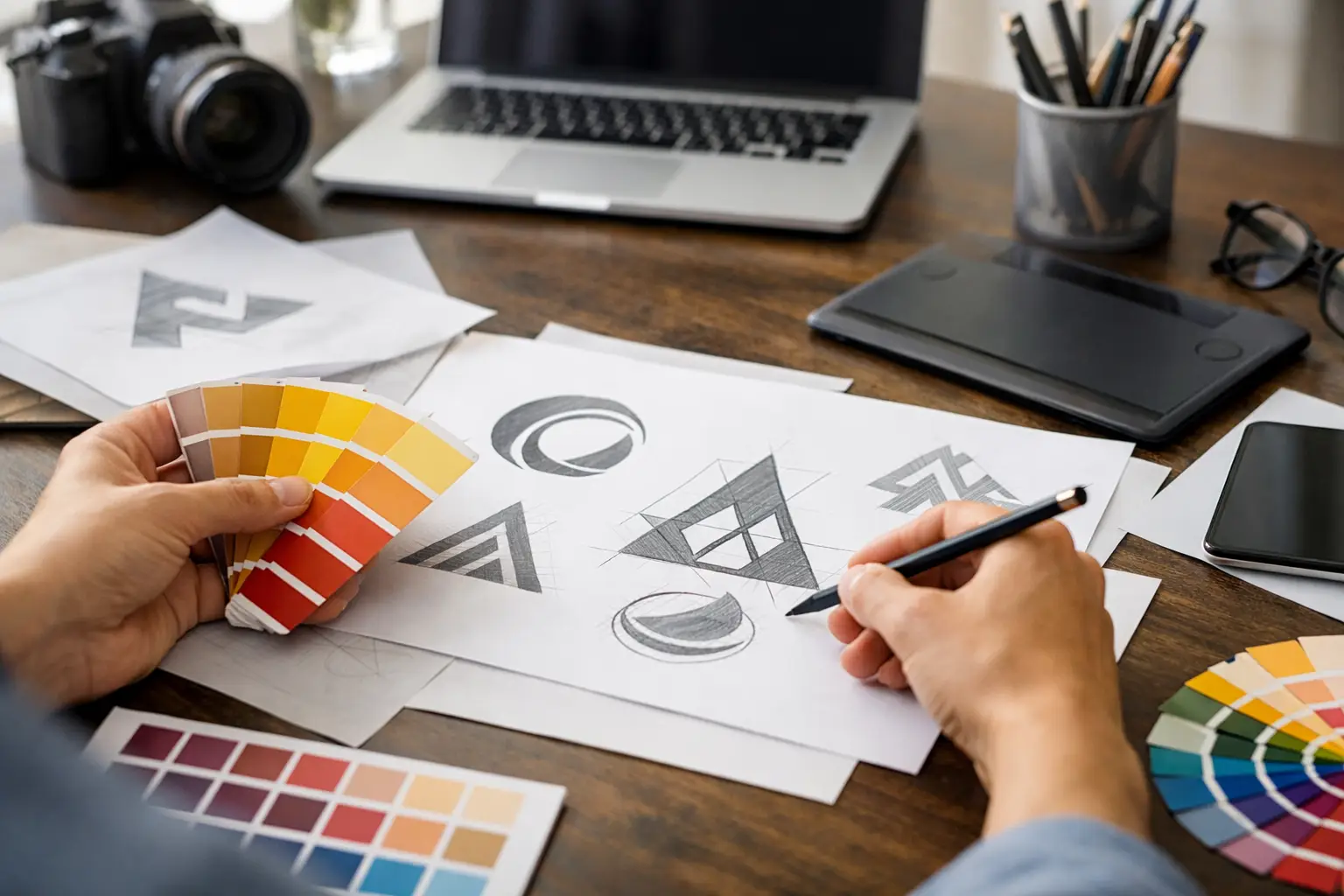
A logo usually gets judged in about two seconds.
That is exactly why the process behind it matters so much. For many businesses, especially growing companies and public sector teams with limited time and internal resources, a logo can feel like one quick design task. In practice, it is one of the clearest decisions a brand makes about how it will be recognized, remembered, and trusted.
A strong logo is not just attractive. It has to work on a website header, a vehicle wrap, a business card, a presentation deck, a promo item, and sometimes a government proposal or public-facing document. If it breaks down in those real-world settings, the problem is rarely the artwork alone. The problem is usually a rushed or incomplete custom logo design process.
Why the custom logo design process matters
When a business comes to us frustrated with inconsistent branding, there is often a pattern. They started with a logo that looked fine in one context, then struggled to use it everywhere else. Maybe it was too detailed to embroider, too generic to stand apart, or too trendy to hold up after a year or two.
The custom logo design process helps prevent those issues before they become expensive. It creates space to ask the right questions early, test ideas against practical needs, and make sure the final mark reflects the business instead of just following visual trends.
That matters even more when multiple departments or stakeholders are involved. A small business owner may need a logo that supports growth into new services. A government organization may need a mark that feels credible, clear, and appropriate across formal communications. In both cases, strategy matters as much as design.
Start with discovery, not sketching
Most logo problems begin when the first conversation is about colors or symbols instead of business goals.
The discovery phase should clarify what the organization does, who it serves, and how it wants to be perceived. That includes the obvious details, such as industry and audience, but also the more useful ones: what makes the organization different, where it shows up most often, what visual baggage it wants to avoid, and how the logo will need to function across print and digital materials.
This is also where practical constraints come into view. A company that relies heavily on signage, uniforms, packaging, and fleet graphics needs a different design approach than a software startup living mostly online. Neither is better. The point is that the logo should be built for actual use, not an imagined brand environment.
A thoughtful discovery process also reduces subjective feedback later. When stakeholders agree upfront on goals and brand direction, the review stage becomes much more productive.
Research shapes better design decisions
Before concepts are developed, it helps to study the landscape.
That does not mean copying competitors or chasing whatever style is popular this quarter. It means identifying common visual patterns in the market so the new logo can either align with expectations where it makes sense or deliberately separate from them where that creates value.
For example, some industries benefit from familiarity. In regulated or high-trust spaces, a logo that feels too experimental can create friction. On the other hand, crowded local service markets often need stronger visual distinction to avoid blending in. The right choice depends on the brand’s goals, audience expectations, and growth plans.
Research can also surface technical needs early. If a logo must work in black and white for forms, stamps, or low-cost printing, that should influence the concept stage from the start.
Concept development is where strategy becomes visible
This is the part clients often picture first, but good concepting only works when the groundwork is solid.
In the concept phase, designers translate brand attributes into visual directions. That may include typography choices, shape language, color systems, and whether the logo should be wordmark-led, symbol-led, or a combination. The best concepts are not random creative exercises. They are responses to the discovery and research work.
A business that wants to project stability and technical competence may need a very different design direction than one focused on energy, accessibility, or local community connection. Those differences should show up in the details. Type can feel formal or approachable. Shapes can suggest momentum or structure. Color can support recognition, but it should not be expected to carry the whole identity.
This stage benefits from restraint. Too many directions can slow decision-making and dilute the strategy. A smaller set of well-reasoned concepts usually produces better conversations than a large batch of disconnected ideas.
Feedback should refine, not derail
Once concepts are presented, feedback becomes one of the most important parts of the custom logo design process.
This is where many projects either gain clarity or lose it.
Useful feedback ties back to goals. Does the logo feel credible for the audience? Does it support the level of professionalism the organization needs? Is it distinctive enough to be remembered? Can it scale across the materials the team actually uses?
Less useful feedback tends to focus only on personal taste. That is understandable. Logos are visual, and everyone reacts to them emotionally. But if the discussion stays at the level of “I like blue better” or “this feels boring,” the project can drift away from business needs.
A collaborative process helps here. When a design team explains why certain choices were made and invites clients to respond in context, revisions become more focused. Sometimes the answer is a small adjustment to typography or spacing. Sometimes a concept is simply not right and needs a stronger pivot. Both are normal.
Refinement is where durability gets built in
A logo should look easy. That does not mean it was easy to make.
Refinement is the stage where proportion, spacing, balance, legibility, and versatility get tightened. Tiny changes can make a major difference in how polished and confident a logo feels. This is also when the mark should be tested at small sizes, in single color, and on different backgrounds.
A logo that only works in full color on a white screen is not finished.
This is especially important for organizations managing multiple touchpoints. If your logo is going to appear on apparel, signage, business forms, social graphics, websites, and packaging, each use places different demands on the artwork. The goal is not to create a logo that does everything perfectly in every possible scenario. The goal is to create a system that holds up consistently across the applications that matter most.
That may include primary and secondary versions, icon-only options, horizontal and stacked layouts, and usage guidelines that prevent distortion or misuse.
Final files are not a formality
A surprising number of businesses reach the end of a logo project and realize they do not have what they need.
The final handoff should include the right file types for both print and digital use, along with clear direction on color values, spacing, background control, and acceptable variations. Without that, even a well-designed logo can become inconsistent once different vendors, departments, or staff members start using it.
This is where a broader brand management perspective adds value. A logo does not live in isolation. It has to work with your website, printed materials, social media graphics, presentations, packaging, and internal documents. If those connections are ignored, the brand starts to fragment almost immediately.
That is one reason many organizations prefer a partner that can think beyond the standalone design. At OneStop Northwest, the goal is not just to deliver a logo file. It is to help clients build an identity that can be used confidently across the channels and systems that support their business.
What clients should expect from the process
A good logo process is collaborative, but it should not feel chaotic.
Clients should expect clear milestones, rationale behind design decisions, room for thoughtful feedback, and a final result shaped by both strategy and practical use. They should also expect honesty. Sometimes a client arrives wanting a very detailed emblem, but their real-world needs point toward something simpler and more flexible. Sometimes they want to look dramatically different, but their audience expects familiarity and trust. Good guidance means talking through those trade-offs instead of pretending there is one perfect answer every time.
The strongest logos rarely come from speed alone. They come from asking better questions, making sharper decisions, and testing the design against the reality of how the brand operates.
If your logo needs to represent your business for years across every touchpoint people see, the process should earn that responsibility. A good mark is not just designed. It is built with enough clarity to keep working long after the first impression.