

A box of branded pens may seem simple. But when those pens sit on reception desks, travel to job sites, and get passed between decision-makers, they do more than carry a logo. They keep your business visible in the places where buying decisions actually happen. That is why promotional products for brand promotion still earn a place in a smart marketing strategy.
For many organizations, especially small and midsize businesses, schools, nonprofits, and government-facing teams, visibility is not the only challenge. Consistency is just as important. A brand can look polished on a website and disconnected everywhere else if printed materials, event giveaways, uniforms, and office signage all tell a different story. Promotional products work best when they are not treated as random swag, but as part of a larger brand system.
Why promotional products for brand promotion still matter
Digital marketing gets a lot of attention, and for good reason. Paid ads, email campaigns, SEO, and social media can create reach quickly. But physical products have a different advantage. They stay in the real world, often within arm’s reach, long after an ad disappears.
A useful item creates repeated exposure without requiring another click or another ad spend. A branded notebook on a conference table, a custom tumbler at a commuter’s desk, or a high-quality tote used for weekly errands turns your brand into a familiar presence. That familiarity matters because people are more likely to remember and trust companies they recognize.
There is also a practical side to this. Promotional products can support multiple goals at once. The same item may help with event visibility, employee engagement, customer retention, and community outreach. That flexibility makes them attractive for organizations trying to get more value from a limited budget.
Still, not every product does the job equally well. A cheap item with weak branding can hurt perception as easily as a thoughtful one can help it.
The best promotional products match the moment
The strongest campaigns start with a simple question: where will this product be used, and by whom? That answer should shape the item far more than trend lists or trade show habits.
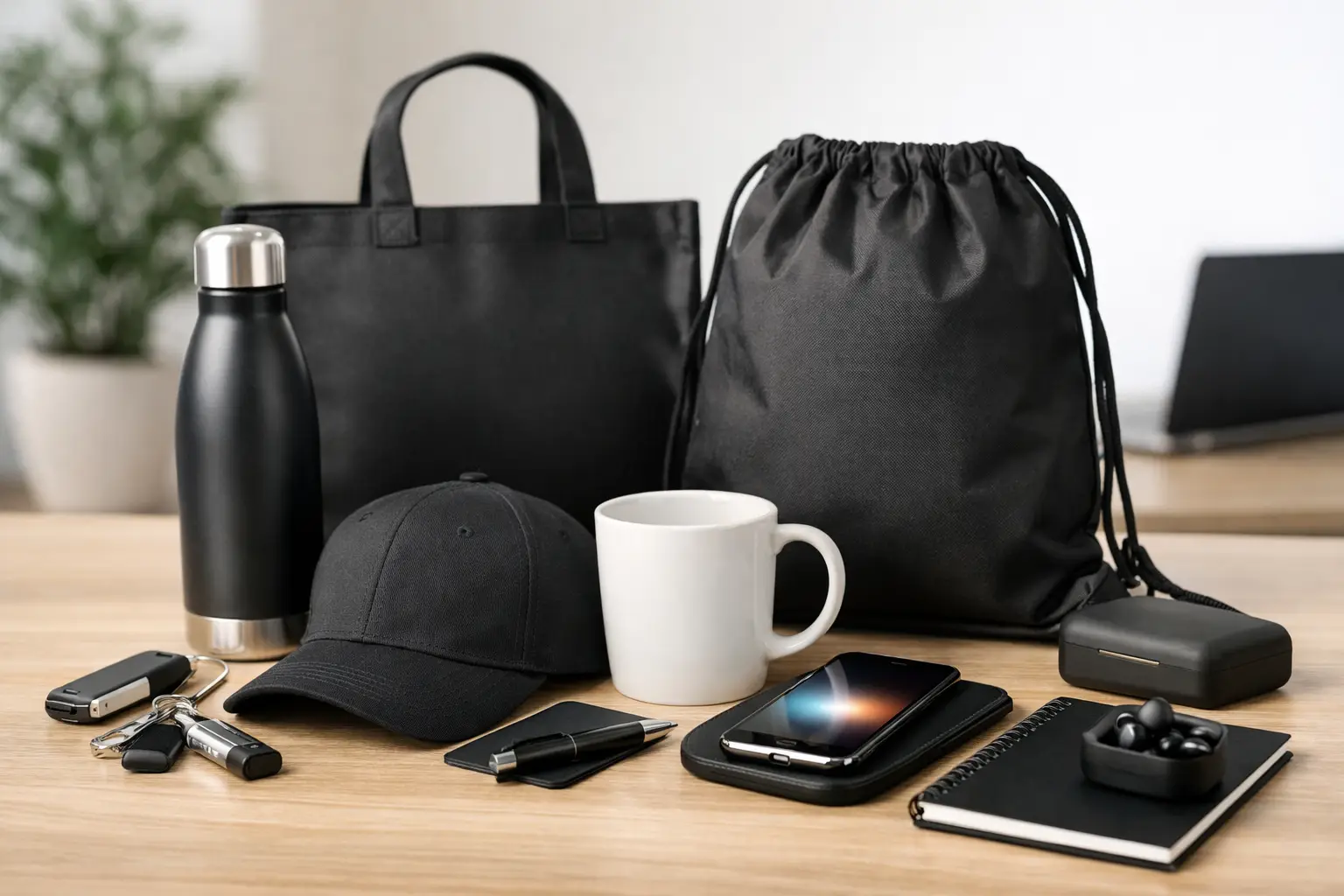
If your audience works in offices, items like notebooks, pens, mouse pads, mugs, and planners may have staying power. If they travel often, luggage tags, power banks, and insulated drinkware may fit better. If your brand appears at outdoor events, branded caps, sunscreen packets, and reusable bags can make more sense than desktop items.
Context matters just as much as audience. A hiring event calls for different products than a client appreciation campaign. Internal employee gifts should feel more personal than mass event giveaways. Government departments and institutional buyers may also need products that are practical, compliant, and easy to distribute at scale.
This is where many companies waste money. They pick products based on price alone, then wonder why boxes of unused items remain in storage months later.
Utility beats novelty most of the time
There is room for creative ideas, but usefulness usually wins. People keep products that solve small daily problems. They use products that fit naturally into routines. Every reuse becomes another brand impression.
That does not mean every item needs to be expensive. A well-designed pen can outperform a flashy gadget if the pen writes well, feels solid, and reflects the brand clearly. On the other hand, an expensive item with poor print quality or no real purpose can miss the mark.
Quality sends a message about your brand
Promotional products speak for your business even when no one from your team is in the room. If a tumbler leaks, if a tote tears, or if a logo peels off after one wash, the product becomes part of the brand impression.
That is the trade-off organizations need to weigh carefully. Ordering the lowest-cost option may stretch the budget in the short term, but it can weaken credibility. Spending more on fewer, better items often creates stronger results, especially when your audience includes prospects, partners, or stakeholders making higher-value decisions.
How to choose promotional products for brand promotion
The easiest way to choose well is to stop thinking of promotional items as separate from your brand strategy. They should support the same message, visual identity, and audience priorities as your website, packaging, signage, and printed materials.
Start with your objective. Are you trying to increase awareness, support a sales event, thank long-term clients, improve employee morale, or create consistency across locations? The answer changes everything from product choice to distribution.
Then look at your audience. A construction firm, healthcare provider, city department, retail business, and software company may all use promotional products, but they should not use them in the same way. Industry, environment, and audience habits should shape the decision.
Next, consider brand fit. The colors, tone, messaging, and packaging should feel recognizable. If your company presents itself as polished and dependable, your promotional products should reflect that. If your brand is more energetic and community-focused, your product mix can feel more casual and approachable.
Finally, think about logistics. Timing, inventory, shipping, and customization all matter. A great product that arrives after the event is not a great product. Neither is one that looks good in a mockup but cannot be produced consistently across your quantities and deadlines.
Common mistakes that weaken results
One of the most common issues is branding overload. Trying to fit a full logo, phone number, website, tagline, and social handles onto a small item usually creates clutter. Clear branding is more memorable than crowded branding.
Another mistake is choosing products without a distribution plan. If your team does not know who receives the item, when they receive it, and what message supports it, the campaign loses focus. Promotional products work better when they are tied to a moment – a welcome kit, a conference follow-up, a service anniversary, a community event, or a campaign launch.
A third issue is inconsistency. Businesses often order products from multiple vendors over time, which can lead to shifting colors, mismatched logos, and uneven quality. Those details may seem minor internally, but to an outside audience they can make a brand feel fragmented.
This is one reason many organizations prefer a partner who can look at the full picture instead of just processing an order. When promotional items connect to brand standards, packaging, print materials, and digital assets, the result feels far more intentional.
Where promotional products create the most value
Trade shows are the obvious example, but they are far from the only one. Branded products can support onboarding kits, sales leave-behinds, customer appreciation campaigns, donor outreach, recruitment events, internal culture programs, and community partnerships.
For service-based businesses, they can also reinforce trust after the first interaction. A client who receives a thoughtful branded item after a kickoff meeting or project launch is more likely to remember the experience. That small touch can help your company feel more established and more attentive.
For organizations with multiple departments or locations, promotional products can also help create brand consistency. Matching employee apparel, event materials, office items, and leave-behinds can make a brand feel coordinated across every touchpoint.
That kind of consistency rarely happens by accident. It usually comes from planning, not from ordering whatever seems available that week.
A smarter way to think about branded products
The most effective promotional strategy is not about giving away more stuff. It is about putting the right branded items in the right hands at the right time.
Sometimes that means low-cost products with wide reach. Sometimes it means premium items for a smaller audience. Sometimes it means building a complete branded package that includes print, packaging, and digital support so the product does not stand alone.
That broader view is where experience matters. A company like OneStop Northwest LLC can help businesses connect promotional products to the rest of their brand presence so every piece works together instead of competing for attention.
If your current promotional items are forgettable, the problem may not be the idea of branded merchandise. It may be that the products were chosen without enough strategy behind them. When promotional products are useful, well-made, and aligned with your brand, they do something simple but valuable – they keep your business present in everyday moments where trust is built over time.
The best promotional product is rarely the trendiest one. It is the one your audience keeps, uses, and quietly associates with a brand that understands what they need.