


Most procurement conversations about corporate apparel start in the wrong place. The first question is usually “how much does it cost per shirt?” when the more important question is “what does the full program actually cost, and what does it return?” That distinction changes everything.
Off-the-shelf workwear appears budget-friendly until you account for decoration costs, accelerated replacement cycles, compliance gaps, and the brand equity you leave on the table every time an employee walks out the door in generic clothing. Branded uniforms, by contrast, function as mobile marketing assets, team cohesion tools, and credibility signals, generating measurable returns that never appear on a purchase order.
This post works through the full comparison. You will see where the cost models actually diverge, why replacement cycles matter more than unit price, what compliance and industry-fit requirements do to the economics of generic workwear, and how to build the internal case for a custom program that earns organizational buy-in. Whether you are evaluating your first uniform program or rethinking an existing one, the goal here is a clear-eyed framework, not a sales pitch.
The Real Question Is Not Price Per Shirt
Most workwear decisions start with the wrong question. When the conversation opens with “how much does a shirt cost,” the comparison is already broken, because per-unit price only captures the moment of purchase, not the full weight of a two- to three-year program.
The two options are meaningfully different. Off-the-shelf workwear means bulk-purchased, generic, minimally decorated garments from retail or wholesale channels. Custom corporate apparel means purpose-specified garments with consistent decoration, color systems, and brand standards built in from the start, not applied as an afterthought.
Each stakeholder evaluates this differently. An HR director focuses on retention and replacement cost. A procurement team cares about SKU consistency and reorder friction. A marketing lead needs to know whether field staff look like they work for the same organization. An operations manager deals with the downstream problem when they do not. A per-unit price comparison serves none of them.
The right framework is total cost of ownership (TCO): decoration, replacement cycles, compliance fit, brand consistency, and employee engagement are all cost-bearing variables a standard workwear PO never captures. Understanding when a managed apparel program outperforms one-off uniform orders is where that analysis starts.
There is also a marketing dimension most organizations overlook. According to the Advertising Specialty Institute’s Ad Impressions research, branded apparel generates more than 3,400 impressions per item across its lifespan. That value does not appear on a purchase order, but it belongs in the calculation.
Why Off-the-Shelf Workwear Looks Attractive at First
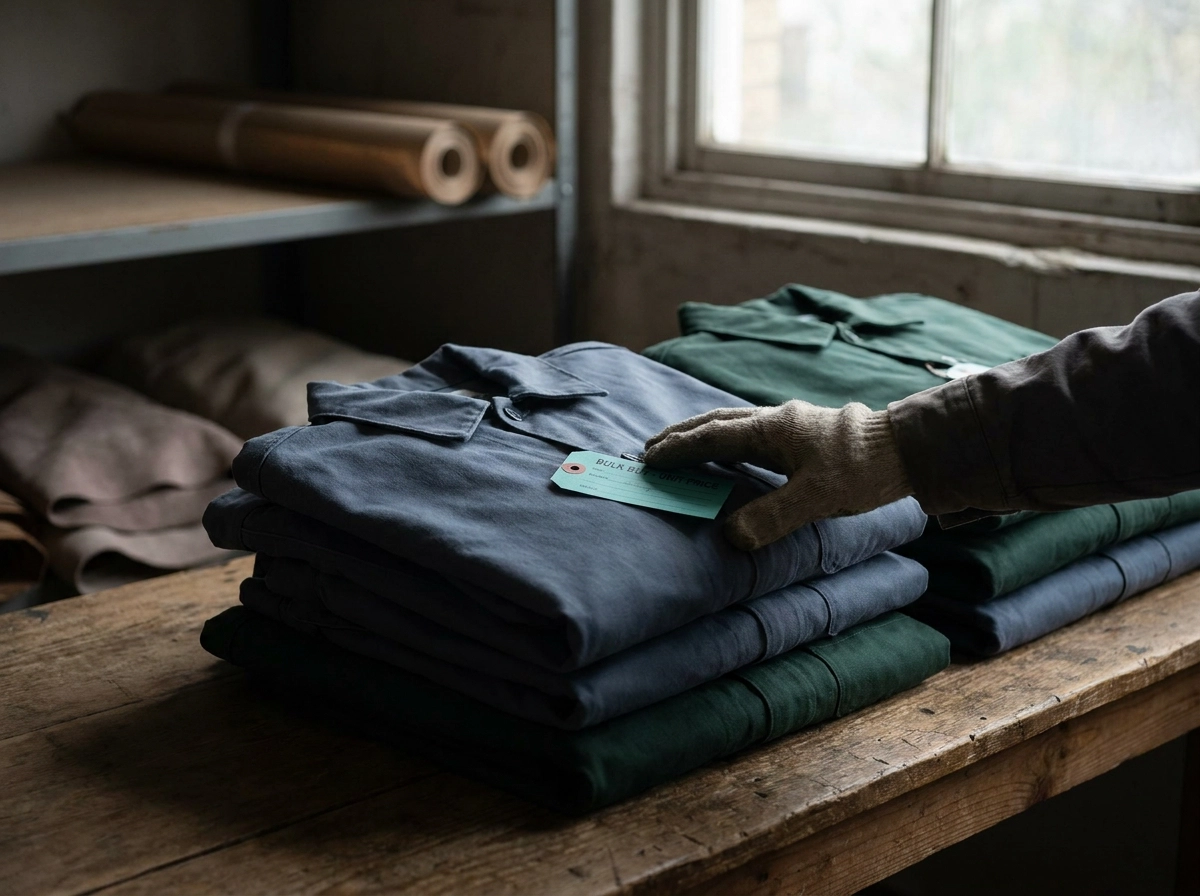
The appeal is straightforward, and it deserves an honest look before the total cost picture comes into focus.
The upfront unit cost advantage is real. Generic polo shirts or work jackets purchased in bulk from a wholesale supplier will almost always carry a lower sticker price than garments sourced through a managed custom corporate apparel program. That gap is visible on a purchase order, which makes it easy to justify in a budget meeting.
No minimums and fast turnaround solve real problems. If you need five shirts by Thursday for a new crew, off-the-shelf wins on speed. Organizations dealing with seasonal staffing spikes, urgent hires, or unpredictable headcounts genuinely benefit from the flexibility that wholesale purchasing offers. That is not a trivial advantage.
The perceived simplicity is also legitimate. No logo files to prepare, no decoration lead times to plan around, no brand standard coordination across departments or locations. For a busy operations manager, removing that administrative friction has real value.
High-turnover environments shift the math. When entry-level roles cycle through staff frequently, replacing a $12 generic shirt feels far less painful than replacing a $45 custom embroidered jacket. In those contexts, the lower replacement cost per person has genuine logic behind it.
The honest edge case: organizations with fewer than five employees, no customer-facing staff, and no brand consistency requirements may find off-the-shelf workwear genuinely sufficient. If that describes your situation, a structured custom apparel program would likely add more complexity than it solves. For everyone else, the per-unit price is only the beginning of the cost story.

Total Cost Comparison: Initial Purchase and Decoration
That lower sticker price erodes faster than most organizations expect once decoration enters the picture.
Most workwear buyers who want a logo on a generic shirt still need to pay for embroidery or screen printing, typically at retail decoration rates through a separate vendor. Add that cost to the base garment price and the gap between off-the-shelf and custom corporate logo apparel narrows considerably. Managing the garment vendor and the decorator separately also means absorbing coordination overhead and markup stacking across two suppliers.
Integrated programs eliminate that structure. When garment sourcing and decoration run through a single workflow, organizations pay one margin layer, not two, and avoid the quality-control friction that comes from vendor hand-offs. If your logo file requirements or placement specs raise questions, resources like this frequently asked questions about custom business logos guide can resolve them before they become order delays.
Decoration method is a cost variable, not just an aesthetic one. Embroidery on a well-specified garment holds through significantly more wash cycles than heat-applied decoration on a generic shirt. Heat transfer vinyl can show edge lift and cracking within 30 to 50 wash cycles; quality embroidery shows no degradation through the same range. That difference becomes a replacement cycle problem, not a cosmetic one.
For corporate apparel jackets, outerwear, or performance wear, material and fit specification matter equally. A logo jacket that pills or fades within one season costs more over time than a well-specified alternative, regardless of purchase price.
Buying power also reshapes the comparison. Working with a single-source partner that carries access to a broad supplier network and collective purchasing leverage can bring custom corporate apparel pricing closer to what organizations assume only off-the-shelf workwear can offer.
Replacement Cycles: Where the Economics Actually Break
Decoration durability, already established as a cost variable, determines how often garments must be replaced, and that frequency is where the economics break most visibly.
Cost-per-wear tells a different story than cost-per-unit. Consider a hypothetical: a $45 embroidered corporate uniform apparel shirt lasting 18 months versus a $15 generic shirt replaced every 5 months, the per-day cost of the pricier garment is likely lower, and every additional replacement event multiplies decoration, reorder, and administrative costs. Research into cost-per-wear as a purchasing framework confirms that unit price consistently misleads buyers when durability differences are not accounted for. Organizations that specify garment weight, construction, and decoration method upfront hold lower replacement rates by design, not by chance.
Unmanaged replacement purchasing also compounds brand consistency problems. When managers reorder whatever is in stock, or employees source their own replacements, the result is a workforce wearing four to six variations of the same brand within two years. Color drift, inconsistent logo placements, and varying fits accumulate until brand presentation is noticeably fragmented.
Structured programs solve this by design. Defined replacement cycles, standardized SKUs, and reorder triggers remove ad hoc behavior that drives both overspending and brand drift. For multi-location employers, healthcare organizations, hospitality groups, and public safety agencies, that structure also relieves real administrative burden. Replacement management scales with headcount, and a managed program keeps it from consuming procurement time disproportionate to its cost.
Compliance, Industry Fit, and the Hidden Costs of Generic
Brand consistency and replacement cycle problems compound when compliance enters the picture, and that is where off-the-shelf workwear carries its most serious hidden cost.
Many industries operate under workwear requirements that generic purchasing cannot reliably satisfy. Fire and law enforcement departments, healthcare providers, food service operations, and manufacturing environments all have visibility, safety, or sterility standards tied to specific garment specifications, not whatever a wholesale supplier happens to have in stock. Building a custom corporate uniform apparel program around those requirements from the start eliminates the compliance review layer that organizations otherwise have to bolt on after the fact.
The functional specifications matter in concrete ways: moisture-wicking performance for field crews, antimicrobial treatments for clinical staff, ANSI-rated high-visibility construction for utilities and roadwork, reinforced seams and abrasion resistance for trades and public safety. These are not features consistently available in generic workwear at predictable quality levels across reorders.
The financial exposure is real and rarely appears as a budget line item until something goes wrong. A non-compliant garment in a regulated environment can generate liability exposure that exceeds any per-unit savings by a wide margin. That risk does not show up on a wholesale invoice.
For schools, government agencies, and nonprofits, procurement compliance adds another layer. Organizations navigating grant requirements or government purchasing workflows benefit from working with a supplier that understands those processes and can provide sourcing documentation and transparency when auditors ask for it.
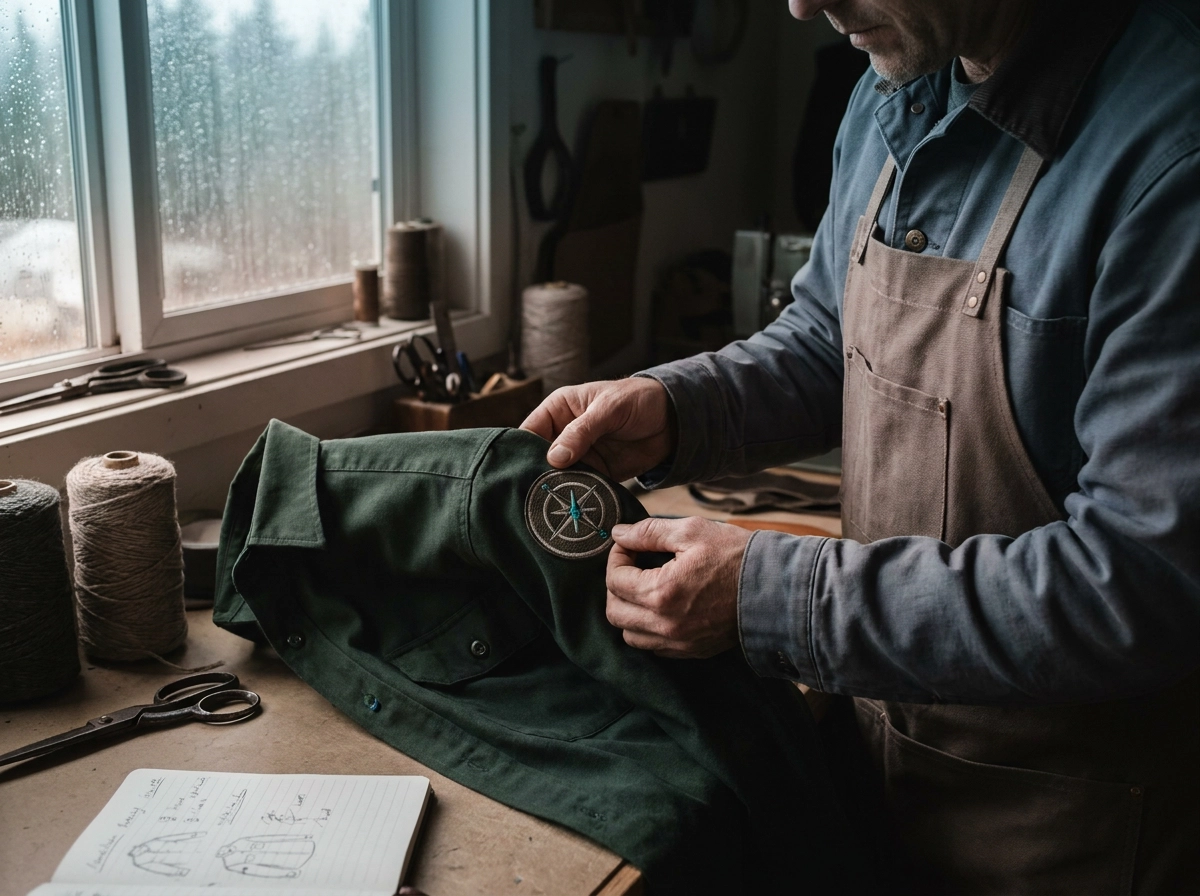
Brand Consistency, Employee Engagement, and the Value That Does Not Show on a PO
Compliance requirements define what a garment must do. Brand consistency defines what it must say, and that second requirement is where off-the-shelf workwear quietly fails most organizations.
Every time a uniformed employee walks into a client’s office, arrives on a job site, or staffs a service counter, that garment generates a brand impression. Every garment functions as a marketing asset, those 3,400+ lifetime impressions noted earlier represent real brand reach that never appears on a workwear PO.
The internal value is equally real. Gallup’s employee engagement research consistently links genuine team cohesion to measurable productivity gains, a dynamic that uniforms reinforce by removing visible status markers and strengthening shared identity, something especially relevant for organizations managing multiple departments, distributed locations, or mixed workforces where culture can fragment easily.
There is also a self-perception effect experienced HR teams recognize: employees who wear well-fitted, professionally decorated apparel tend to present themselves accordingly in customer-facing situations. A polished program signals that the organization takes presentation seriously, and employees respond to that signal.
Brand consistency across locations and seasons is structurally impossible to maintain with off-the-shelf purchasing unless someone owns SKU standardization and reorder sourcing full-time. Custom programs build consistency in from the start rather than chasing it administratively. Explore the broader case for branded merchandise benefits for teams to see how apparel fits into a wider brand ecosystem.
Organizations that move from generic workwear to a managed program consistently report one additional benefit: a stronger recruitment and retention signal. A well-run apparel program tells prospective and current employees that the organization invests in its people and its brand equally.
When Off-the-Shelf Workwear Is Actually the Right Answer
All of that said, custom corporate apparel is not the right solution for every organization, and claiming otherwise would be misleading.
A few contexts where generic workwear genuinely makes sense:
- Very small operations with no public-facing staff. A two-person repair shop with no walk-in customers and no compliance obligations does not need a structured apparel program. The administrative overhead of managing one would outweigh any benefit.
- One-time or event-specific needs. Volunteer shirts for a single weekend event, disposable coveralls for a temporary project, or promotional tees for a trade show that will not be reordered are reasonable off-the-shelf purchases, especially under time pressure.
- Extremely high-churn entry-level roles where brand presentation is genuinely secondary. This scenario, high churn, non-customer-facing roles, is less common than it appears, but it exists.
The honest caveat is this: most organizations that assume they fall into one of these categories have not run an actual comparison. Once decoration costs, replacement frequency, and the administrative time spent managing ad hoc purchasing are included, the economics of a structured program often look more favorable than the sticker price suggests.
Before assuming off-the-shelf is the practical choice, it is worth doing a basic custom branded apparel program cost review covering two to three years of garment, decoration, and replacement costs. That analysis tends to answer the question more clearly than intuition does.
How to Structure a Custom Corporate Apparel Program That Works
Once the economics confirm a custom program makes sense, execution quality determines whether it actually delivers.
Start with specification, not SKUs. Define function, compliance requirements, brand standards, and end-user environment before selecting any garment. Organizations that reverse this process, starting with a price point and working backward, frequently end up with garments that fail early or miss regulatory requirements. A jacket that wears out in six months is not cheaper than one that lasts two years.
Document decoration standards before the first order. Logo file formats, approved color systems, placement specifications, and decoration method requirements should be locked in writing before production begins. Resolving these inconsistencies after garments ship costs significantly more than defining them upfront.
Build the operational structure in from the start. Replacement schedules, new-hire onboarding, and multi-location consistency need structural answers, not ad hoc coordination. Organizations that treat these as problems to solve later manage them reactively, which adds administrative cost and invites brand drift.
For larger organizations, a managed employee apparel portal removes the central procurement bottleneck. A dedicated online store lets employees, department heads, or location managers order within approved parameters, eliminating per-transaction overhead without sacrificing brand control. OneStop Northwest’s programs to power your branded merchandise are built around exactly this kind of scalable distribution model.
Single-source program management reduces the friction that makes custom apparel harder than it needs to be. When sourcing, decoration, fulfillment, and reorder management run through one partner, the economics become easier to document and defend in a budget conversation.
Making the Case Internally: What to Bring to the Budget Conversation
Once you have a structured program designed, the next challenge is getting it approved. That conversation goes better when you walk in with numbers, not just intentions.
Build a 24-month TCO model before the meeting. Include per-unit garment cost, decoration cost, estimated replacement frequency, and administrative time spent managing ad hoc purchasing. The per-unit sticker price almost never survives that comparison intact.
Lead with compliance and brand consistency risk, not preference. If your industry carries visibility requirements, hygiene standards, or dress code mandates that off-the-shelf workwear cannot consistently meet, those gaps represent organizational liability. Budget holders respond to risk framing far more readily than to arguments about aesthetics or morale, even when the morale case is legitimate.
Position employee engagement and brand impression as supporting evidence. The 3,400+ impressions per garment figure is well-documented, and engagement research on team cohesion corroborates the value, but in a budget meeting both work better as supporting data than as the primary argument. Cost and risk get the approval; brand equity reinforces it.
Come prepared for the consultation. Bring headcount, current workwear spend, industry requirements, and brand standards. A single-source proposal covering garment sourcing, decoration, fulfillment, and reorder management turns an abstract internal argument into a concrete line-item comparison.
OneStop Northwest works with organizations across the Pacific Northwest and nationwide to develop custom corporate apparel programs built to withstand financial scrutiny. If your current workwear spend is harder to defend than it should be, that is usually a program design problem worth solving. The same clarity that applies to matching the right format to a print project applies here: define the requirements first, then build the program around them.
Conclusion
The choice between branded uniforms and off-the-shelf workwear is rarely about the price of a single shirt. It comes down to replacement cycles, compliance exposure, brand consistency, and the total program cost over time. Custom apparel frequently wins on all four fronts when organizations do the math honestly.
Generic workwear looks affordable until you account for faster degradation, inconsistent presentation, and the liability gaps it can create in regulated industries. A well-structured custom program eliminates those variables and gives budget holders a defensible, predictable line item.
The organizations that get this right come to the conversation prepared. They know their headcount, their current spend, and their requirements before the first proposal is written.
If your workwear program is harder to justify than it should be, the solution is usually a better program design. Start that conversation today.
Frequently Asked Questions
What is the difference between total cost of ownership (TCO) and per-unit price when evaluating workwear?
Per-unit price only captures the moment of purchase, while total cost of ownership (TCO) factors in decoration costs, replacement cycles, compliance requirements, brand consistency, and employee engagement over a 2-3 year program period. TCO provides a complete financial picture, while per-unit price comparisons ignore critical cost-bearing variables like decoration durability, replacement frequency, and administrative overhead. Understanding TCO is essential because a cheaper unit price often results in higher long-term costs due to faster degradation and more frequent replacements.
How does decoration durability affect the replacement cycle and overall program costs?
Decoration method directly impacts how long garments remain presentable and functional. Heat-applied decoration can show edge lift and cracking within 30-50 wash cycles, while quality embroidery shows no degradation through the same range. This means generic workwear with heat transfer decoration requires replacement much more frequently than custom corporate apparel with embroidery. Cost-per-wear—not cost-per-unit—tells the true financial story, and a $45 embroidered shirt lasting 18 months often costs less per day than a $15 generic shirt replaced every 5 months, when accounting for multiple replacement events, decoration, reorder, and administrative costs.
What are the hidden compliance and liability risks of choosing off-the-shelf workwear?
Many industries operate under specific workwear requirements for visibility, safety, or sterility that generic workwear cannot reliably satisfy. Fire and law enforcement, healthcare, food service, and manufacturing environments often require moisture-wicking, antimicrobial treatments, ANSI-rated high-visibility construction, or reinforced seams. Generic workwear does not consistently provide these specifications across reorders. Non-compliance in regulated environments creates real liability exposure that can far exceed any per-unit savings. Building a custom program around compliance requirements from the start eliminates the risk of retrofitting standards after purchase.
What measurable value does branded apparel provide that does not appear on a purchase order?
According to the Advertising Specialty Institute's Ad Impressions research, branded apparel generates more than 3,400 impressions per item across its lifespan—representing substantial brand reach that never appears on a workwear PO. Additionally, Gallup's employee engagement research links uniforms to measurable productivity gains by removing visible status markers and strengthening shared identity. Branded apparel also signals organizational investment in employees and brand presentation, improving recruitment and retention. Employees wearing well-fitted, professionally decorated apparel tend to present themselves more professionally in customer-facing situations, reinforcing the brand signal.
When is off-the-shelf workwear actually the right choice for an organization?
Off-the-shelf workwear makes genuine sense in limited contexts: very small operations (fewer than 5 employees) with no public-facing staff and no compliance obligations; one-time or event-specific needs like volunteer shirts for a single weekend event or temporary project apparel; and extremely high-churn entry-level roles where brand presentation is genuinely secondary. However, most organizations that assume they fit these categories have not run an actual comparison. A basic 2-3 year cost review including decoration, replacement frequency, and administrative time management often reveals that a structured custom program is more economical than the sticker price suggests.