

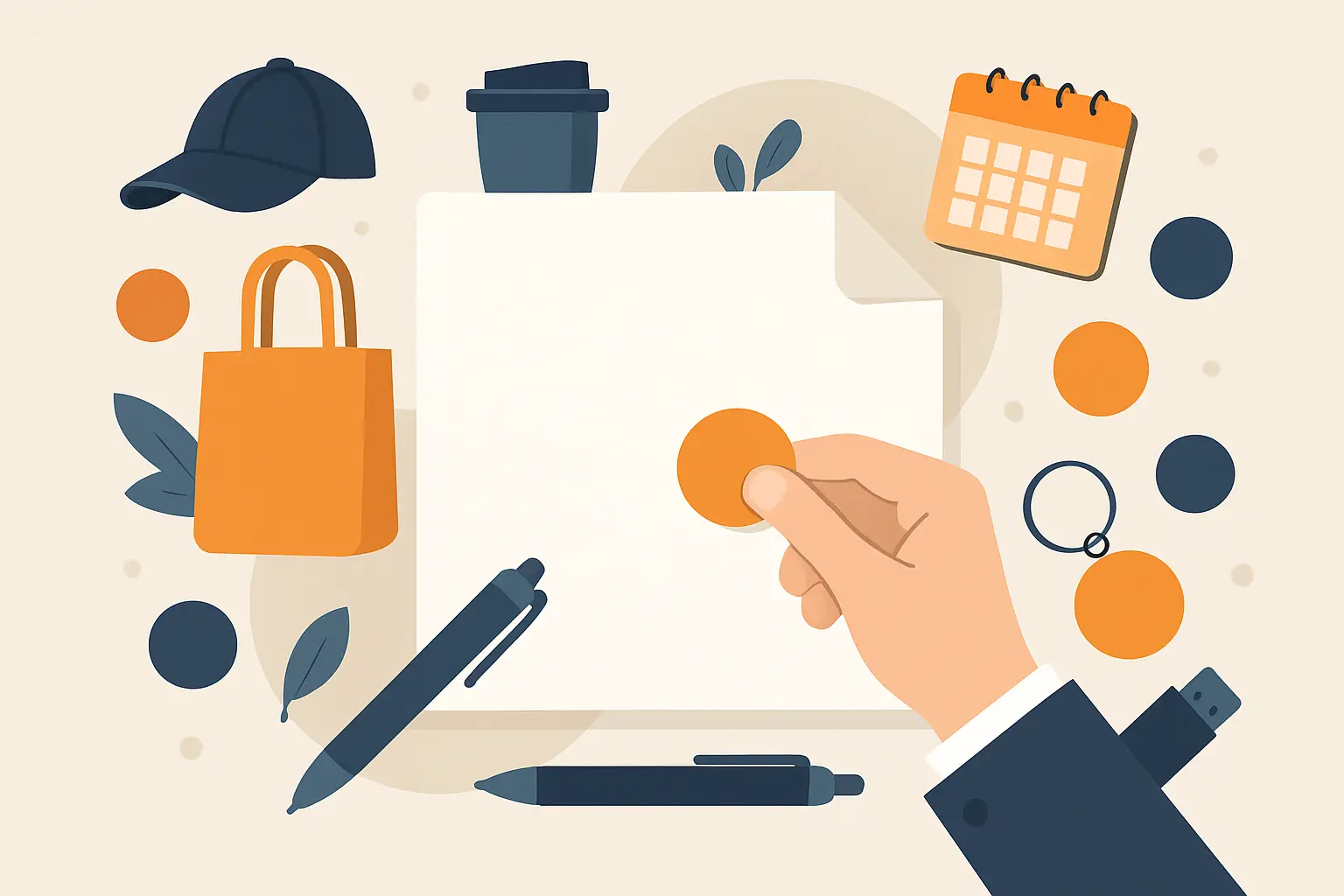
Someone walks into your lobby, grabs a pen from the counter, and tosses it in their bag without thinking. Two weeks later, they’re on a call, the pen is in their hand, and your logo is right where their eyes land while they take notes. That’s not flashy marketing. It’s the kind that shows up quietly, repeatedly, and at the exact moment someone needs it.
Promotional products get dismissed as “swag” until you watch what actually happens in real life: people keep useful items, share them with coworkers, and form mental shortcuts around the brands that consistently help them solve small problems. For businesses and public organizations trying to stay visible without burning through ad budgets, the benefits of promotional products can be surprisingly practical.
Why promotional products still work when ads get ignored
Most organizations are dealing with the same constraint: attention is expensive. Digital ads are easy to launch and easy to scroll past. Email campaigns perform well only when lists are healthy and messaging is consistent. Meanwhile, a physical item has a different job – it doesn’t need a click. It needs to earn a spot on a desk, in a kitchen drawer, in a glovebox, or in a conference tote.
That physical presence creates a type of brand reinforcement that’s hard to replicate elsewhere. It’s not better than digital marketing. It complements it. Promotional products work best when they are part of a coordinated brand system: consistent logo usage, color standards, messaging, and distribution plans.
The real benefits of promotional products for businesses and agencies
1) They turn brand awareness into repeated exposure
Awareness is often treated like a one-time event: someone sees a billboard, watches an ad, notices a sign. Promotional products are different because they can deliver exposure dozens of times after the initial handoff.
A quality tumbler might live on a desk for months. A badge reel might be clipped on daily. A notebook can travel through meetings across departments. You’re not paying for a single impression – you’re paying for ongoing visibility in the places where decisions are made.
The trade-off is that exposure only happens if the item is genuinely used. Cheap items that break or feel disposable can backfire, because they associate your brand with “not worth keeping.”
2) They create a practical reason to remember you
Many organizations struggle with the same challenge: you’re competent and reliable, but so are your competitors. Promotional products can become a small, tangible differentiator.
If you’re a contractor, a property manager, a bank, a regional healthcare provider, or a government office, your customer may only interact with you occasionally. A useful item bridges the gap between those interactions. It keeps your name nearby without forcing another touchpoint.
This is especially effective for service businesses where the “product” is mostly invisible. A great service experience plus a thoughtful branded item helps people remember who delivered the experience.
3) They support sales teams without feeling like a pitch
Sales enablement doesn’t always mean more brochures. Sometimes it means giving reps an easy reason to re-engage a prospect.
A small “drop by” package for a warm lead can feel personal, especially if the items are relevant to the prospect’s environment. Think desk accessories for office-based teams, jobsite gear for field operations, or event-ready kits for organizations that host community meetings.
It depends on your sales cycle. If your sales process is long and consultative, a few well-timed items can reinforce professionalism and persistence. If your sales cycle is fast, promotional products might be better used as a post-sale reinforcement to reduce buyer’s remorse and encourage referrals.
4) They improve event ROI by extending the life of the event
Trade shows, recruiting fairs, conferences, community events – they’re expensive. Travel, booths, staffing, print materials, and the opportunity cost of time add up quickly. The question is what happens after the event.
A promotional product is one of the few event expenses that keeps working after everyone goes home. The right item also creates a reason for attendees to visit your booth or table in the first place, which matters if your team is competing against a row of other organizations.
The catch is that “more stuff” doesn’t equal better results. If everyone is giving away the same stress ball, yours won’t stand out. The product choice needs to match the audience and the context of the event.
5) They strengthen internal culture and retention
Promotional products are often treated as external marketing, but internal branding is where they can quietly do a lot of work.
New hire kits, service anniversary gifts, safety program rewards, and team recognition items reinforce belonging. For hybrid or multi-location organizations, branded items can also reduce that “we’re all separate” feeling. A consistent look across apparel and office materials helps people feel like they’re part of the same operation, even when they’re not in the same building.
This is one area where quality matters more than quantity. Employees can spot the difference between a thoughtful kit and a leftover box of last year’s items.
6) They make your brand more consistent across departments
Many organizations unintentionally dilute their brand by letting each department source its own materials. The result is mismatched logos, colors that don’t align, and a patchwork of messages that confuse customers and constituents.
Promotional products can become a forcing function for brand consistency. When you standardize approved logos, brand colors, and templates for items like apparel, pens, folders, and event materials, you reduce the “everyone does their own thing” problem.
For government and public-sector organizations, consistency can also support credibility. When communications look unified, the organization feels more coordinated and reliable.
7) They can be more cost-effective than repeated paid impressions
Promotional products aren’t “cheap,” but they can be efficient. A single item that lasts for months can outperform a short run of paid impressions if your goal is sustained recognition.
This is easiest to see with products that have long shelf life: drinkware, outerwear, quality notebooks, durable bags, or desk items that don’t get tossed. When you calculate cost per month of use, the economics can make sense, especially for local and regional brands.
That said, efficiency depends on targeting. Ordering 1,000 items because the unit price is lower doesn’t help if you only have a plan to distribute 200 thoughtfully.
8) They encourage referrals and “pass-along” impressions
One of the most underrated benefits of promotional products is that people share them.
A spare tote ends up with a neighbor. A second pen gets handed to a colleague. A branded hoodie gets borrowed and worn somewhere else. Those pass-along impressions are hard to measure, but they are real, and they often reach people who would never have been targeted by your ads.
This works best with items that are either broadly useful (like a charger) or visibly appealing (like a well-designed hat). If the design is cluttered or overly salesy, people are less likely to use it in public.
9) They help you show up as prepared and professional
There’s a credibility boost that comes from having the right branded materials at the right time. When your team arrives at a meeting with consistent folders, notebooks, or presentation materials, it signals organization. When event staff are wearing coordinated apparel, it signals readiness. When welcome packets are neatly packaged, it signals that you care about the experience.
This matters for organizations that compete on trust: professional services, healthcare, public agencies, financial institutions, and B2B providers. Small details influence how people judge the larger promise.
Choosing products that actually deliver results
If you’ve ever ordered promotional items and felt underwhelmed, it usually comes down to one of three issues: the product didn’t match the audience, the branding was inconsistent, or there was no distribution plan.
A practical approach starts with where the item will live and how it will be used. Desk items succeed in office-heavy environments. Jobsite gear matters for field teams. For community outreach, items that support daily life (totes, bottles, pantry-friendly tools) often outperform novelty.
Next is design discipline. Clean logo placement and consistent colors tend to age better than cramming on taglines, phone numbers, and web addresses. If you want people to keep it, make it something they’re comfortable carrying.
Finally, decide how you’ll get items into the right hands. Promotional products work best when they support a moment: onboarding, a renewal, a milestone, a service call, a proposal drop-off, or a community event.
When promotional products are the wrong move
Promotional products are not a cure-all. If your brand message is unclear, your website is outdated, or your customer experience is inconsistent, a giveaway can’t fix that. In fact, it can amplify the gap between what you promise and what you deliver.
They’re also not ideal if you have no way to distribute them strategically, or if your audience has strict compliance rules that limit what they can accept. Some industries and government contexts require careful policies, so it’s worth checking requirements early.
When promotional products are paired with strong brand foundations, though, they become a multiplier. They keep your identity visible while your other marketing and communication efforts do the heavier lifting.
For organizations that want promotional products to fit into a broader brand system – alongside design standards, web presence, and consistent messaging – OneStop Northwest LLC often helps clients align the pieces so the items feel like part of the brand, not an afterthought.
A helpful way to think about promotional products is simple: the best item is the one your audience chooses to keep. If you start there, you’ll naturally make better decisions about quality, design, timing, and distribution – and your brand will be the one that shows up when it counts.