

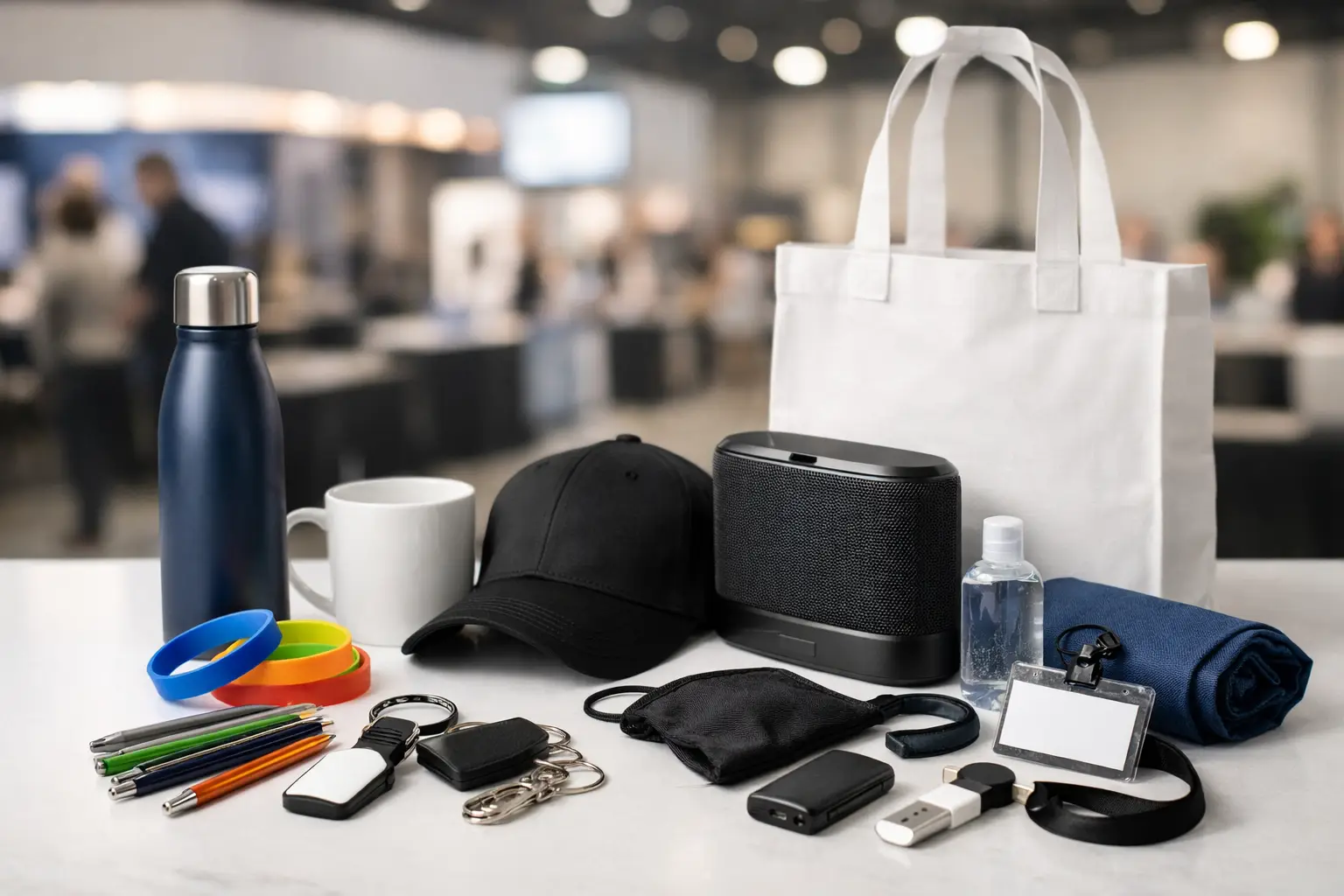
A crowded event floor gives you only a few seconds to make an impression. Your booth design matters, your team matters, and so does what people carry away with them. The right giveaway keeps your brand in hand, on desks, and in daily routines long after the event ends.
That is why choosing the best promotional products for events is less about picking the cheapest item in bulk and more about matching the product to the audience, setting, and goal. A giveaway can support lead generation, reinforce a premium brand image, or simply make your company easier to remember. The product has to fit the job.
What makes promotional products work at events?
The best event giveaways do three things well. First, they are useful enough that people keep them. Second, they connect naturally to your brand instead of feeling random. Third, they fit the environment. A fast-moving trade show has different needs than a recruiting fair, municipal event, conference, or internal company gathering.
This is where many organizations lose value. They order a product because it is inexpensive, not because it supports the experience they want attendees to have. A branded item that gets tossed before someone leaves the venue is not really a cost saver.
For most businesses and public organizations, the best approach is practical. Choose items people can use right away or take back to the office. Then make sure the design is clean, readable, and consistent with the rest of your brand materials.
The best promotional products for events right now
Some items keep performing year after year because they solve a simple problem for attendees. Others work best when the audience or event type is highly specific. The products below consistently offer strong value when selected with intention.
1. Tote bags
Tote bags remain one of the best promotional products for events because they start working immediately. People use them to carry handouts, samples, notebooks, and other swag around the venue. That creates visibility during the event itself, not just after.
They also offer a larger print area, which helps if your logo, website, or message needs space to breathe. The trade-off is cost. Higher-quality totes feel better and last longer, but they cost more than many small giveaway items. If your audience includes professionals, conference attendees, or community partners, the extra investment often pays off.
2. Pens that actually write well
A pen is only forgettable when it is poorly made. A smooth-writing pen still earns its place in offices, conference rooms, reception areas, and backpacks. It is a low-friction item that works across industries, from healthcare and education to local government and small business.
This is one area where quality matters more than many buyers expect. If the pen feels flimsy or skips when writing, it reflects poorly on your brand. A modest upgrade in barrel style, ink quality, or grip can make a standard product much more effective.
3. Reusable water bottles
Branded water bottles are a strong choice for wellness-focused events, conferences, outdoor gatherings, and employee programs. They suggest durability and practicality, and people are more likely to reuse them than many novelty products.
They do take up more budget and space, so they may not fit every campaign. If you are trying to hand something to every passerby at a large trade show, water bottles can be too bulky. If your goal is to make a stronger impression with qualified prospects or staff, they can work extremely well.
4. Portable phone chargers
At any event, a low phone battery creates instant relevance. That is why portable chargers and power banks tend to stand out. They solve a real problem at the exact moment many attendees feel it.
These products position your brand as helpful and prepared. They are best reserved for higher-value interactions because the unit cost is higher than common giveaways. For VIP prospects, speakers, or targeted outreach, they can leave a much stronger impression than a bag of lower-cost items.
5. Notebooks and sticky notes
Meetings, breakout sessions, and training events still create demand for analog note-taking. A well-designed notebook feels professional and useful, especially when paired with a quality pen. Sticky notes work well too, particularly in office environments where reminders still live on monitors, desks, and planners.
These products are especially effective for B2B events and government audiences because they fit naturally into the workday. The key is clean branding. A subtle logo often gets more use than a cover overloaded with graphics.
6. Drinkware for desks and commutes
Mugs, tumblers, and insulated cups offer repeated visibility because they stay in rotation. They work well when your audience is likely to return to an office, use a home workspace, or commute regularly.
The challenge is selecting the right style. A ceramic mug may suit internal gifting or local meetings, while an insulated tumbler is better for mobile professionals. If budget is tight, fewer high-quality drinkware items often outperform a large order of cheaper versions that do not last.
7. Badge holders and lanyards
These are easy to underestimate, but they can be highly visible at conferences and organized events. Since attendees wear them throughout the day, your branding stays in sight. For event hosts and sponsors, they are particularly effective.
That said, lanyards are most useful when tied to the event experience itself. If you are an exhibitor rather than the organizer, they may not be practical unless you are sponsoring registration or access points.
8. Tech accessories
Items like webcam covers, cord organizers, mouse pads, and phone stands work well for office-based audiences. They are compact, relevant, and easy to distribute. For companies speaking to remote teams, administrative staff, or hybrid workers, tech accessories feel current without being flashy.
Not every tech item has equal staying power. Focus on products that do one small job well. Complicated gadgets often look exciting in a catalog but get ignored in real life.
9. Apparel with a simple design
T-shirts, caps, and quarter-zips can be strong brand builders when the design is something people would genuinely wear. That usually means subtle branding, better fabric, and a look that does not feel like a walking ad.
Apparel is not always the best choice for mass giveaway tables because sizing creates friction. It works better for staff uniforms, customer appreciation, team events, and select attendee groups. When done well, though, it creates a longer brand lifespan than many smaller items.
10. Hand sanitizer and wellness items
Health-conscious products still have a place, especially at public events, healthcare settings, schools, and community outreach programs. Hand sanitizer, wipes, and small wellness kits are practical and easy to distribute.
These items may not feel exciting, but usefulness matters more than novelty. If your audience values preparedness and public service, they can support a thoughtful brand message.
11. Snack packs and edible giveaways
Sometimes the best giveaway is the one people use immediately. Branded snacks, mints, coffee packets, or candy can help draw traffic and create a friendly first interaction. They are especially effective when paired with a deeper conversation or another takeaway item.
Because they are temporary, edible products should not carry the full burden of brand recall. Think of them as engagement tools rather than long-term reminders.
How to choose the right giveaway for your event
The smartest question is not, “What is popular?” It is, “What do we want this product to accomplish?” If your event goal is broad visibility, choose a product with mobility, like a tote bag or lanyard. If your goal is longer-term desk presence, consider notebooks, pens, or drinkware. If you are trying to create stronger recall among a smaller group of decision-makers, a higher-value tech item may make more sense.
Audience matters just as much as budget. A municipal agency may prioritize practicality and community usefulness. A growing business at a trade show may want items that support lead follow-up and office visibility. A company recruiting talent at a campus event may lean toward wearable items or tech accessories.
It also helps to think beyond the product itself. Design, color choice, imprint quality, and message placement all affect whether an item feels polished. A reliable product with poor branding can still miss the mark. That is why many organizations benefit from working with a partner that can align promotional items with broader brand standards, event goals, and supporting materials. At OneStop Northwest, that kind of coordination is often what turns a giveaway into a more consistent brand experience.
A few mistakes worth avoiding
The most common mistake is choosing based only on unit price. Low-cost items can be effective, but only if they are still useful and reasonably well made. Another mistake is ordering something trendy that does not fit your audience. What gets attention at a startup expo may feel out of place at a government conference.
It is also easy to overbrand. Bigger logos are not always better. People tend to keep items that look clean and professional, especially in workplace settings. Finally, do not wait too long to order. Rushed timelines often limit product choices, increase costs, and reduce customization quality.
A good event giveaway should feel like an extension of your brand, not an afterthought. When the product is useful, well designed, and suited to the audience, it keeps working long after the booth comes down. The best choice is usually the one your attendees will still be using next week.