

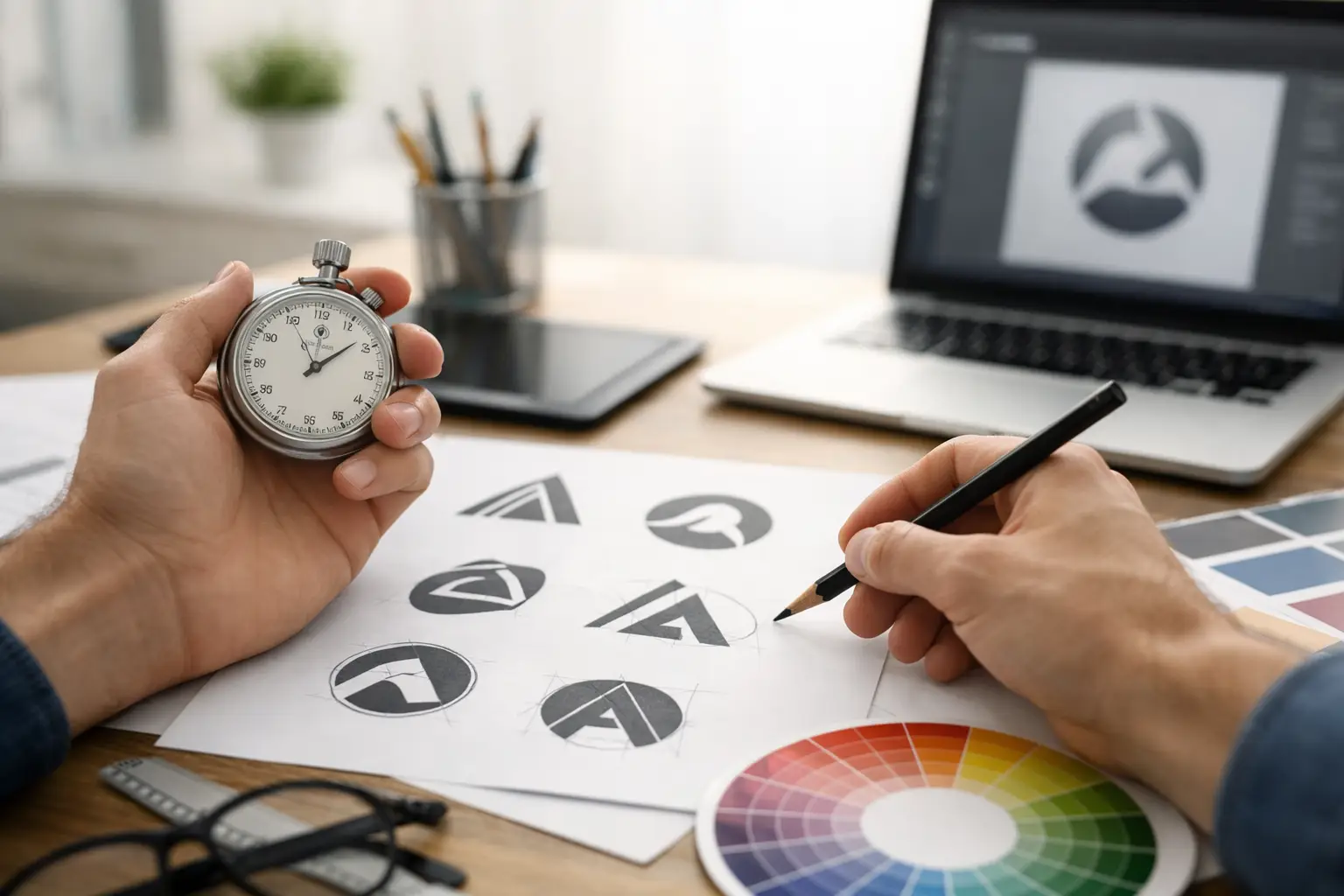
A rushed logo usually looks rushed. You can often spot it right away – generic icon, mismatched fonts, and a design that feels disconnected from the business it is supposed to represent. That is why one of the first questions clients ask is, how long does logo design take, and the honest answer is that the timeline depends on how much strategy, revision, and decision-making are built into the process.
For most businesses, a professional logo takes anywhere from one to six weeks. A simple project for a small company with clear direction may move quickly. A more complex brand identity for an organization with multiple stakeholders, formal approvals, or a broader rollout can take longer. The real timeline is shaped less by the artwork itself and more by the clarity of the brand, the scope of the project, and how efficiently feedback is handled.
How long does logo design take for most businesses?
If you are looking for a practical benchmark, many logo projects fall into three rough ranges.
A basic logo project may take about one to two weeks when the business already has a clear name, audience, style preference, and decision-maker. In these cases, the designer is not starting from scratch strategically. They are solving a focused visual problem.
A more typical custom logo timeline is two to four weeks. This allows time for discovery, concept development, revisions, and final file preparation. For many small and midsize businesses, this is the sweet spot. It gives enough room to think carefully without dragging the process out.
A more involved identity project can take four to six weeks or more. That is common when the logo is part of a larger branding effort, when multiple departments need to approve the work, or when the business needs supporting brand assets such as color systems, typography guidance, social media graphics, packaging direction, or website coordination.
Why logo design takes longer than people expect
Many people assume the logo itself should only take a few hours. Technically, drawing shapes or selecting type may not take long. Creating the right logo is a different task.
A strong logo has to do several jobs at once. It needs to reflect your brand personality, feel credible to your audience, work across print and digital formats, remain readable at different sizes, and stand apart from competitors. Getting all of that right requires research and testing, not just design software.
There is also a business reality that affects timing. In many organizations, the design is reviewed by an owner, marketing lead, operations team, and sometimes a board or public-facing department. The more people involved, the longer the process tends to take. That does not mean collaboration is a problem. It just means alignment should happen early, not after concepts are already on the table.
The typical stages of a logo project
Most professional logo projects move through a few clear phases. The names may vary from one agency to another, but the structure is usually similar.
Discovery and brand alignment
This is where the project gets grounded. The designer or branding team gathers information about your business, audience, market, values, and goals. They may ask about competitors, customer perception, brand personality, and where the logo will appear.
This phase can take a couple of days or a full week depending on the size of the organization and how prepared the client is. If your team has already defined your mission, audience, and visual preferences, things move faster. If those basics are still being debated internally, the design timeline stretches before design even starts.
Concept development
Once the strategy is clear, the design team begins exploring directions. That may include typography studies, symbols, color routes, and logo systems. Good concept development is not about producing endless options. It is about presenting thoughtful choices with a reason behind each one.
This phase often takes several days to two weeks. It depends on complexity, the number of concepts promised, and whether the logo is purely typographic or includes custom illustration or icon work.
Review and revisions
This is usually where the timeline becomes unpredictable. Some clients know what fits immediately. Others need time to compare directions, gather internal feedback, and decide what the logo should communicate.
A revision round itself might be quick. Waiting on feedback is what often adds days or weeks. Vague comments can slow things down too. Feedback like make it pop or try something more modern is hard to act on unless everyone shares the same definition. Clear, consolidated feedback saves time and produces better work.
Finalization and file delivery
After approval, the logo still needs to be cleaned up and prepared for real-world use. That includes final file formats, color variations, black-and-white versions, and sizing considerations. In some cases, basic brand guidelines are included so your team knows how to use the logo consistently.
This final step is often completed within a few days, but it matters more than many people realize. A logo is only useful if it is delivered in formats that work across signage, websites, social media, print pieces, uniforms, packaging, and presentations.
What can slow down a logo timeline?
The biggest delays usually have nothing to do with design skill. They come from process issues.
Unclear brand direction is a common one. If a company has not decided who it wants to reach or how it wants to be perceived, the logo becomes a place where larger strategy questions show up. That is not necessarily bad, but it does mean the project shifts from design execution into brand clarification.
Too many decision-makers can also create drag. When five people submit separate opinions, the project can start to chase preferences instead of business goals. The strongest projects usually have one lead point of contact who gathers feedback and filters it into a clear response.
Scope changes matter too. A project that starts as logo design may grow into naming, tagline development, packaging updates, web graphics, or a full brand refresh. Those additions may be worthwhile, but they affect the schedule.
Finally, urgent timelines can create a trade-off. Yes, a logo can sometimes be developed quickly. But speed often reduces the time available for exploration and testing. That may be acceptable for a temporary mark or internal initiative. It is less ideal for a logo expected to represent the business for years.
How to get a strong logo faster
If timeline matters, preparation matters just as much. Businesses that move efficiently usually do a few things well before the first concept is ever presented.
They define their audience clearly. They understand whether they want to appear established, innovative, approachable, premium, or highly technical. They gather examples of visuals they like and explain why. They also decide early who has approval authority.
It helps to think beyond the logo itself. Where will it be used most often? A logo for a government initiative, a contractor, a retail product, and a software platform may all need different practical considerations. When those use cases are identified upfront, the design process gets sharper.
This is one reason a collaborative branding partner can save time overall. At OneStop Northwest LLC, we often see businesses lose weeks not because design is difficult, but because the brand decisions around the design were never organized at the start.
Cheap, fast, and custom: you usually pick two
There is no shortage of quick logo options online. Some are fine for early-stage ideas or temporary use. But businesses that need credibility, consistency, and long-term brand value should be careful about choosing speed over fit.
Template-based logos can be created in a day, sometimes in minutes. The trade-off is originality and flexibility. They may look acceptable in a small social media profile but fall apart across signage, print materials, packaging, or a full website.
A custom logo takes longer because it is built around your business rather than selected from a library. That extra time is where strategy shows up. It is also where better long-term results tend to come from.
So, how long does logo design take if you want it done right?
For most organizations, the realistic answer is two to four weeks for a professional custom logo, with more time needed for complex branding or multi-stakeholder approval. That timeline gives enough room for discovery, concept work, revisions, and proper final delivery.
If someone promises a fully strategic, highly original logo overnight, it is fair to ask what is being skipped. Sometimes speed is necessary, and there are ways to move efficiently. But when a logo will represent your business across every touchpoint, a little time spent upfront can prevent a lot of inconsistency later.
A good logo is not just a design file. It is a decision about how your organization wants to be recognized, remembered, and trusted. That is worth giving the process the time it needs.