

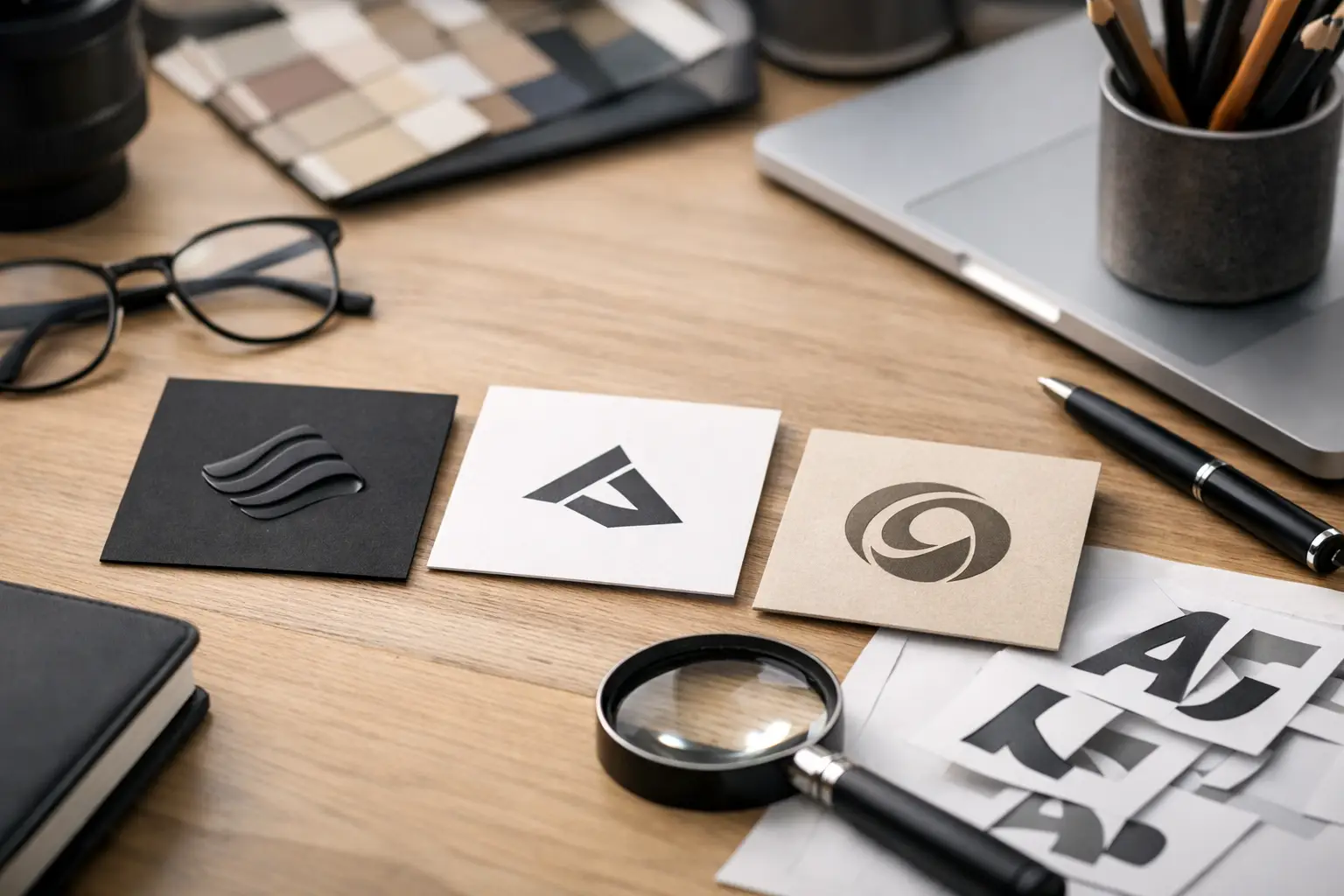
A logo can look polished on screen and still fall apart the moment it lands on packaging, uniforms, signage, or a government proposal. That is why choosing the best fonts for brand logos is less about personal taste and more about fit, clarity, and long-term flexibility. The right typeface helps people recognize your business quickly, trust it faster, and remember it longer.
For many organizations, font choice gets pushed to the end of the branding process. A name is approved, a symbol is drafted, and then someone asks which font should go under it. In practice, the font often carries as much of the brand personality as the icon does. It can make a company feel established, modern, technical, premium, friendly, or practical in just a few letters.
What makes the best fonts for brand logos work
The best logo fonts are not always the trendiest ones. They are the ones that stay legible at small sizes, hold their shape across print and digital formats, and match the brand’s positioning.
A law firm, a regional contractor, and a startup software provider should not all sound the same visually. A font that works beautifully for a boutique skincare line may feel too delicate for a public sector vendor or too decorative for an industrial supplier. This is where strategy matters. Good branding decisions come from understanding where the logo will live, who needs to trust it, and what message it should send before anyone reads a single line of copy.
In our experience, the strongest logo typography usually balances four things: memorability, readability, distinctiveness, and range. If a font looks unique but becomes hard to read on a business card or embroidered shirt, that is a problem. If it is clean but generic, the logo may disappear into a crowded market.
12 best fonts for brand logos to consider
1. Helvetica Now
Helvetica remains a reliable choice for brands that want clarity and confidence. It is neutral in a useful way, which makes it a strong option for companies that need broad appeal across industries. Professional services, technology firms, and organizations with complex communications often benefit from its clean structure.
The trade-off is familiarity. Because Helvetica has been used so widely, it may need custom spacing or slight modifications to feel distinctive in a logo.
2. Futura
Futura brings a geometric, modern feel without looking cold when used well. It works especially well for brands that want to appear efficient, forward-looking, and design-conscious. Its circular forms can feel approachable while still being precise.
That said, some letterforms can feel rigid in longer names. It is often strongest in short wordmarks.
3. Avenir
Avenir sits in a very practical middle ground. It feels modern but not severe, polished but not overly corporate. For businesses trying to project professionalism with a human edge, this font can be a smart fit.
It is a strong candidate for service-based brands because it adapts well across websites, signage, print materials, and presentations.
4. Gotham
Gotham has a sturdy, confident personality that reads well in many settings. It feels contemporary and dependable, which is why it has remained popular in branding for years. If your organization wants to look established without appearing traditional, Gotham can do that well.
Its popularity is also its challenge. Like Helvetica, it often benefits from customization so the final logo does not feel off-the-shelf.
5. Proxima Nova
For brands that live heavily online, Proxima Nova is often worth considering. It has a familiar digital friendliness and performs especially well on screens. Companies focused on web, SaaS, communications, or modern service delivery often find it approachable and flexible.
It is less distinctive than some other options, so it works best when paired with a strong brand system or custom logo treatment.
6. Garamond
When a brand needs to communicate heritage, quality, or trust, Garamond can be a strong serif choice. It has a refined, literary quality that suits professional firms, luxury products, and organizations that want to feel established.
The caution here is tone. In some industries, Garamond may feel too traditional if the brand is trying to signal innovation or speed.
7. Baskerville
Baskerville offers elegance with a bit more authority than softer serif options. It is excellent for logos that need sophistication without becoming ornamental. Consulting firms, higher-end retail brands, and professional services can benefit from its structured look.
It also tends to reproduce well in print, which matters for packaging and formal documents.
8. Montserrat
Montserrat has become a favorite for modern branding because it feels clean, urban, and easy to read. It works well for businesses that want a fresh, accessible look without drifting into casual territory.
Its drawback is overuse. If you choose it, thoughtful customization can make a major difference.
9. Frutiger
Frutiger is highly legible and practical, which makes it a strong option for brands where clarity matters as much as personality. Healthcare, transportation, public-facing services, and government-adjacent organizations often benefit from that balance.
It is not flashy, and that is part of its value. It supports trust and usability.
10. Didot
Didot is bold, elegant, and high contrast. It can create a premium, editorial feel very quickly, especially for beauty, fashion, or luxury brands. Used carefully, it makes a memorable statement.
But it is not forgiving. Thin strokes can become hard to reproduce at small sizes, so it is usually a poor fit for logos that must work in tiny digital spaces or on promotional products.
11. Rockwell
Rockwell brings strength and personality through its slab serif design. It feels grounded, direct, and dependable. This can work particularly well for construction, manufacturing, food brands, and businesses that want to communicate substance.
If a brand needs warmth and durability rather than sleek minimalism, Rockwell is worth a look.
12. Gill Sans
Gill Sans has an approachable classic feel that sits somewhere between formal and friendly. It can work well for education, community organizations, and service brands that want to appear credible without feeling stiff.
Its tone is softer than some geometric sans serifs, which can be an advantage when the brand needs to feel welcoming.
How to choose the best fonts for brand logos for your business
The easiest mistake is asking which font looks best in isolation. A better question is which font works best in your real-world context.
Start with brand personality. If your business needs to project authority and experience, a serif or a more structured sans serif may fit. If you are trying to look innovative and agile, a geometric or humanist sans serif may be the better direction. If your audience includes public agencies, procurement teams, or conservative stakeholders, readability and professionalism usually matter more than novelty.
Next, think about application. A logo that appears on fleet vehicles, trade show displays, invoices, social media graphics, and embroidered apparel needs a font that survives scale changes. Thin, high-contrast fonts often fail this test. So do overly decorative scripts.
Then consider differentiation. Your competitors may all be using the same safe visual language. That does not mean you need something wild, but it does mean your font should help carve out a recognizable position. Sometimes that comes from choosing a less obvious family. Other times it comes from customizing a common font so it becomes uniquely yours.
Serif, sans serif, or script?
There is no universal winner here. Serif fonts tend to signal tradition, expertise, and stability. Sans serifs often feel modern, straightforward, and adaptable. Script fonts can add personality and elegance, but they are much harder to execute well in logos.
For most organizations, especially those juggling both digital visibility and physical materials, sans serif and serif options are the strongest starting point. Script usually works best in limited cases where the brand identity truly depends on a handcrafted or highly personal feel.
A practical rule is this: if the font choice starts drawing attention away from the brand name itself, it is probably doing too much.
Customizing a font can be the smartest move
Many of the best fonts for brand logos begin as existing typefaces and then get refined. A slight change in letter spacing, a modified character, or a custom ligature can turn a familiar font into a distinctive asset.
This is often where professional brand development creates real value. A business does not necessarily need a fully custom typeface, but it does need a logo that feels considered. Small adjustments can improve legibility, fix awkward name combinations, and create a more ownable result across every touchpoint.
At OneStop Northwest, we often see clients come in with a font they like but no framework for evaluating it. Once the conversation shifts from personal preference to brand function, the right direction becomes much clearer.
Common font mistakes in logo design
The most common issue is choosing a font because it feels trendy right now. Trends move quickly. Your logo should not need a redesign every time visual fashion changes.
Another mistake is prioritizing uniqueness over usability. If people cannot read the name quickly, the logo is not helping your brand. The third is ignoring context. A font may look great in a design mockup but fail completely on packaging, signage, uniforms, or digital headers.
There is also the issue of mismatch. A serious B2B company using a playful rounded font can create confusion. A family-focused local brand using a severe corporate font can feel distant. Good logo typography should reinforce the brand promise, not compete with it.
Choosing a logo font is really about deciding how your business should be recognized before anyone speaks to your team, visits your office, or reads your proposal. A well-chosen font does that quiet work every day, across every place your brand shows up. If you treat it as a strategic decision instead of a last-minute design detail, your logo has a much better chance of lasting.