
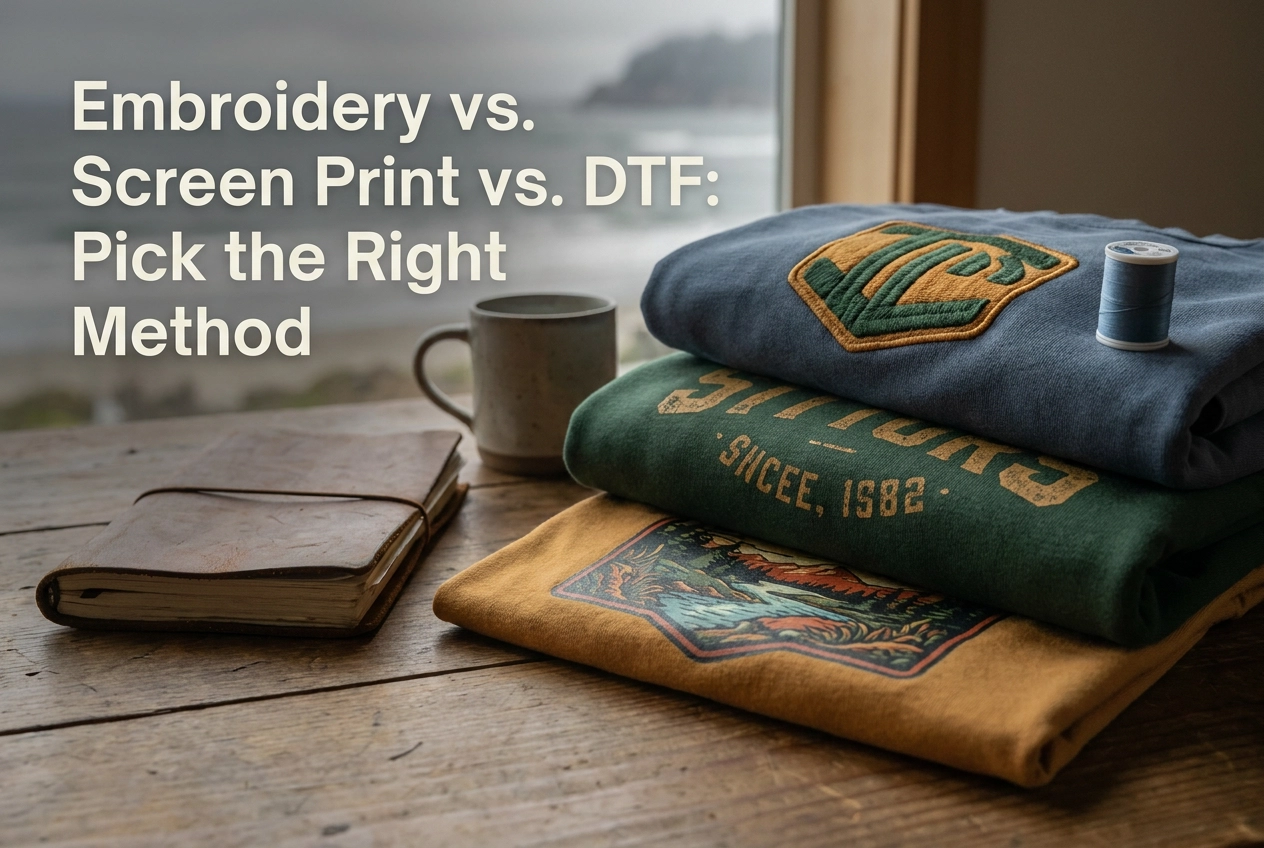
Most apparel programs get expensive at the same quiet moment: after the garment is chosen, when someone asks how the logo will be decorated. That sequence forces compromises on fabric, quantity, and cost. The better approach is to choose embroidery, screen printing, or DTF printing alongside the garment itself. Each method has a clear job. Embroidery suits polos, hats, and customer-facing staff uniforms. Screen printing fits large, single-color runs on tees. DTF printing handles full-color artwork and shorter runs on blends that would otherwise require a costly screen setup. This guide is a decision table, not a preference debate. You will see how fabric filters the options, where logo complexity pushes embroidery and screen printing to their limits, how digitizing and per-color screens change setup costs, where order minimums actually land, and why the wearer and program context can change the answer. We will also walk through a mixed-method order and show why decoration should be decided with fabric and quantity. OneStop Northwest helps organizations simplify those choices as a single-source business solutions partner serving Shelton, Mason County, Western Washington, and clients nationwide.
The Expensive Mistake: Choosing the Garment Before the Decoration
Most apparel programs get quoted in the wrong order: garment first, decoration later. By then the fabric, quantity, and logo have already narrowed the method. A familiar example is a department choosing a lightweight performance tee for 24 pieces, then requesting an embroidered left chest. Dense stitching puckers that fabric, and switching to screen printing leaves a per-color setup spread across too few pieces to price well.
Decoration is not a finish added at the end. It has its own cost structure, either one-time embroidery digitizing or one screen per color for screen printing, and that structure only works when divided across the run. Specify it last and expect a re-quote, an unwanted fabric swap, a simplified logo, or a setup fee that never amortizes because the order was too small.
The fix is sequence. Decide fabric, logo complexity, quantity, and who wears the item together. Put the decoration method on the purchase order as a spec line, not an afterthought. That sequencing also keeps the total cost comparison between branded uniforms and off-the-shelf workwear honest.
The Decoration Decision Table: Fabric, Logo, Quantity, and Wearer
With that sequence in hand, use this table rather than a preference debate. It applies to apparel and promotional products with your logo.
Short version: embroidery suits small, durable, customer-facing pieces; screen printing suits larger runs of simple spot-color art on cotton and blends; DTF printing suits full-color art and short runs where screen setup would be wasteful.
| Method | Fabric | Logo | Quantity | Wearer |
|---|---|---|---|---|
| Embroidery | Structured fabrics: polos, twills, fleece, outerwear, caps | Limited fine detail | About a dozen up | Staff facing customers, worn weekly |
| Screen printing | Cotton and cotton blends | One to three flat spot colors | Runs that spread per-color setup | Event wear or repeating program merchandise |
| DTF printing | Cotton, blends, performance knits | Full-color, gradients, names, numbers | One piece up | Personalization, short-run custom t-shirt printing, changing designs |
How to read it: start with fabric and eliminate failures, then check logo, then quantity. If two methods survive, quantity and per-piece cost break the tie. Mixing two or three methods on one order is normal and can lower total cost.
Fabric Is the First Filter, Not a Footnote
Start with fabric. It is the one variable you cannot decorate your way out of.
Screen printing sits most comfortably on cotton and cotton blends, where plastisol and water-based inks bond predictably to a flat surface. It can work on performance fabrics with the right ink system, but confirm that with the decorator before the garment is locked in.
Embroidery runs on almost any fabric; it just does not run well on all of them. Dense stitching puckers lightweight and stretchy knits, stiffens thin tees, and pulls on garments that drape. Its real home is fabric with body: pique polos, twill, fleece, canvas, outerwear shells, and structured caps. Those hold a stitch without distortion and survive repeated laundering, which is why uniform programs default to it.
DTF printing handles the polyester blends and performance knits that are awkward for both other methods. On dark polyester, ask how the decorator prevents dye migration into the print. The same filter applies to commercial printing formats.
Dye sublimation falls outside this comparison and is limited to light-colored polyester. If the program is built on cotton tees, rule it out early.
Practical rule: lightweight or highly stretchy knits should never be planned for embroidery.
Logo Complexity: Where Embroidery and Screen Printing Hit Their Limits
Fabric decides whether a method is viable. Artwork decides whether it is practical.
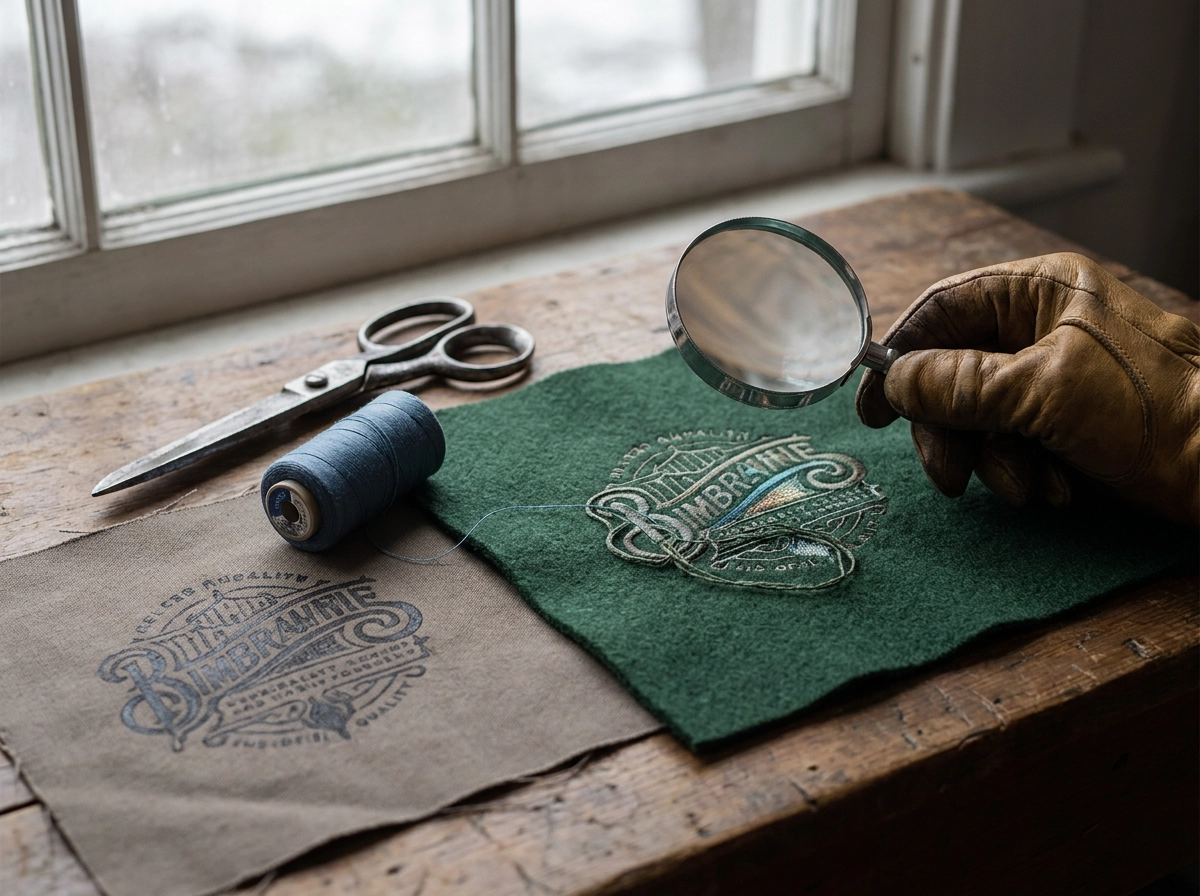
Embroidery has a detail ceiling. Type around 6 point and hairline rules need to be enlarged, thickened, or dropped, and gradients, photographic art, and many-color designs must be simplified or they stop reading at arm’s length. Compact, high-contrast lockups are where stitching wins: a left-chest logo, a cap front, a department name on a sleeve. There, a stitched mark looks more finished than a printed one.
Screen printing is a spot-color process. Each color needs its own screen, so a three-color logo means three setups, three registration steps, and three chances for a registration shift on a stretchy garment. It performs best at one to three flat colors with clean edges. Halftones and simulated process work are possible, but they depend on the shop’s skill and should not be assumed on a first order.
DTF printing reproduces full color, gradients, and small text in a single pass with no per-color setup, absorbing artwork that would otherwise push a screen order into four or five setups. Unlike commercial printing, where one digital file handles any color count, decoration complexity carries a physical cost.
Count the colors before choosing screen printing. Count the smallest text before choosing embroidery.
Setup Costs Explained: Digitizing Versus Screens
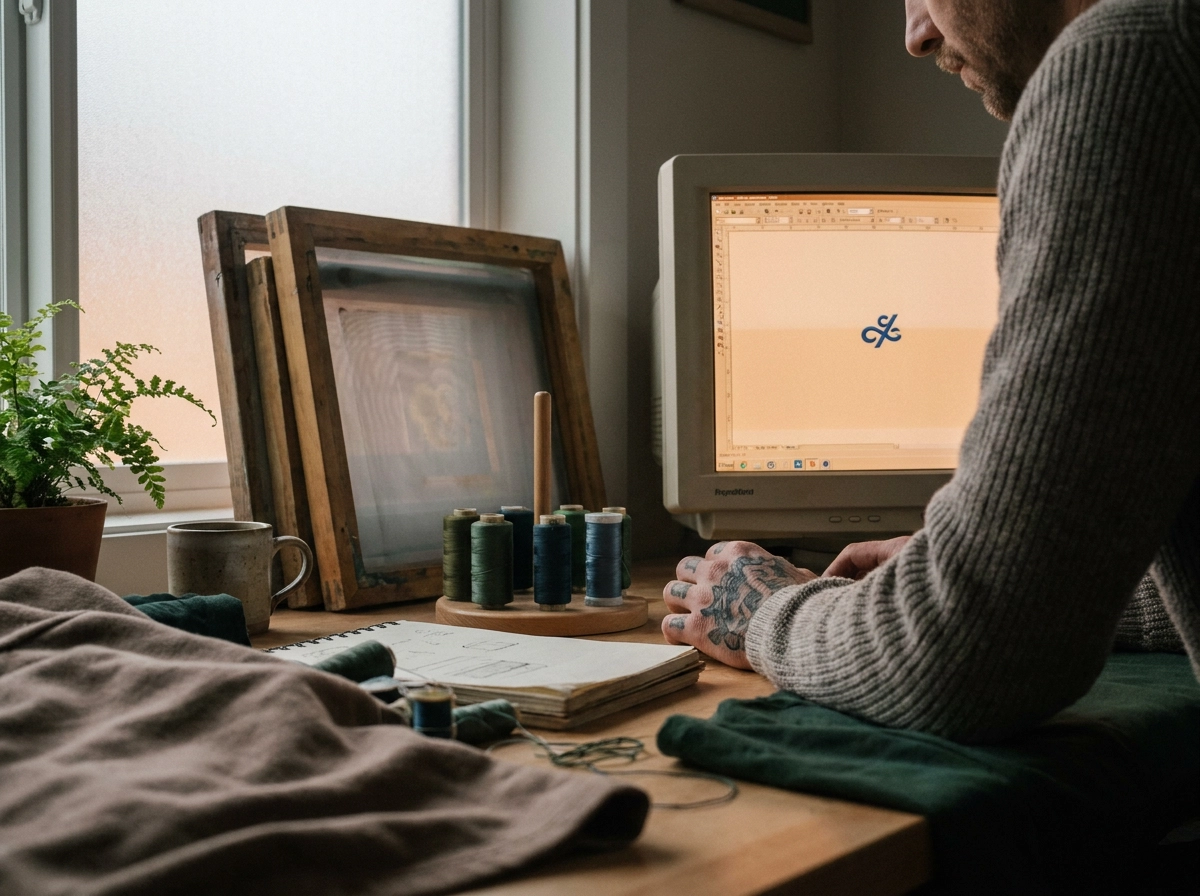
Setup is where two identical-looking quotes quietly diverge. Embroidery uses digitizing, a one-time charge to convert the logo into a stitch file, usually priced by stitch count. Because it is not per piece, that charge shrinks across the run. Confirm who owns the file and whether it stays on record. A reusable file is an asset across future orders and items; one repurchased every season is a recurring cost. Screen printing setup is per color, and industry estimates commonly run about $15 to $25 per color per screen, with each additional color adding another quote line. DTF printing carries neither screen nor digitizing setup, which is why a 10-piece order can work there and not on screens. You pay more per piece and less per order. Before approving, divide fixed setup by piece count. Hypothetically, a two-color screen setup on 24 pieces carries a far heavier per-piece load than the same setup on 240 pieces; that gap, not blank cost, often decides the method. Get three answers in writing: setup per method, how long screens are held for reorders, and whether reorders trigger a second setup. Treat those policies like the file management and fulfillment standards you would check in any ongoing print program.
Where Order Minimums Actually Land
Those setup structures explain why minimums exist. They do not explain why published minimums disagree.
Shops commonly quote screen printing minimums between about 24 and 50 pieces, embroidery around a dozen, and DTF printing as low as one. Treat those as shop-reported ranges, not rules; color count and garment price move them.
The screen printing and DTF crossover is less settled. Estimates run from roughly 24 to about 72 pieces for one or two colors, and the real number depends on how many colors the logo uses and what the blank costs. At 250 pieces or more with a simple one to three color design, screen printing is hard to beat on per-piece cost.
The conflict comes from counting. Some shops quote minimums on blanks, some on decorated pieces, and some bake setup into the unit price while others itemize it. Two quotes that look comparable may not be.
For short-run custom t-shirt printing, ask for the minimum per method and the per-piece price at your exact quantity, not the sample quantity a quote sheet assumes. Get minimums and setup charges in writing, per method, before you finalize quantity. Quantity is the last lever you want to discover after art approval.
With quantity fixed, the next filter is the wearer.
Who Wears It: Program Context Changes the Answer
Quantity settles minimums. The wearer settles method.
Staff in customer-facing roles need a mark that reads as uniform and survives weekly washing. That points to embroidery on polos, button-downs, fleece, and structured caps, where stitching looks intentional, not promotional.
Event tees, giveaways, and program merchandise run the other way. Large runs of one simple cotton design are screen printing territory, where setup spreads thin enough to disappear across the run.
Individualization pushes toward DTF printing. Participant names, numbers, and per-person art would need a screen for every variation; DTF prints each from one file with no added setup.
Structured headwear is effectively an embroidery decision. Curved panels, seams, and rigid fronts make other methods awkward, while embroidery handles a cap front, side, and back cleanly.
Programs mixing audiences on one order, such as staff apparel, volunteer shirts, and participant gear, usually need more than one method; forcing one across all three means overpaying on at least one.
Name the wearer and the wear frequency first. A shirt worn twice a season and a polo worn twice a week are not the same purchase, even with an identical logo. That logic, applied item by item, is the foundation of a managed corporate apparel program that runs itself.
Mixed-Method Orders: One Worked Example
That split shows up on a single purchase order. Picture a school or multi-department organization building a fall apparel program with three audiences and wear patterns.
Student and spirit tees: a two-color design on cotton at 200-plus pieces. Screen printing spreads setup across the run and lands the lowest per-piece price, and the same design repeats every year.
Staff polos and caps: embroidered left chest and cap front, ordered in the dozens. Digitizing is paid once and reused on reorders, and the stitched logo matches the standard staff wear in front of families.
Participant or senior shirts with individual names: DTF printing. Per-name personalization would need a separate screen for every variation; one full-color print file covers the list.
The split avoids digitizing charges on tee quantities that do not need them, per-name screen setups that would have doubled the order cost, and three purchase orders from three vendors with three ship-to addresses and three invoice cycles. It also fits a managed apparel program better than a series of one-off orders.
OneStop Northwest handles embroidery, screen printing, DTF, and apparel sourcing as one program, so methods get quoted together against the same garment and art rather than in three conversations.
Deciding Decoration Alongside Fabric and Quantity
That split works because it follows the program, not a preference. Before requesting quotes, write a five-line spec: fabric and garment style; logo colors and smallest text size; quantity by size and audience; who wears it and how often; and reorder likelihood.
If reorders are likely, treat setup as a one-time investment. Digitized embroidery files are reusable across items and seasons; screen setups may or may not be held, so confirm the policy before the first order ships.
For an ongoing uniform program or company store, standardize by category: polos and caps embroidered, tees screen printed, personalized items DTF. Applied consistently, reorders match what employees already own. One supplier also keeps logo, thread colors, ink, and art files consistent, which three vendors interpreting the same artwork rarely guarantee. If you own the uniform budget, the Corporate Apparel Buying Guide for HR and Operations Leaders covers vendor evaluation and program structure.
OneStop Northwest serves Shelton, Mason County, Western Washington, and clients nationwide, sourcing apparel and decoration through one partner so the method stays tied to fabric and quantity, not to whichever shop answered first.
The Method Follows the Fabric and the Program
Put that spec to work as a sequence. Ask four questions, in this order:
- What fabric is the garment?
- How many colors are in the logo, and how fine is the smallest detail?
- How many pieces are you ordering?
- Who wears it, and how often?
Let the answers eliminate methods before price enters the conversation. A lightweight performance knit rules out embroidery on fabric grounds alone, so it never belongs on a quote sheet. Only the methods that survive all four questions deserve a cost comparison.
Then request setup charges and minimums in writing for each surviving method, and keep the digitized embroidery file on record so reorders do not repurchase it.
If the order spans staff, participants, and event merchandise, expect more than one method. That is not added complexity. It is why the per-piece cost stays sane.
Specify decoration in the same conversation as the garment and the quantity. This sequencing change prevents most re-quotes and surprise setup charges.
Conclusion
Choosing decoration is easier when you follow the right sequence. Start with fabric, because it can rule out methods before price matters. Then narrow the field by logo complexity, order quantity, and the people who will wear the garment. Get setup charges and minimums in writing, and keep digitized embroidery files on record for reorders. When an order covers staff, participants, and event merchandise, plan for more than one method; that mix often keeps per-piece costs sensible and the program coherent.
The next step is to bring your garment, logo, quantity, and wearer details to OneStop Northwest. As a single-source partner for apparel and decoration serving Shelton, Mason County, Western Washington, and clients nationwide, OneStop Northwest can keep the method tied to the fabric and the program. Decide decoration alongside the garment and quantity, and you remove most re-quotes and surprise setup charges before they happen.
Frequently Asked Questions
Why should decoration be chosen alongside the garment instead of after it?
Choosing the garment first often forces compromises later. By the time decoration is specified, fabric, quantity, and logo have already narrowed the method, which can lead to a re-quote, a fabric swap, a simplified logo, or a setup fee that never amortizes. Decoration should be specified together with fabric and quantity, as a spec line on the purchase order.
Which decoration method fits which fabric?
Screen printing sits most comfortably on cotton and cotton blends. Embroidery suits structured fabrics such as pique polos, twill, fleece, canvas, outerwear shells, and structured caps, and should not be planned for lightweight or highly stretchy knits. DTF printing handles polyester blends and performance knits that are awkward for the other two methods. Dye sublimation is limited to light-colored polyester.
How many colors can a logo have for each method?
Screen printing works best with one to three flat spot colors, since each color needs its own screen. Embroidery has a detail ceiling and suits compact, high-contrast lockups rather than gradients, photographic art, or many-color designs. DTF printing reproduces full color, gradients, and small text in a single pass with no per-color setup.
What is digitizing, and why does it matter for reorders?
Digitizing is a one-time charge to convert an embroidery logo into a stitch file, usually priced by stitch count. Because it is not charged per piece, it shrinks across the run. Confirm who owns the file and whether it stays on record, since a reusable file is an asset across future orders, while repurchasing it every season is a recurring cost.
How do setup costs differ between screen printing and DTF printing?
Screen printing setup is charged per color per screen, and each additional color adds another quote line. DTF printing carries neither screen nor digitizing setup, so it can work for short runs such as a 10-piece order. The post notes that you pay more per piece with DTF and less per order. Divide fixed setup by piece count before approving to compare methods fairly.