

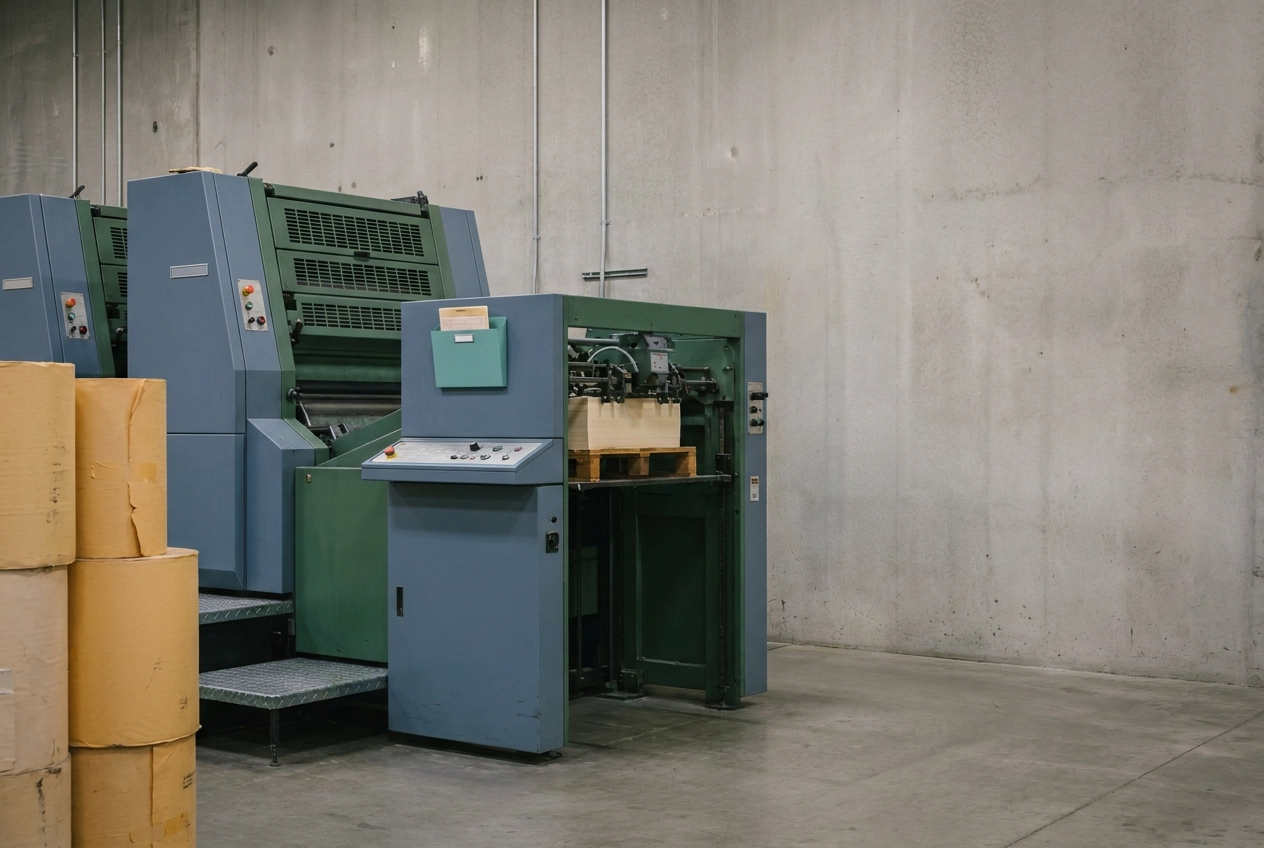
Every business eventually faces a print project that goes beyond what a home printer or office copy machine can handle. Maybe it is a large trade show banner, a run of ten thousand branded brochures, or a set of packaging materials that needs to match your brand colors perfectly. That is where commercial printing services come in, and understanding how they work can save you time, money, and a great deal of frustration.
Commercial printing is a broad field, and not all print methods are created equal. The process you choose directly affects your unit cost, turnaround time, and the final quality of your finished piece. Making the wrong call early in the project can mean paying too much, waiting too long, or receiving results that fall short of your brand standards.
This guide is written for buyers who are new to the world of professional print procurement. By the time you finish reading, you will understand the core print methods available, how to match the right method to your specific project, and what to look for when selecting a printing partner who can deliver consistent, high-quality results at scale.
What Commercial Printing Actually Means
Commercial printing is professional, volume-oriented print production handled by specialized businesses using industrial equipment, not the office copier down the hall, a consumer upload-and-ship website, or a quick-copy counter at a retail chain.
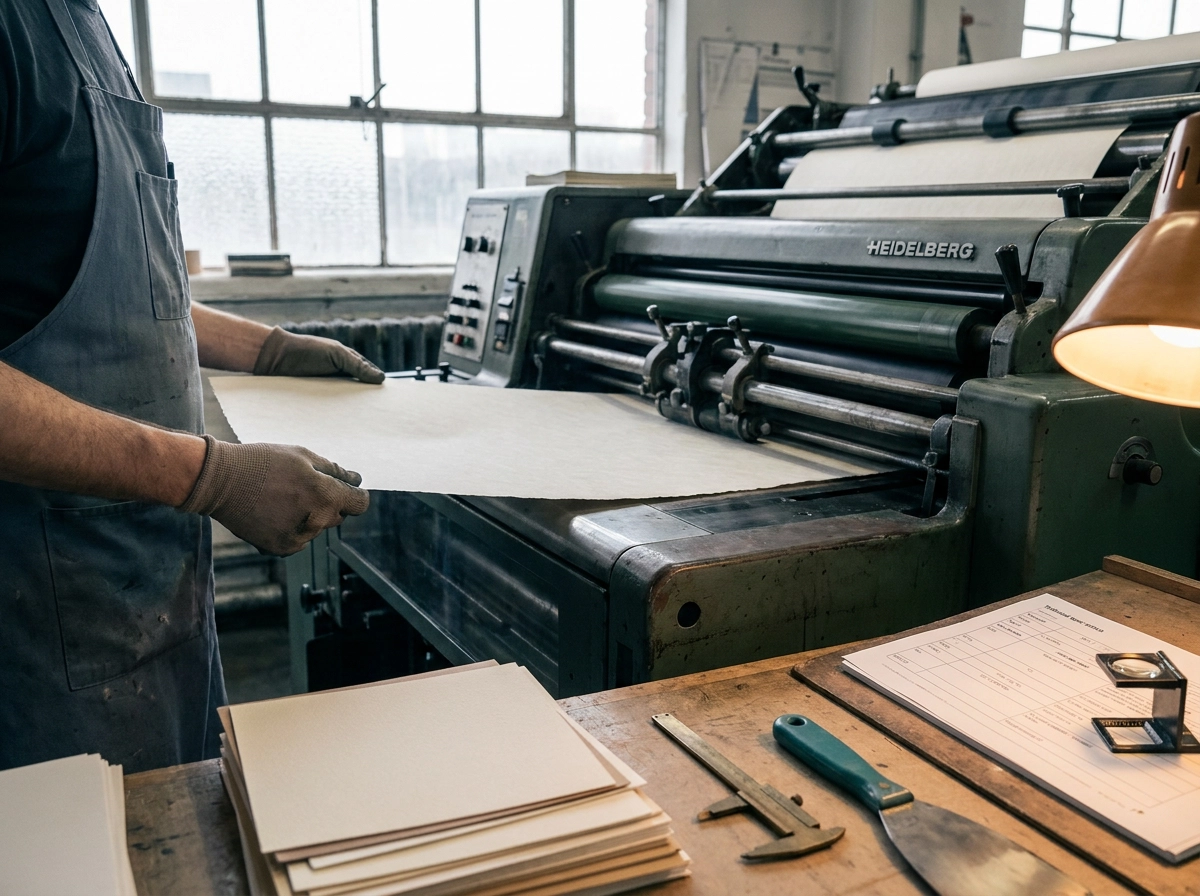
A commercial printing company brings technical expertise that goes well beyond pressing “print.” That includes selecting the right paper stock and weight, specifying inks for accurate color reproduction, applying finishes like lamination or UV coating, and managing bindery operations such as folding, cutting, and binding. The output reflects deliberate craft decisions at every stage.
That depth is what separates commercial printing services from quick-copy or in-house alternatives. An office printer handles convenience jobs at low volume. A quick-copy shop handles short-run, speed-first work with limited substrate options. A commercial printer handles volume, consistency, and quality simultaneously, producing identical results across thousands of pieces, on a wide range of materials, to exacting standards.
The deliverables span nearly every printed business need: marketing collateral, branded stationery, direct mail, product packaging, event materials, signage, and more.
For marketing and operations buyers, understanding this distinction is practical, not academic. Unit cost, brand fidelity, and turnaround time all behave differently depending on where and how something is printed.
Offset Printing: When Volume and Color Accuracy Are the Priority
Of the methods covered in what we print, offset lithography is the standard for high-volume, color-critical work.
The process is mechanical and precise. Metal plates carry the image, transferring ink first to a rubber blanket and then onto paper. Because the ink is applied consistently through every impression, color stays uniform whether you’re on sheet 10 or sheet 10,000.
Color accuracy is where offset earns its place for brand-sensitive work. Press operators calibrate ink density and can dedicate individual press stations to Pantone or spot colors. That level of control is difficult to replicate with most digital methods, making offset the practical choice when corporate color standards are non-negotiable.
The cost structure follows a predictable logic. Setup involves plate-making and press calibration, which adds meaningful upfront cost. But once the press is running, the per-unit cost drops steadily as quantity climbs. For runs in the thousands, offset typically delivers the lowest cost per piece of any print method.
Ideal applications include annual reports, product catalogs, high-volume direct mail, and branded collateral distributed across multiple locations or departments.
The tradeoff is real: offset is not suited for short runs, last-minute revisions, or pieces that need unique content on each copy. Those projects belong to a different method entirely.
Digital Printing: Speed and Flexibility for Shorter Runs
Where offset requires plate setup before a single sheet prints, digital printing skips the plate-making step, moving jobs from approved file to finished output quickly and with minimal make-ready waste.
The practical sweet spot for digital is roughly 1 to 500 pieces. Below that volume threshold, offset plate and setup costs would push the per-unit price to an impractical level, making digital the economically sensible choice for shorter runs.
One capability unique to digital workflows is variable data printing. Each piece in a run can carry a unique name, mailing address, offer code, or personalized image. This makes digital the right tool for personalized direct mail, employee onboarding packets customized by department or location, and loyalty campaigns with individual offer codes.
Other common digital use cases include event programs, short-run promotional materials, test campaigns where you want to evaluate response before committing to a large print run, and urgent reprints when something changes after the original run ships.
On quality: modern digital printing has closed much of the gap with offset for everyday marketing and business applications. For most materials, the difference is negligible to the end reader. Offset still holds an advantage in color consistency across long runs and in matching precise Pantone or spot colors, which matters for brand-critical work covered in the previous section.
Large-Format Printing: Signage, Displays, and Environmental Graphics
Where offset and digital handle paper-based deliverables, large-format printing addresses an entirely different category: physical environments. This includes banners, trade show displays, wall wraps, window graphics, floor decals, and outdoor signage, all produced at dimensions that standard commercial presses cannot accommodate.
The method used depends on the application. Digital inkjet dominates most large-format work because of its flexibility and quality at typical quantities. Screen printing and offset-derived methods appear when substrate type or order volume calls for them. An indoor banner for a one-day event has different production requirements than a permanent exterior panel rated for years of UV exposure, and the method, ink, and material are selected accordingly.
Materials are equally varied. Common substrates include vinyl, fabric, foam board, corrugated plastic, mesh, and rigid panels like aluminum composite. Each serves a distinct purpose: mesh allows airflow for outdoor banners, fabric produces a premium look for trade show displays, and rigid panels hold up in permanent installations.
For organizations, large-format supports retail environments, facility wayfinding, vehicle wraps, event branding, and branded spaces in healthcare, hospitality, and government facilities.
Practically speaking, large-format work is rarely purchased in isolation. A facility refresh or product launch typically requires both printed collateral and signage, and coordinating those through a single provider keeps brand standards consistent and removes the overhead of managing separate vendors.
Specialty Finishing: What Happens After the Press Run
The press run is only part of the process. Specialty finishing covers everything that happens afterward, and it has an outsized effect on how a printed piece looks, feels, and functions.
Finishing services include folding, laminating, die-cutting, embossing, foil stamping, and UV coating. Each choice shapes the final impression. A presentation folder with soft-touch laminate communicates a different level of quality than the same folder on an uncoated sheet. For client-facing materials, that difference registers immediately.
Bindery services determine how multi-page documents are assembled:
- Saddle stitching (stapled through the spine) works well for thinner booklets, catalogs, and event programs
- Perfect binding produces a flat, glued spine suitable for thicker catalogs, manuals, and annual reports
- Spiral binding allows lay-flat use, making it practical for training guides and reference materials
- Case binding is the hardcover standard for premium publications and long-term reference documents
Beyond binding, many commercial printers offer kitting and fulfillment: assembling printed materials with branded merchandise, packaging the combination, and shipping to multiple locations or individual recipients in a single coordinated operation.
One practical note: finishing decisions affect both unit cost and production time. Identifying the finishing requirements at the start of a project, rather than at the approval stage, prevents cost surprises and keeps the schedule intact.

Choosing the Right Method: A Practical Decision Framework
Once you know what method each project requires, four practical filters help you decide quickly.
Volume is the primary factor, digital for sub-500 runs, offset for the thousands (as detailed above).
Turnaround is the second filter, digital is the practical default for tight deadlines, given its plate-free head start (as detailed above).
Brand fidelity is the third consideration, offset for Pantone-critical work where consistent color reproduction is non-negotiable (as detailed above). This mirrors the same discipline that drives decisions in managed apparel programs, where brand consistency across recurring production cycles matters as much as it does in print.
Content variability is the fourth filter, and it overrides volume entirely, variable data printing makes digital the only viable option when each piece requires unique content (as detailed above).
When a project requires both consistency and personalization, a hybrid approach works well. Offset-printed shells handle the brand-critical base; digital printing adds the variable elements. A commercial printer with both capabilities manages this as a single workflow, so you do not need to coordinate two vendors.
Beyond the Print Job: Managed Print and On-Demand Fulfillment
Choosing the right print method solves the immediate project. Managing print as an ongoing organizational function is a different challenge entirely.
Managed print services (MPS) shift the relationship from one-off transactions to a structured program. Rather than placing individual orders reactively, an organization works with a partner to manage inventory levels, set reordering triggers, handle storage, and coordinate distribution on an ongoing basis.
Print-on-demand fulfillment takes a complementary approach. Organizations maintain a digital library of approved, press-ready assets and order pieces in small batches as needed. The result is less overprinting, lower storage costs, and fewer materials that become obsolete before they’re used.
Both models are particularly relevant for multi-location organizations. A school district, healthcare network, or government agency can centralize brand-compliant ordering through a single program, so individual facilities get what they need without going off-brand or negotiating their own vendor relationships.
This also connects directly to vendor consolidation. Organizations that currently maintain separate relationships with a commercial printer, a fulfillment house, and a design firm are managing more administrative overhead than necessary.
Sustainability is a growing factor in print procurement decisions as well. Print-on-demand and managed inventory programs reduce overprinting and material waste compared to large speculative runs ordered in bulk on the assumption of future demand.
What to Look for When Evaluating a Commercial Printing Company
Once you have a clear picture of your print program’s scope, the next step is finding a partner capable of handling it consistently. Five criteria are worth examining before you commit.
Capability breadth. A commercial printing company that offers offset, digital, and large-format production in-house eliminates coordination overhead and reduces opportunities for brand inconsistency or scheduling conflicts.
Finishing and fulfillment. Printers that manage bindery, kitting, and distribution internally can quote more accurately and deliver more predictably than those who outsource those steps. Ask specifically whether finishing is handled on-site or sent out.
Brand management experience. Ask whether the printer has worked with regulated industries, multi-location employers, or franchise systems. These environments require disciplined color management and documented processes, and prior experience there is a reliable signal of that capability. The same questions apply when how to choose the right branding company is part of a broader vendor evaluation.
Responsiveness and account support. A dedicated point of contact who understands your account, your approval process, and your recurring needs is worth more over time than the lowest per-job quote.
Geographic reach versus local presence. Online printing companies offer competitive pricing for straightforward jobs. For complex or high-stakes projects, an established regional commercial printer typically provides consultative support, faster turnaround, and greater accountability. When volume is uncertain, test before you commit to a full run rather than over-ordering on a first engagement.
How OneStop Northwest Approaches Commercial Printing
OneStop Northwest is built around a straightforward premise: most organizations need more than a print job. They need signage, branded apparel, promotional products, and fulfillment, and managing four separate vendors for those needs creates real administrative friction.
As a single-source business solutions partner headquartered in Shelton, Washington, OneStop combines commercial printing services with signage, apparel, custom packaging, graphic design, and fulfillment within one relationship. Organizations throughout the Pacific Northwest and across the United States can access this through a national supplier network without coordinating across multiple vendors.
The clients who benefit most share a common profile: recurring, varied branded materials needs across departments or locations. Marketing teams, HR departments, school districts, government agencies, healthcare providers, hospitality groups, and public safety departments all order print, signage, and branded goods on a regular cycle. Consolidating that activity reduces purchase orders, simplifies invoicing, and keeps brand standards consistent across every deliverable.
If your organization is ready to simplify how it manages branded materials across the board, learn more about why organizations choose OneStop Northwest for their company store and merchandise programs, or partner with OneStop Northwest to explore what a consolidated approach looks like for your specific needs.
Organizations uncertain whether offset, digital, or large-format is the right fit for a specific project are welcome to bring that brief to OneStop before committing to a method or quantity.
Key Takeaways for Marketing and Operations Buyers

Three methods cover the majority of commercial print decisions:
- Offset, high-volume, Pantone-critical runs
- Digital, short runs, tight deadlines, variable content
- Large-format, signage, displays, and environmental graphics
Specialty finishing and fulfillment belong in the planning conversation from the start, not after press approval. Laminate choices, binding methods, kitting requirements, and distribution logistics all affect budget and timeline in ways that surface too late if treated as afterthoughts.
Apply the four filters, volume, turnaround, brand fidelity, and content variability, against any print brief to narrow the options quickly; then evaluate partners on capability breadth, brand management experience, and account support as outlined above.
Organizations with recurring, multi-format, or complex print needs are best served by having a conversation with a knowledgeable partner before the project brief is finalized. The method, quantity, and finishing decisions made early have the most leverage on quality, cost, and outcome.
Frequently Asked Questions
What's the main difference between commercial printing and using an office printer or quick-copy shop?
Commercial printing is professional, volume-oriented production handled by specialized businesses with industrial equipment and technical expertise. Unlike office printers or quick-copy shops, commercial printers handle large volumes with consistency and quality, offer a wide range of material options, and provide finishing services like lamination, UV coating, folding, and binding. They deliver identical results across thousands of pieces to exacting brand standards.
When should I choose offset printing versus digital printing?
Use offset printing for high-volume runs (typically thousands of pieces) where color accuracy and Pantone color matching are critical to your brand. Offset has higher setup costs but the lowest per-unit cost at scale. Choose digital printing for shorter runs (1-500 pieces), tight deadlines, or when you need variable data printing (personalized names, addresses, or codes on each piece). Digital skips the plate-making step, making it faster and more economical for small quantities.
What is variable data printing, and when would I use it?
Variable data printing is a digital capability that allows each piece in a run to carry unique content—such as personalized names, mailing addresses, individual offer codes, or custom images. It's ideal for personalized direct mail campaigns, employee onboarding packets customized by department, loyalty programs with individual codes, and test campaigns. This capability is unique to digital workflows and cannot be efficiently produced with offset printing.
How do specialty finishing decisions impact my print project?
Specialty finishing—including lamination, die-cutting, embossing, foil stamping, and UV coating—significantly affects the final look, feel, and perceived quality of your printed piece. Binding methods (saddle stitching, perfect binding, spiral binding, or case binding) determine how multi-page documents are assembled. These finishing decisions should be identified at the start of your project, not during approval, because they directly impact both unit cost and production timeline.
What should I look for when choosing a commercial printing company?
Evaluate commercial printers on five key criteria: (1) Capability breadth—offering offset, digital, and large-format in-house; (2) Finishing and fulfillment services handled on-site rather than outsourced; (3) Brand management experience with regulated industries or multi-location organizations; (4) Dedicated account support and responsiveness; (5) Geographic reach and whether they offer consultative support for complex projects. For simpler jobs, online printers offer competitive pricing, but complex or high-stakes projects benefit from established regional printers with greater accountability.