

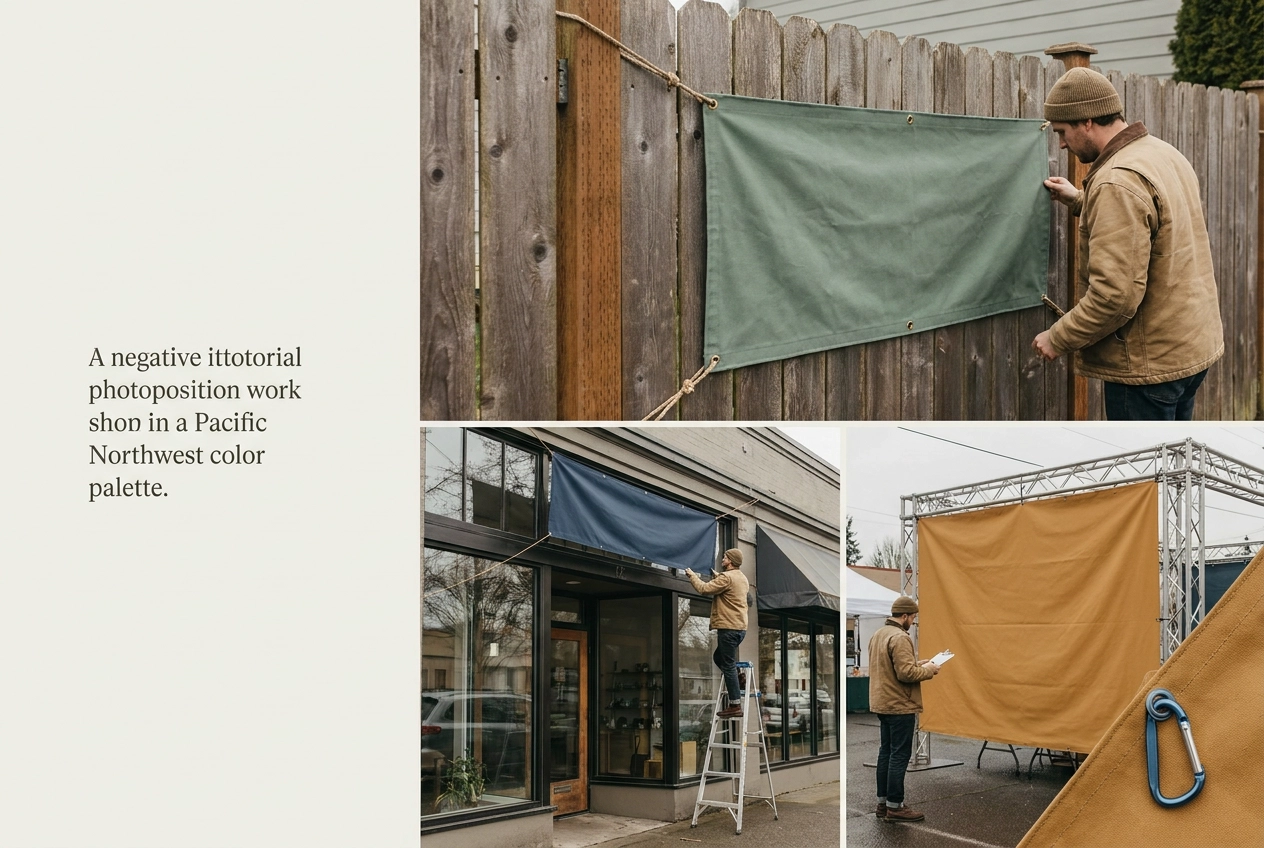
A custom banner can fail for reasons unrelated to the artwork. The same product name can describe a fence banner facing wind, a storefront banner shaped by sightlines and facade rules, and an event banner with a removal deadline. Treat those as one specification and you invite tearing, sagging, or a call from the landlord. The better starting point is where the banner hangs and what it must survive. Before you request a quote, answer four practical questions: What is the mounting surface? How much wind exposure will it face? How far away will people view it? How long will it stay up? Those answers shape material weight, finishing, hardware, and even whether local sign codes permit the size and placement you have in mind. This post organizes custom banners by use case, from fence and storefront to event applications. You will learn how mounting conditions change specifications, where local sign codes can alter the answer, what to confirm before ordering, and why the four answers should come before the quote. OneStop Northwest helps organizations reduce vendor complexity across signage and related services, with roots in Shelton, Mason County, and Western Washington and clients nationwide.
Start With the Mounting Surface, Not the Product
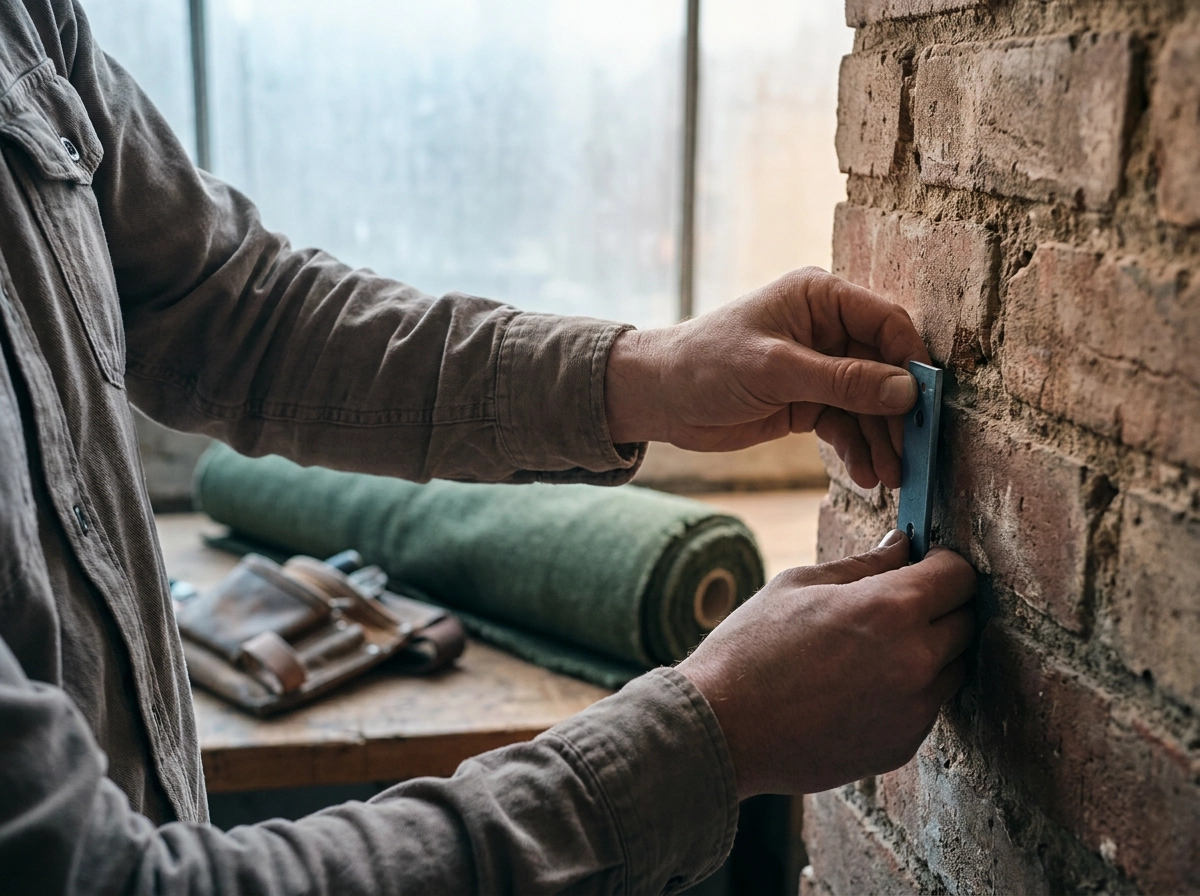
Start with the surface, because it removes options before you ever compare price. A chain-link fence, a brick or stucco facade, a metal fascia, glass, a freestanding frame, and a portable backdrop all accept different attachment methods, and some will not hold a banner at all without hardware the surface cannot support.
Wind exposure is the second answer. An open corner lot, a coastal lot, a building canyon that funnels gusts, and a sheltered courtyard demand different levels of anchoring and edge reinforcement. Wind pressure rises with the square of wind speed, which is why exposure outranks artwork quality (ASCE 7-16 wind load provisions).
Viewing distance is third. A banner read from a sidewalk at ten feet and one read from a road at highway speed need different layout hierarchy and different letter heights. Ask your supplier for the letter height that matches your distance and the speed at which people pass.
Duration is fourth. A three-day event banner and a two-year fence banner should not be built the same way. Long-life construction on a weekend piece is waste; saving on a piece that has to look permanent means replacing it early. Long-term installations hinge on substrate and mounting as much as print, covered in outdoor business signs: materials, durability, and what to specify.
Those four answers usually settle material weight, edge finishing, grommet placement, and hardware in a single conversation, and they explain why the same product name draws such different quotes. The production side of that gap is covered in commercial printing formats explained.
One caveat before the use cases: the numbers behind each spec, including vinyl weight, grommet spacing, and hem width, come from the supplier producing your piece. This guide gives you the questions in the right order so those answers mean something, beginning with the fence.
Fence Banners: Wind Exposure and Long-Term Mounting
With the four answers in hand, the fence is usually the most punishing of the three placements. A fence is flexible and porous, and that combination creates the core problem: chain link passes wind, but the banner does not. The banner becomes a sail, and every attachment point takes the load. A tear at a grommet is the most common failure, and it is a finishing question rather than an artwork question.
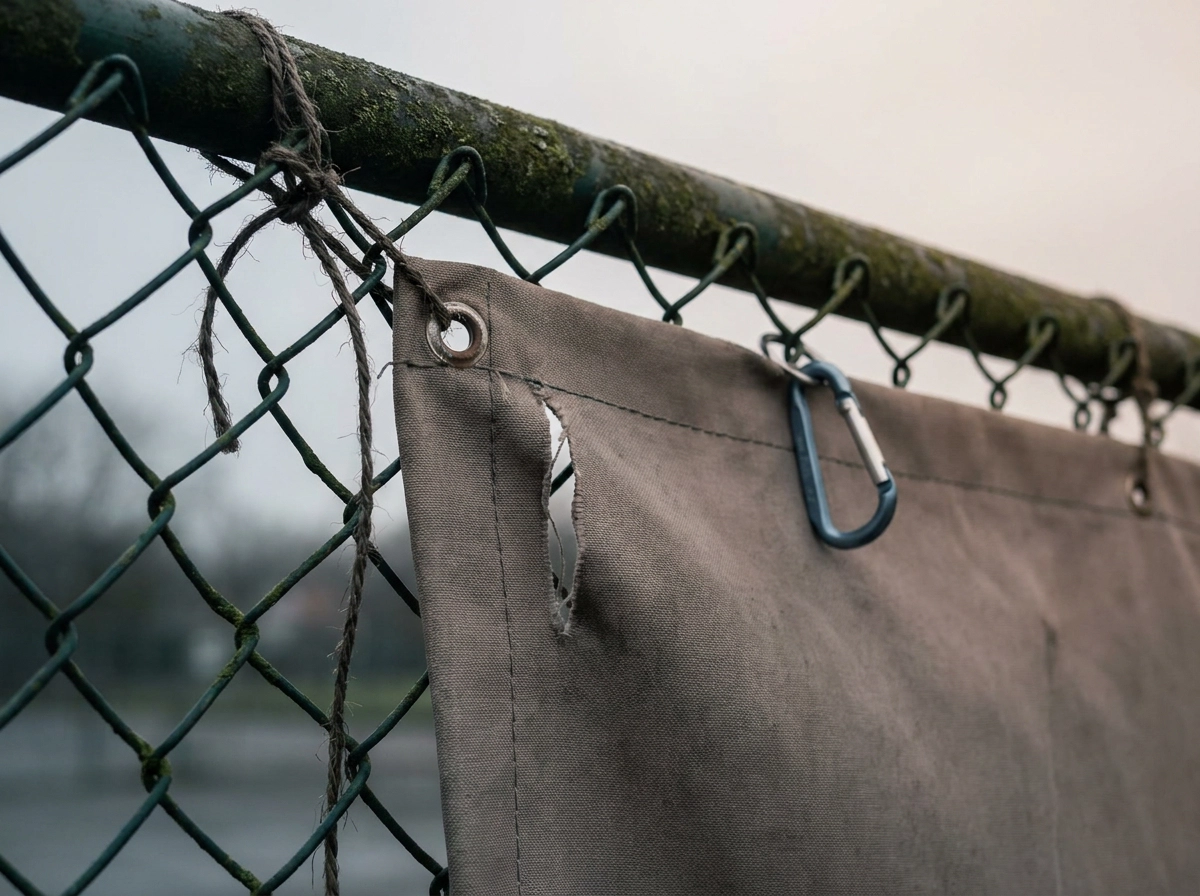
Ask your supplier which attachment they recommend for your specific fence and wind exposure: zip ties, bungee cord, or a tensioned frame. A tensioned frame spreads load along the perimeter instead of concentrating it at individual points. It costs more, but it holds shape better over months. Push on perimeter finishing as well. How are the edges finished? Are grommets reinforced, and do they sit in a hemmed edge rather than bare material? Reinforced corners are worth asking about on larger pieces.
State season and duration explicitly on the order. A banner that stays up through a Pacific Northwest wet season and winter wind faces far more stress than one installed in June and removed in September, and the supplier can build to that if you say so.
Confirm the fence is yours to use. Shared property lines, leased buildings, and right-of-way fences all raise a permission question, and placement on private property requires the owner’s consent. Get that in writing before you order. Then sanity-check the sightline: a fence set well back from the road or behind landscaping may be the wrong surface no matter how well the banner is built. For a broader view of matching sign types to locations, see Business Signage 101: Which Sign Type Fits Each Location and Use Case.
Storefront Banners: Sightlines, Landlord Rules, and Facade Realities
A fence banner is an anchoring problem. A storefront banner is often a permission problem.
Storefronts are the lowest-wind, longest-duration scenario of the three, which flips the risk from physical to administrative. The banner itself faces little stress; facade rules, lease terms, and local sign codes all apply at once, and each can stop the install.
Confirm with your landlord or property manager before you order, not after. Lease and facade guidelines may dictate where a banner can hang, whether hardware can penetrate the wall, what colors and sizes are allowed, and how long it can stay up. A piece refused on installation day is a total loss on the print run.
Identify the exact surface first. Glass, brick, stucco, corrugated metal fascia, and awning valance each accept different hardware, and some methods leave holes you will patch later. Suction and clamp options for glass avoid drilling entirely but carry size and weight limits worth asking about.
Interior window banners are a separate path. They skip exterior hardware and facade approval but compete with reflections and interior lighting, and the same lease language may still cover them.
Storefront viewing is short and pedestrian, but not still. A banner read from the sidewalk, the parking lot, and a passing car is being read at three distances at once. Pick one primary distance, design for it, and confirm letter height with your supplier. Large-format production is the other half of the equation; this plain-language guide to commercial printing explains where it fits among print methods.
Sale windows and seasonal promotions change more often than fence banners. Design for repeated installation: simple attachment, a consistent size, and a storage plan that keeps the piece flat between uses.
Event Banners: Short Lifespans and Hard Removal Deadlines
Storefront banners are built to be swapped; event banners are built to disappear. That changes the priorities: for a piece that lives hours or days, install speed, portability, and clean removal matter more than long-term durability. When a banner has to go up in twenty minutes by people who have never installed one, simplicity beats longevity every time.
Deadlines are real. Derby, Kansas, for example, requires event-related signs to come down within 72 hours after the event ends, and Spring Hill, Kansas sets a 48-hour removal window. Whether or not your city writes that into code, venues often do, and a banner left up can affect your deposit or your ability to book the space again.
Some jurisdictions also restrict the format itself: Derby’s temporary sign rules ban illuminated signs and inflatable or air-generated signs, so an inflatable arch or lit banner needs a city and venue check before you commit.
Venue rules differ from city rules and are usually stricter about attachment. Parks departments, fairgrounds, and private venues may prohibit staking, require ballast instead of stakes, cap height, or ban anything attached to a structure. Ask for the venue’s own document rather than assuming the city code covers it.
Hardware has to match the format. Freestanding frames, step-and-repeat backdrops, table throws, and rope-and-pole setups each accept different finishing. Confirm what the frame or stand requires before ordering: pole pockets, grommets, or a specific edge treatment.
For anything running multiple days, order a second copy or a repair kit. A torn banner on day two is a branding problem you can avoid cheaply at the print stage, and a tattered sign can also draw a removal order.
Where Local Sign Codes Change the Answer
Event timing is one code variable; size and duration are where the answer really moves. Derby, Kansas caps one temporary sign on a nonresidential property at 32 square feet, limits each display to 45 days, allows 180 days per calendar year, and requires a 30-day gap between displays. Maize, Kansas allows up to two temporary banners of 30 square feet or less on the business’s building or fence, with no permit required.
Those Kansas figures show how far local rules diverge; they are not guidance for a Washington or Oregon buyer. Confirm your own city or county planning or permit desk’s rules before you lock a size or schedule.
Wind resistance most directly reinforces the surface-and-exposure framework. Derby requires temporary signs to be built and installed to withstand wind, rain, and other atmospheric conditions. That is a performance standard, not a load rating; the code text reviewed gives no number, so ask your supplier which installation method they will stand behind.
Placement rules sit on top of size rules. Derby requires signs at least 8 feet from the back of a street curb, allows one sign per street frontage, and prohibits off-site commercial signage. Location, property owner consent, and size are separate approvals that can each fail.
Mount type appears on the paperwork, another reason to settle the surface first. Derby’s temporary sign application asks applicants to describe the mount as freestanding, pole, wall, or canopy, a question you cannot answer after design is finished.
Codes also stack. Wichita and Sedgwick County write sign rules to work alongside building and zoning codes, so a banner can satisfy the sign code and still trip a building or zoning requirement. Budget that review before print.
What to Confirm Before You Order

With the rules checked, put the four answers in writing and hand them to your supplier in order: mounting surface, wind exposure, viewing distance, and duration. A supplier working from those four lines can quote a defensible specification instead of a generic one.
Confirm permission separately from specification: landlord or property manager sign-off for a leased facade, owner consent for a fence on private property, venue approval for an event setup, and any required temporary sign permit from the city or county. Each is a separate approval, and any one can stop the order.
Request finishing details in writing: how the perimeter is finished, whether grommets are reinforced and how far apart, what hardware is included versus supplied separately, and which installation method the supplier recommends for your surface and wind exposure.
Ask who installs and who removes. Many organizations assume installation is included and learn otherwise on delivery day. Put the install and removal plan, including any event deadline, on the schedule before the file goes to print.
Sometimes a banner is the wrong format. Custom yard signs are ground-mounted, seasonal, and read from a shorter distance, so the same four questions produce a different spec. Custom signage buyers often need both formats for one campaign, and the framework transfers either way.
On larger campaigns, source signage alongside custom banners, branded apparel, promotional products, and print from one partner to cut coordination and keep brand elements consistent across formats. OneStop Northwest coordinates signage and displays through the same supplier network it uses for apparel, company stores, and marketing, for organizations in Shelton, Mason County, Western Washington, and the Pacific Northwest, as well as nationally.
The Four Answers Come Before the Quote
The same product name covers three different builds. A fence banner is an anchoring and edge-reinforcement problem. A storefront banner is a permission and sightline problem. An event banner is an install-speed and removal-deadline problem. One spec stretched across all three is how banners tear, sag, and get taken down by someone else.
Before you request a quote, write four lines: what it mounts to, what wind it faces, how far away people read it, and how long it stays up. Those four lines protect your budget better than any spec sheet, because they let a supplier quote a defensible build instead of a generic one.
Then verify three permissions separately: landlord, property owner, and local sign code. Check size caps, display duration, setback, and wind-resistance language with your own city or county, and leave another state’s rules where you found them.
Finally, ask how the piece is finished and who installs it. If banners, custom yard signs, or broader custom signage sit alongside apparel and promotional products in the same campaign, OneStop Northwest can coordinate the program through one partner rather than four. When uniforms are part of that scope, the corporate apparel buying guide for HR and operations leaders applies the same vendor-evaluation logic.
Conclusion
The right banner build starts with the job it has to do. A fence banner has to handle wind and long-term anchoring, a storefront banner has to respect sightlines and landlord rules, and an event banner has to install quickly and come down on deadline. Local sign codes can change the answer, so confirm size, duration, setback, and wind language before you order. Write the four lines first: mounting surface, wind exposure, reading distance, and display time. Then verify landlord, property owner, and local code approvals. With those answers ready, OneStop Northwest can help coordinate custom signage, banners, yard signs, apparel, and promotional products through one partner, whether you are in Shelton, Mason County, Western Washington, or nationwide. Start with the four answers, then bring them to OneStop Northwest for a quote built around the real conditions.
Frequently Asked Questions
What four questions should I answer before requesting a custom banner quote?
Answer four practical questions first: What is the mounting surface? How much wind exposure will it face? How far away will people view it? How long will it stay up? These answers shape material weight, finishing, hardware, and whether local sign codes permit the size and placement you want.
Why does the mounting surface matter so much?
The surface removes options before you compare price. Chain-link fences, brick or stucco facades, metal fascia, glass, freestanding frames, and portable backdrops each accept different attachment methods, and some will not hold a banner at all without hardware the surface cannot support.
Why is a fence banner harder to install than other banners?
A fence is flexible and porous. Chain link passes wind but the banner does not, so the banner acts like a sail and every attachment point takes the load. A tear at a grommet is the most common failure, and it is a finishing question rather than an artwork question. Asking your supplier about attachment methods such as zip ties, bungee cord, or a tensioned frame can help.
What should I confirm before putting a banner on a storefront?
Confirm with your landlord or property manager before you order. Lease and facade guidelines may dictate where the banner can hang, whether hardware can penetrate the wall, what colors and sizes are allowed, and how long it can stay up. Also identify the exact surface, since glass, brick, stucco, metal fascia, and awning valances each accept different hardware.
How do event banners differ from fence and storefront banners?
Event banners are built to come down, so install speed, portability, and clean removal matter more than long-term durability. Many cities and venues set removal deadlines, and venue rules are often stricter about attachment than city codes. Check the venue's own document rather than assuming the city code covers it.
