

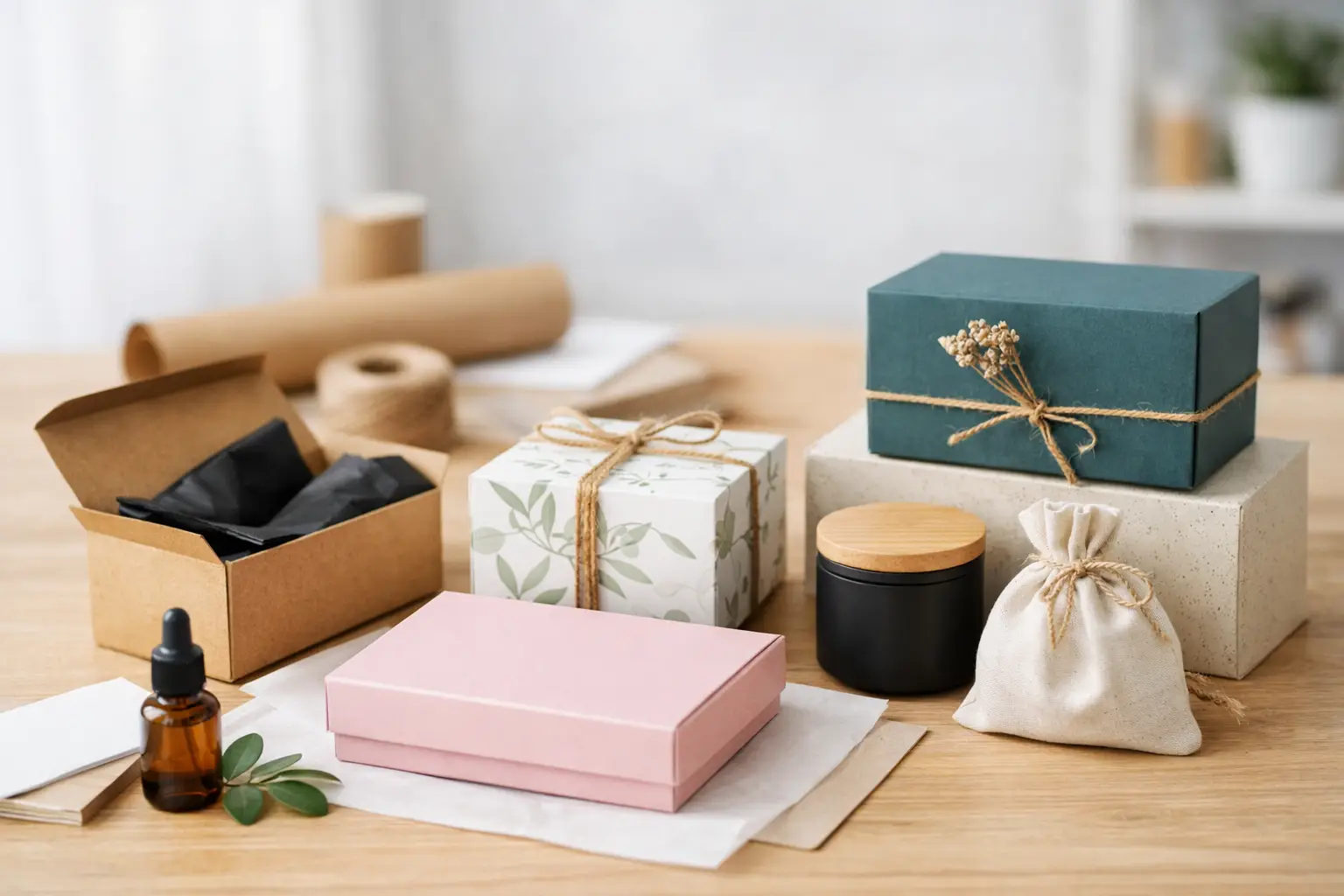
A customer opens a package in about five seconds, but those five seconds can shape how they remember your business for months. That is why custom packaging for small brands is not just a finishing touch. It is part of the brand experience, part of the sales process, and often part of the reason a customer comes back.
For smaller companies, packaging can feel like a luxury reserved for national brands with large budgets and in-house creative teams. In practice, it is often one of the clearest ways a growing business can look established, consistent, and trustworthy. The goal is not to outspend larger competitors. The goal is to make each customer interaction feel intentional.
Why custom packaging for small brands matters
Small brands usually have less room for error. If your website is strong but your product arrives in a generic mailer with no brand cues, the customer experience can feel disconnected. That gap may seem minor internally, but customers notice when a business looks polished in one place and improvised in another.
Good packaging helps close that gap. It reinforces your logo, color palette, tone, and positioning in a physical format customers can see and hold. For ecommerce brands, that matters even more because the package may be the first real-world contact a customer has with your company.
There is also a practical side. Packaging can reduce damage, improve shipping efficiency, support compliance needs, and make products easier to store or display. The best results happen when brand presentation and logistics are planned together instead of treated as separate decisions.
What small brands actually need from custom packaging
A common mistake is assuming custom packaging has to be elaborate to be effective. Most small businesses do better with packaging that is clear, consistent, and cost-conscious. Fancy finishes and complex structures can be useful in the right setting, but they are not the starting point for every brand.
What matters first is alignment. Your packaging should match your product, price point, and audience expectations. A boutique candle company may benefit from tactile unboxing details and premium labeling. A local food brand may need packaging that balances shelf appeal with required product information. A government-facing supplier may need packaging that prioritizes clarity, durability, and professionalism over visual flair.
The right packaging usually answers three questions. Does it protect the product? Does it reflect the brand accurately? Does it make operational sense at your current stage of growth? If the answer to any of those is no, then the design needs another round of thinking.
Brand consistency matters more than complexity
For small brands, consistency often creates a stronger impression than creativity alone. Repeating the same logo usage, typography style, messaging, and color choices across boxes, inserts, labels, and shipping materials builds familiarity over time.
That familiarity matters because customers rarely judge a brand from one touchpoint. They piece it together from many small signals. Your website, social content, printed materials, and packaging should feel like they belong to the same business. When they do, trust grows faster.
Budget pressure is real, so prioritize wisely
Most smaller organizations are balancing packaging decisions against marketing spend, staffing, inventory, and shipping costs. That is normal. It also means packaging choices should be phased based on impact.
In many cases, a custom sticker, branded insert, or printed tape can improve presentation before a business moves into fully custom boxes. For some brands, that staged approach is smarter than committing to large minimum orders too early. For others, especially those selling premium products, investing in the box itself may be worth it because the packaging directly affects perceived value.
It depends on margin, order volume, and how central the unboxing moment is to the buying experience.
How to approach custom packaging for small brands
The strongest packaging projects start with strategy, not samples. Before choosing materials or requesting quotes, define what the packaging needs to accomplish.
Start with the product itself. Consider size, weight, fragility, storage conditions, and shipping method. Then look at your customer. Are they buying a gift, a replenishment item, a business supply, or a premium specialty product? The answer changes what kind of experience matters most.
Next, define the brand role of the packaging. Is it primarily there to create recognition, support retail presentation, improve ecommerce delivery, or help a business look more established in a competitive market? It can do more than one thing, but one goal should lead.
After that, the visual and structural decisions become easier. You can choose the right packaging type, level of customization, print method, and finishing details based on actual business priorities rather than guesswork.
Materials, format, and print choices
There is no universal best packaging format. Folding cartons, rigid boxes, poly mailers, corrugated shippers, pouches, labels, and inserts all serve different purposes. A small skincare brand shipping direct to consumers may need a combination of product cartons and branded mailers. A B2B parts supplier may need durable corrugated packaging with clean labeling and minimal decoration.
Material choice affects cost, protection, and perception. Heavier or more premium materials can create a stronger first impression, but they also increase production and shipping costs. Lightweight options may save money but can fall short if the product arrives damaged or looks underwhelming.
Print decisions carry similar trade-offs. Full-color custom printing looks polished, but simpler approaches can still be effective when the brand identity is strong. Small brands often benefit from choosing one or two signature visual elements and applying them consistently rather than trying to maximize every possible surface.
Sustainability should be practical, not performative
Many businesses want packaging that reflects environmental responsibility. Customers increasingly care about that, but vague claims can create more confusion than confidence.
A better approach is to make practical choices you can stand behind. That may mean using recyclable materials, reducing excess space, limiting unnecessary inserts, or selecting packaging sizes that lower shipping waste. Sustainability works best when it is integrated into operations, not added as a marketing slogan after the fact.
For small brands, simple improvements are often more credible than ambitious promises that are hard to maintain.
Common packaging mistakes small brands can avoid
One of the most frequent issues is designing packaging in isolation. A box may look great on screen but fail in shipping, be too expensive to reorder, or create fulfillment delays. Packaging should always be tested against real-world use.
Another issue is overdesign. Small businesses sometimes try to make packaging do everything at once: tell the brand story, highlight every product feature, create a luxury feel, and stand out on social media. The result can feel crowded. Clear, focused packaging usually performs better.
There is also the problem of scaling too fast. Ordering large quantities can reduce unit cost, but it can also lock a business into outdated branding, the wrong dimensions, or materials that no longer fit the product mix. Flexibility has value, especially for growing brands still refining their positioning.
Finally, many companies underestimate how much packaging affects internal efficiency. If it slows packing, increases storage issues, or creates avoidable damage claims, it is hurting more than helping.
When it makes sense to get expert help
Custom packaging touches branding, design, sourcing, operations, and customer experience. That is a lot for one internal team to manage, especially in a smaller business where people are already wearing multiple hats.
Outside support becomes especially useful when packaging needs to line up with a broader brand system. If your logo, website, printed materials, and product presentation are all being developed or refreshed, packaging should not be an afterthought. It should be part of the same conversation.
That is where a collaborative partner can make a real difference. At OneStop Northwest, we often see the best outcomes when packaging is approached as part of a complete brand strategy rather than a separate production task. That keeps the visual identity stronger and the decision-making more efficient.
Packaging that earns its place
The best packaging is not always the most expensive or the most elaborate. It is the packaging that fits the product, supports the brand, and works in the real conditions of your business.
For small brands, that kind of packaging can do a lot of heavy lifting. It can help you look more established, create better customer impressions, reduce friction, and support long-term brand recognition. If you start with clarity instead of excess, packaging stops being just another cost and starts becoming part of the reason customers remember you.