


Most small businesses get their first professional website the same way they get a bad haircut: they walk in without knowing what to ask for, and they walk out surprised by the result. The good news is that understanding how website design services actually work puts you firmly in control before the first conversation with a design firm ever happens.
A professionally built small-business website is not a single task handed off to someone with a laptop. It is a structured engagement with defined phases, clear deliverables, and decision points that require your active participation. Buyers who understand this process evaluate proposals more accurately, give better feedback, and avoid the costly surprises that come from mismatched expectations.
This guide walks you through everything you need to know before, during, and after a professional web design engagement. You will learn what each phase involves, what realistic timelines look like, what drives pricing, and how to protect yourself from scope creep. By the end, you will know exactly what to expect and exactly what to prepare so your project starts on solid ground.
What Professional Website Design Actually Means
If you have ever built a website using a drag-and-drop tool, you already know what that experience produces: a functional page that looks like thousands of others, with no strategic thinking behind how it works or who it serves. Professional website design is a fundamentally different purchase.
The distinction is not primarily visual. A professional website design engagement delivers strategy, structure, and accountability alongside the finished product. It begins before any design work touches a screen and continues through launch and beyond. You are not buying a template with your logo swapped in. You are buying a structured process built around your specific business goals.

That process has defined phases, each with its own purpose and deliverables. Each phase produces something concrete, requires input from you at the right moment, and serves as a checkpoint before the next phase begins. Understanding this is what separates buyers who get good results from those who end up frustrated mid-project.
A professional website design company also brings strategic judgment to decisions that a template tool leaves entirely to you: how your navigation should be organized, where calls to action belong, how your brand identity translates to a digital experience. That judgment is part of what you are paying for.
This brings up a common misconception worth addressing directly. When professional website design services cost more than a DIY subscription, the difference rarely reflects fancier visuals. It reflects research time, structural planning, iterative review cycles, and a firm that remains accountable if something needs to be corrected. Understanding what drives the return on that investment helps you evaluate any proposal more clearly.
This guide uses plain language throughout. Every term gets explained when it first appears.
What You Are Actually Buying When You Hire a Web Design Firm
Buying professional web design means buying a firm’s structured process and accountability, not just a finished page, and understanding what that process delivers at each stage is what makes proposals legible. That is why two proposals for a “5-page website” can carry very different price tags and deliver very different results.
Professional website design pricing reflects far more than visual output. Discovery work, information architecture planning, design iterations, development hours, quality assurance testing, and launch support are all built into a well-structured engagement. When any of those components are missing from a proposal, cost typically shows up later as change orders, rebuilds, or a site that does not perform the way you expected.
The clearest way to understand what you are getting is through the concept of phases. A phased process breaks the engagement into sequential stages, each with a defined purpose, a set of deliverables, and a specific role for you as the client. Phases create a shared reference point that both sides can return to when priorities shift or disagreements arise. That structure protects your investment as much as it organizes the firm’s workflow.
Structured processes also reduce project risk in a measurable way. Decisions made during early phases prevent expensive rework later. Website redesign case study examples for common challenges illustrate how process gaps create the problems that buyers most often encounter after launch.
The sections that follow walk through each phase in detail: discovery, information architecture, design, development, and launch. Understanding what happens in each stage, and what you are responsible for, is the foundation for a successful engagement.
Phase 1: Discovery, Where Every Good Website Starts
Discovery is the first phase of a professional website design engagement, and it sets the foundation for everything that follows. Before any design work begins, your designer needs to understand your business thoroughly: what you do, who your customers are, what you want the site to accomplish, and what constraints exist going in.
A structured discovery session typically covers several areas. Your designer will ask about your core business goals and the primary action you want visitors to take. They will review your target customer profiles, examine the competitive landscape, audit your existing brand assets (logo, colors, fonts), inventory your current content, and assess any technical requirements such as e-commerce, booking systems, or third-party integrations.
This is the most input-intensive phase for you as the business owner. Arriving prepared with clear answers about your goals, your audience, and your existing materials accelerates every phase that follows. Gaps in your input here translate directly into delays and additional costs later.
Discovery produces concrete deliverables. At minimum, expect a formal project brief and a defined scope of work. Depending on the engagement, your firm may also deliver a preliminary sitemap or a technical requirements document. To understand how a structured creative process translates into those outputs, how our creative and design process works explains what that looks like in practice.
One final point worth emphasizing: skipping or compressing discovery is one of the most reliable predictors of a website project running over budget and past deadline. A firm that wants to jump straight to design without a formal discovery process is not saving you time; it is transferring risk onto you. Treat the absence of a defined discovery phase as a credibility red flag when evaluating any proposal.
Phase 2: Information Architecture, Structure Before Style
Once discovery wraps up and your scope is defined, the project moves into information architecture, often called IA. This is where the logical structure of your website gets mapped out before anyone touches colors, fonts, or imagery.
Information architecture is simply the organization of your website’s pages, content, and navigation. Think of it as the blueprint before the build. Just as a contractor doesn’t frame walls before the floor plan is finalized, a professional designer doesn’t start visual work before the site’s structure is agreed upon.
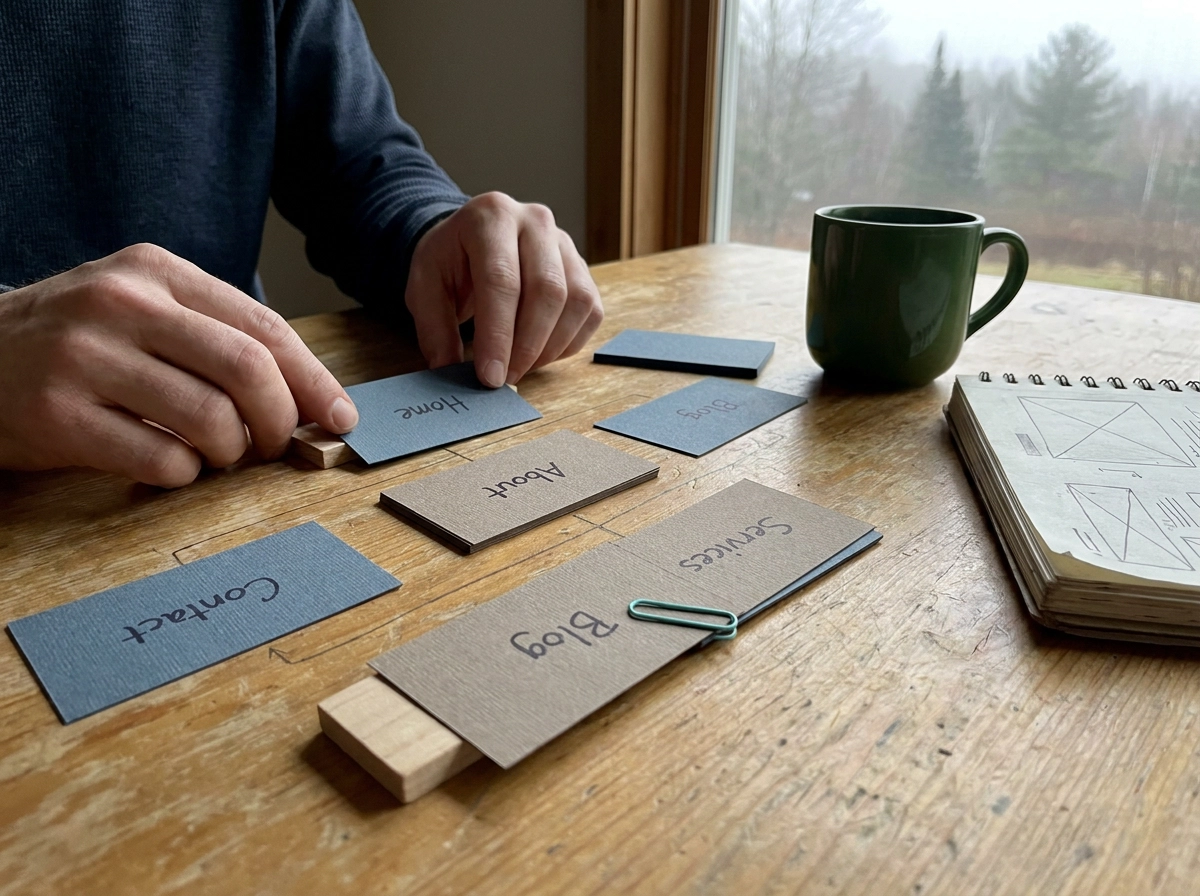
The reason for this sequence is straightforward: structural changes made after visual design is built require reworking completed deliverables. Catching a navigation problem on paper costs almost nothing. Catching it after a designer has built five polished page mockups costs real time and real money.
IA deliverables typically take two forms:
- A sitemap: A simple diagram showing every page on the site and how those pages relate to each other. Home, About, Services, Contact, and any sub-pages are laid out so everyone can see the full scope at once.
- Wireframes: Rough, unstyled layouts showing where content blocks will live on each page. No colors, no photos, no branding. Just structure. Where does the headline go? Where does the call-to-action button sit? These questions get answered here.
Your role at this stage is to review and approve both before design begins. If any pages are missing or content requirements have changed since discovery, this is the moment to raise them. Late additions after design approval become change orders.
Logical navigation keeps visitors moving through your site rather than abandoning it, surfaces the calls to action your business depends on, and guides users toward outcomes that matter, whether that’s a phone call, a form submission, or a purchase. Understanding branding in web design touches on how structure and brand identity work together to shape that visitor experience.
Phase 3: Visual Design, Turning Structure Into a Brand Experience
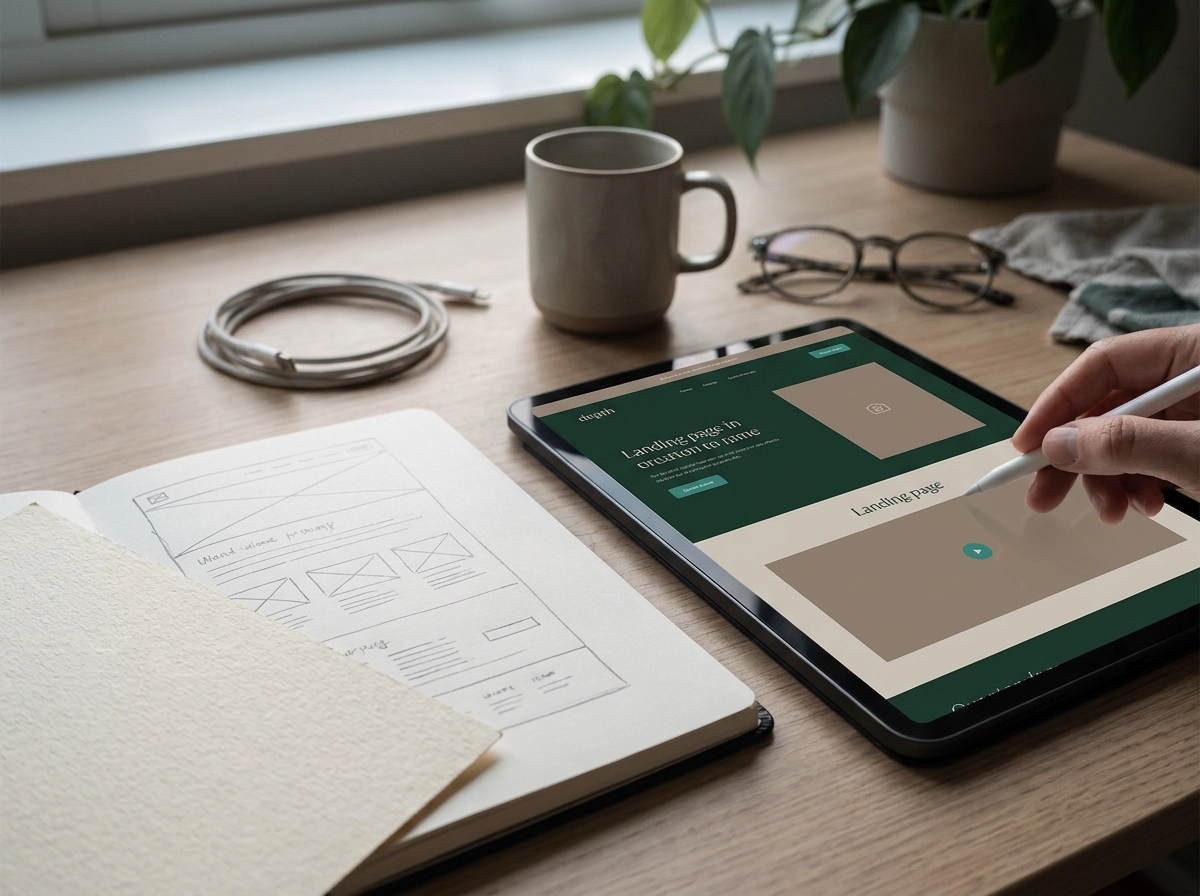
With the wireframes approved, the design phase is where your website stops looking like a blueprint and starts looking like your business.
Your designer applies your brand’s color palette, typography, and imagery directly to the approved wireframe layouts, producing high-fidelity mockups that show exactly how the finished site will appear. These are static visuals, not live pages, which is precisely the point. Reviewing a mockup is fast and inexpensive; revising a built page is neither.
Review the concept before development begins. Most professional engagements present at least one primary design concept for your feedback before a single line of code is written. This is your opportunity to evaluate whether the visual direction reflects your brand accurately, resonates with your target customers, and meets your business goals. Feedback given here is low-cost. The same feedback given after development is not.
Understand what revision cycles are and why they are structured. Most professional engagements structure revision rounds so both parties have a clear decision point at each major stage, confirm the specific number of rounds in your proposal. This is an intentional process feature, not a restriction. Defined rounds keep projects on schedule and give both parties a clear decision point.
The quality of your feedback matters as much as the timing. Useful feedback is specific and grounded in business purpose: “the hero image feels too generic for our industry” or “this font reads as too formal for our customer base.” Feedback that introduces new pages, sections, or features not discussed during discovery is a scope change, and it should be handled through a formal change order, not folded into a revision round.
Your brand assets are a major accelerant. Having finalized logos, color codes, approved fonts, and brand guidelines ready before design begins dramatically reduces back-and-forth. If those assets need development first, the logo design process is worth completing before your web engagement kicks off, not during it. Consistency across your site depends on having a single, authoritative source for your brand standards.
Phase 4: Development, Building What Was Designed
Once design is approved, development begins. This is the technical phase where your approved mockups are translated into a real, functioning website using HTML, CSS, a content management system (CMS) like WordPress, and any integrations specified in your scope, such as contact forms, e-commerce functionality, or online booking tools. The CMS is particularly important for small business owners: it is the interface you will use to update content after launch, without touching code.
Your most important job during development is delivering final content on time. That means finalized copy for every page, production-ready images, PDFs, team bios, and any other materials the development team needs to build against. Missing content is one of the most common causes of project delays, sometimes extending timelines by weeks. If your developer has to pause and wait, the schedule slips regardless of how efficiently the technical work is going.
Before anything goes live, the development team runs quality assurance (QA) testing. This includes checking how the site renders across different browsers (Chrome, Safari, Firefox, Edge), confirming mobile responsiveness on various screen sizes, testing every form submission, verifying that links work, and measuring page load performance. QA catches problems in a controlled environment rather than in front of customers.
You will review the site in a staging environment, a private, password-protected preview that mirrors the live site without being publicly accessible. This is your opportunity to do a thorough final review before launch. Provide consolidated, specific feedback at this stage.
What inflates cost during development: requesting features that were not in the original scope (“while you’re at it” additions), submitting revised copy after layouts are already built, and requesting a platform switch mid-project. Each of these triggers rework of completed work, which is billed as a change order.
Phase 5: Launch, Go-Live and What Happens Next
Once the staging review is approved and final content is in place, launch is not an automatic event. It is a coordinated sequence: domain configuration, DNS updates, redirect setup (if you are replacing an existing site), and final content checks all happen in a defined order. DNS propagation can take time, which is why experienced teams schedule go-live during low-traffic windows and monitor closely until everything resolves cleanly.
Expect minor issues in the days immediately following launch. A button that renders differently in one browser, a form that needs a small adjustment, a mobile spacing issue that only appears on a specific device, these are normal, not signs of a failed project. Most professional engagements address these through a defined punch-list or short warranty period. Confirm that process in your contract before you sign.
Launch-day fixes are typically included; ongoing maintenance is a separate, usually retainer-based service, confirm both in your contract.
Ongoing maintenance generally covers software and plugin updates, security monitoring, hosting management, routine content updates, and performance checks. These are not optional extras; they are what keeps a site secure, functional, and current over time.
This is a decision worth making before you sign a contract, not after your site is live. Ask every prospective design firm directly: what happens the day after launch, and what does continued support cost? A firm that cannot answer that question clearly is leaving you with an unmanaged asset.
Realistic Website Design Timelines by Project Type
Now that you understand what happens at each phase, the next practical question is how long the whole process takes.
A standard 5-page brochure website, managed through a professional design engagement with defined phases, typically runs 6 to 8 weeks from kickoff to launch. That assumes a reasonably smooth feedback cycle and content delivered on schedule.
E-commerce projects are a different category. A site with 50 or more products requires significantly more development work, QA testing, payment integration, and content entry. Realistic timelines for a professionally managed e-commerce engagement run 12 to 14 weeks. Seeing real-world examples of how timelines play out across project types, like those in 6 Website Redesign Case Study Examples That Work, can help calibrate expectations before you start evaluating proposals.
The delay causes described across the phase sections above, slow feedback, missing content, late scope changes, and multi-approver bottlenecks, are the four variables you control entirely.
When reviewing a proposal, look for a timeline that shows defined phase durations, labeled client review windows, and dependencies between phases. A timeline presented as a single completion date with no phase breakdown is a signal that the firm’s process lacks structure, and that lack of structure transfers risk directly to you.
Before signing with any website design company, ask two questions: How do you handle client-caused delays? And what happens to the project schedule if content is not delivered on time? The answers will tell you quickly whether their process protects your budget and your launch date.
What to Prepare Before Your Design Engagement Begins
Those timeline pressures are directly tied to how well you prepare before kickoff. Clients who arrive with the right materials move through every phase faster and with fewer costly surprises.
Brand assets first. Gather final versions of your logo in vector format (files ending in .ai, .eps, or .svg), your exact brand color codes (hex or Pantone values), approved fonts, and any existing brand guidelines. If you need help formalizing these before the project starts, Start With the Brand Decisions That Matter is a practical starting point. Having these ready before discovery prevents the design phase from stalling on foundational questions.
Audit your content before the designer asks for it. Take stock of what you already have: existing page copy, product descriptions, team bios, photography, and any documents you want to include. Then identify what still needs to be written or produced. Content gaps are among the most reliable causes of schedule delays, as covered in the development phase above.
Clarify your business goals and target audience. Know the primary action you want visitors to take and who your customer is, these shape every structural and design decision, as established in the discovery and information architecture phases above.
Collect two to four reference websites you find effective. Be specific about what works: the layout, the navigation simplicity, the photography style. Vague preferences like “clean and modern” give designers little to work with; concrete examples do.
Settle internal approval authority before day one. Identify a single person with final sign-off on design and content decisions. Multiple approvers with conflicting input is one of the most disruptive variables in any engagement, and it is entirely within your control to resolve it before the project begins.
Understanding Website Design Pricing: What Drives Cost
With your preparation work done, pricing is the next natural question, and understanding what drives cost makes every proposal easier to evaluate.
Primary cost drivers in website design pricing include:
- Page count and content volume: More pages mean more design, development, and QA hours.
- Feature complexity: E-commerce functionality, booking systems, and member portals require significantly more development time than a standard brochure site.
- Content production: If a firm is writing copy or sourcing photography on your behalf, that work is billable.
- Custom vs. template-based design: A fully custom design built around your brand costs more than a pre-built template with surface-level modifications.
- Post-launch support scope: Hosting, maintenance, and update services add to total cost. Reviewing factors influencing web hosting costs before signing helps you plan your full budget, not just the build fee.
Pricing transparency is a quality signal. A professional website design company should walk you through a proposal line by line. Vague scopes, such as “website design and development, all-inclusive,” frequently produce expensive change orders once work begins.
The low-cost trap is real. Very low website design pricing typically reflects template customization, no discovery phase, and no post-launch support. Buyers who choose on price alone often spend more over time through revisions, rebuilds, and fixes a structured engagement would have prevented.
Scope additions after discovery trigger change orders, as covered above.
Before committing to any firm, ask these four questions:
- What phases does your process include?
- What deliverables do I receive at each phase?
- What is your revision policy?
- What happens after launch?
Firms that answer these clearly have built a process worth paying for.
How Scope Creep Happens and How to Prevent It
Understanding what drives cost connects directly to another budget risk that trips up even well-prepared buyers: scope creep.
Scope creep is the gradual addition of features, pages, or changes beyond what was originally agreed. The requests are almost always well-intentioned. “While you’re at it, can we add a staff directory?” “My business partner just saw a competitor’s site and wants us to add a resource library.” These feel like small asks, but each one requires rework of approved deliverables, pulls developer hours from scheduled work, and pushes the go-live date.
The three most common triggers:
- “While you’re at it” requests during development, after design is already approved
- Stakeholders who weren’t in discovery providing input late in the process, often with conflicting priorities
- Competitive examples discovered after design approval, prompting structural changes that should have been addressed in the information architecture phase
Your best defense is the scope of work document produced during discovery. A clearly written, mutually approved scope gives both parties a shared reference point when new requests come up. If a request isn’t in the scope, that’s a factual observation, not an argument.
Professional design firms handle out-of-scope requests through formal change orders. A change order documents exactly what is being added, what it will cost, and how it affects the timeline, before any work begins. This process protects you as much as it protects the firm; you always know what you’re approving.
Reframe scope management as a collaboration skill rather than rigidity. Clients who respect phase gates, submit consolidated feedback, and route new ideas through the change order process consistently get better results, delivered on time and within budget.
Why Your Website Should Connect to Your Broader Brand
Managing scope creep protects your project timeline and budget. But there is a broader issue worth addressing before you finalize any web design engagement: your website does not exist in isolation.
When a website uses different colors, fonts, or tone than a business’s signage, uniforms, business cards, or promotional materials, customers notice the inconsistency, even if they cannot name it. That disconnect quietly undermines trust and forces every future design decision to reconcile competing visual standards. The more vendors involved, the worse this problem compounds.
A standalone web designer solves one problem. They build a site, and they may do it well. But if a separate vendor handles your signage, another handles your branded apparel, and a third manages your print materials, brand consistency becomes a coordination project that falls entirely on you. Details drift. Hex codes get approximated. Fonts get substituted. Each handoff introduces another opportunity for the brand to fragment.
An integrated service partner manages both digital and physical brand touchpoints from a shared understanding of your standards, which produces tighter consistency with significantly less overhead.
For a small business, the website is often the first impression a prospective customer encounters. It should reflect the same standards as every other customer-facing surface, including the staff uniforms, the trade show display, and the packaging on a shipped order.
A website redesign is also a natural opportunity to audit and refresh those other touchpoints. OneStop Northwest works with organizations across the Pacific Northwest and nationwide as a single-source business solutions partner, offering website design and hosting alongside graphic design, branded apparel, promotional products, signage, and printing. When one partner manages both, the audit and refresh happen in one conversation, not five.
What to Do Before You Contact a Web Design Company
With your brand touchpoints aligned, the final step before reaching out to any web design firm is making sure you walk in prepared.
Buyers who understand the phases of a professional engagement evaluate proposals more accurately, provide feedback that actually moves the project forward, and avoid the misalignments that quietly inflate cost and push back go-live dates. The full preparation checklist is covered in the section above, these two items are the ones most often overlooked on the day of the first call:
- Brand assets: Logo files (vector format preferred), color codes, approved fonts, and any existing brand guidelines
- Approval authority: The name of whoever has final sign-off on design and content decisions
When evaluating any website design company, ask them to walk you through their process phase by phase. A firm that can clearly describe what happens during discovery, information architecture, design, development, and launch, and what you are expected to deliver at each stage, demonstrates the kind of structure that protects your timeline and budget. Vague answers here are a meaningful signal.
Post-launch support is equally important. Ask about hosting, maintenance, security updates, and how content changes are handled before you sign anything.
Organizations looking for a structured, full-service approach to website design and broader brand consistency are welcome to start a conversation with OneStop Northwest to see what a well-managed engagement looks like in practice.
Conclusion
A professional website design engagement is not a transaction; it is a structured process that moves from discovery through launch with clear deliverables at every stage. Understanding that process before you begin is what separates projects that finish on time and on budget from those that do not.
The most important takeaways are straightforward: good websites are built on strategy, not just aesthetics; your preparation directly affects your results; pricing reflects scope and complexity; and the right design partner will protect your investment with a defined process.
Your website is often the first impression your business makes. It deserves more than a template and a rushed timeline.
If you are ready to invest in a website that works as hard as your business does, contact OneStop Northwest to start a conversation about what a well-managed, results-driven design engagement looks like for your organization.
Frequently Asked Questions
How long does a professional website design project typically take?
A standard 5-page brochure website typically takes 6 to 8 weeks from kickoff to launch, assuming a reasonably smooth feedback cycle and on-time content delivery. E-commerce projects are more complex and usually run 12 to 14 weeks. Timeline delays are typically caused by slow feedback cycles, missing content, late scope changes, and multiple approvers with conflicting input—all variables you can control.
What's the difference between professional web design and using a drag-and-drop website builder?
Professional web design delivers strategy, structure, and accountability alongside the finished product. It includes defined phases with clear deliverables, research time, structural planning, iterative review cycles, and a firm that remains accountable for corrections. A drag-and-drop tool produces a functional page that looks like thousands of others with no strategic thinking behind it. Professional design brings judgment to navigation organization, call-to-action placement, and how your brand translates to a digital experience—that's what justifies the higher cost.
What should I prepare before starting a web design engagement?
You should gather four key things before your engagement begins: (1) Brand assets—logo files in vector format, exact brand color codes, approved fonts, and any existing brand guidelines; (2) Content audit—identify what copy, images, and documents you already have and what still needs to be created; (3) Clear business goals—know the primary action you want visitors to take and who your target customer is; and (4) Approval authority—designate a single person with final sign-off authority on design and content decisions. Having these ready prevents delays and keeps projects on schedule.
What is scope creep and how can I prevent it?
Scope creep is the gradual addition of features, pages, or changes beyond what was originally agreed upon. Common triggers include "while you're at it" requests during development, late input from stakeholders who weren't in discovery, and competitive examples discovered after design approval. Your best defense is the scope of work document created during discovery—this gives both parties a shared reference point. Professional design firms handle out-of-scope requests through formal change orders, which document exactly what's being added, the cost, and timeline impact before any work begins.
What happens to my website after it launches?
Launch is not the end—ongoing maintenance is essential. Professional engagements typically address minor post-launch issues through a defined punch-list or short warranty period. After that, ongoing maintenance (usually a retainer-based service) covers software and plugin updates, security monitoring, hosting management, routine content updates, and performance checks. Before signing any contract, ask your design firm directly: what happens the day after launch, and what does continued support cost? A firm that cannot answer this clearly is leaving you with an unmanaged asset.