

The question sounds simple: at what quantity does offset become cheaper than digital? In practice, there is no universal number to look up. Page count, paper stock, finishing, color requirements, and the number of versions can move the crossover point enough that last year’s quote may not hold. That is why buyers comparing custom printing services need a decision framework, not a rule of thumb.
This post breaks down the offset versus digital decision from the buyer’s side. You will see why the question still trips up buyers, what drives cost through setup, ink, and waste, and where digital wins on short runs, variable data, and speed. We will cover where offset wins on volume, stock, and ink matching, then walk through paper limitations, color accuracy, version counts, a dual-quote checklist, and how to choose a partner that quotes both ways. As a single-source business solutions partner, OneStop Northwest helps organizations simplify purchasing across printing, branded merchandise, apparel, signage, fulfillment, and related services. We serve Shelton, Mason County, Western Washington, and the Pacific Northwest, with nationwide support. The practical takeaway is simple: get both quotes before you commit.
Why the Offset vs. Digital Question Still Trips Up Buyers
The shift toward digital is real but gradual. Keypoint Intelligence commentary from January 2025 reports that more than a quarter of surveyed print service providers plan no further offset investment and expect to move to 100 percent digital. Treat that as directional: the survey’s methodology and sample size are not public.
Cost, not quality, is the brake. Analysts attribute the slow transition to cost differences rather than capability gaps, which gives a well-informed buyer leverage at the quoting stage. Ink sits at the center. Consumables remain significantly cheaper in offset, and that gap should persist because offset inks and digital toner or inkjet fluids carry different cost structures.
Most of this conversation happens inside the print shop. Industry analysis frames the decision at the provider level, so buyers rarely receive two priced options on the same specification. Some providers also appear unaware of their own crossover points, which is why you should ask in writing what quantity would move your job from one method to the other, and why. Knowing how commercial printing formats differ helps you ask sharper questions.
The Real Cost Drivers: Setup Charges, Ink, and Waste
Those economics become visible when you break a quote into fixed and variable costs. On offset, plates, ink setup, registration, wash-up, and press time before the first sellable sheet are largely fixed, then divided across the whole order. Digital carries a much smaller fixed burden per job. Per-sheet consumables move differently: offset ink and paper costs fall as volume climbs, while digital consumable costs stay close to linear. Make-ready also consumes sheets that are discarded, spoilage that a long offset run absorbs more easily than a short one. Finishing adds its own fixed charges for die cutting, folding, saddle stitching, perfect binding, and shrink wrapping, which can change the cheaper method once included. Version count resets part of the math: each distinct artwork version adds offset setup, so quantity per version matters more than the purchase order total. That structure explains why the better choice shifts with run length and version count. For a plain-language look at how these methods fit the broader category, see our commercial printing guide for buyers.
Where Digital Printing Wins: Short Runs, Variable Data, Speed
Once setup charges are the fixed cost to beat, digital’s advantage becomes clear. At small quantities, where make-ready still dominates the per-unit price, digital usually quotes lower, and it keeps reorders economical.
Variable data is digital’s clearest structural edge. Names, account numbers, QR codes, personalized URLs, and unique codes can change on every sheet because there are no plates to remake, making one-to-one campaigns and serialized packaging practical.
Speed follows from the same absence of plates. An approved file reaches press faster, which matters for event deadlines, last-minute corrections, and campaigns that launch before creative is fully settled.
Small batches support testing and replenishment: print a few hundred pieces, measure response, revise before a large commitment, or stage inventory as demand arrives instead of warehousing one shipment. The same logic applies to signage programs, where choosing sign types by location and use case prevents mismatched purchases later.
Business cards printing is the classic case. A new hire, a trade show, or a title change rarely justifies offset setup, so short digital batches keep details current without paying for plates.
Offset’s case begins where these conditions end.
Where Offset Printing Wins: Volume, Stock, and Ink Matching
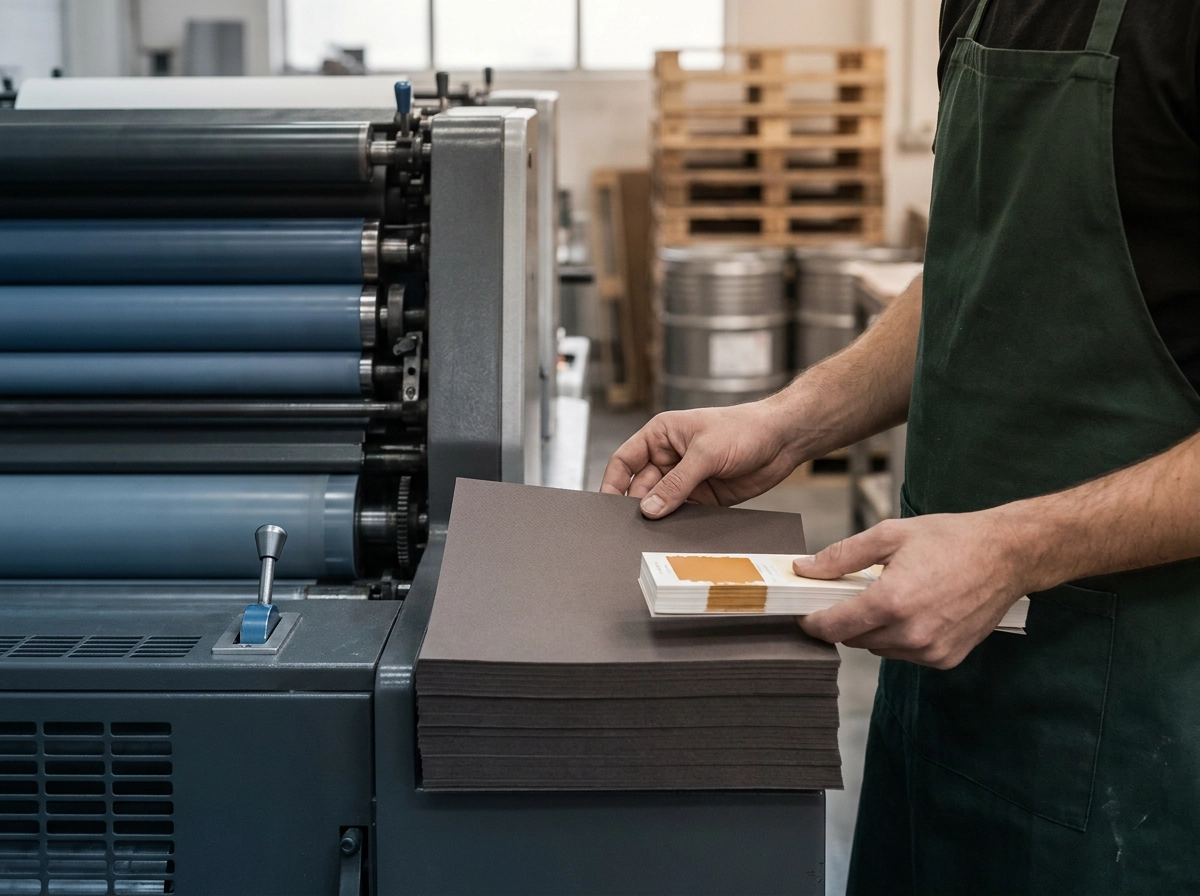
Digital keeps short runs and one-to-one jobs practical; offset takes over when volume, stock, and color precision carry more weight than speed.
Volume is offset’s home turf. Spread setup charges across a large quantity, and the lower per-unit consumable cost takes over, flattening the price curve in a way digital cannot match. On heavy designs, large solid areas, dense photo coverage, and full-bleed pages on long runs are often more economical on offset because ink costs less per unit at scale. Offset also accepts a broader stock range: heavy cover weights, textured and uncoated sheets, larger sheet sizes, and some specialty or synthetic stocks that may exceed what a digital press can feed or fuse reliably. Spot color is another advantage; a dedicated ink can be mixed to a specified color and printed as its own unit, which matters for brand-critical pieces once quantity justifies it. Catalogs, manuals, annual reports, direct mail at scale, and packaging that must look identical across printings are natural offset candidates when version count stays low. For repeat brand work, see our guide to choosing a commercial printing partner for ongoing marketing collateral.
The Crossover Point Is Not a Number You Can Look Up
Those advantages do not make quantity the deciding number. Four variables move the crossover: page count, paper, finishing, and version count. Change any one and the quantity where offset becomes cheaper moves with it, so no published threshold applies to your job.
Page count changes multi-page math. A booklet imposes differently than a postcard, so signature size, sheet size, and press format influence how many pieces fit per sheet and how quickly setup amortizes.
Version count splits the order. Five thousand pieces of one design differs from five thousand across ten regional versions. Offset setup multiplies across versions; digital does not.
Even the tool built for this question is an estimate. Keypoint Intelligence references a Cost and Time Crossover Point Estimator, a commercial analyst product, not an industry standard. Treat it as a starting point and confirm with live quotes.
The reliable answer is two quotes on one specification. Ask each provider to price the identical job both ways and name the quantity where their recommendation flips. Apply the same logic to repeat purchases such as managed apparel programs versus one-off uniform orders, where versions and reorders change the economics too.

Paper and Stock: Where Substrate Limits Decide the Press
Stock selection can override the crossover math entirely. Not every paper exists in a digital-compatible version, so ask early whether your preferred sheet can run on the digital press without fusing problems or jamming. Caliper and coating matter on toner machines: very heavy cover weights, heat-sensitive coatings, and some textured or metallic sheets may be off limits or require a different finishing path.
Uncoated text sheets behave differently across methods. Offset ink absorption often looks richer on uncoated stock, while digital output on the same sheet may need a custom profile to avoid a flat or mottled result.
Imposition efficiency is easy to overlook. Sheet size and how many pieces fit per sheet can swing offset per-unit cost more than the press rate itself, especially on small-format items.
If your first-choice stock is not viable on the lower-cost method, ask for the closest equivalent named in writing, including the exact sheet and weight, so you can judge the tradeoff rather than accept a quiet substitution.
Color and Ink Matching: When Brand Accuracy Decides
Stock affects more than feed reliability; it also changes how color reads. Offset holds a structural edge on spot color: a dedicated ink mixed to a specified color prints as a predictable solid, while digital builds spot colors from process inks and may not land every one perfectly.
Extended-gamut digital presses narrow that gap. Many run more than four inks, so ask which device will run your job and whether it can hold your brand color within a stated tolerance.
Large solids and long gradients fail differently. Digital can show banding or density variation; offset holds even coverage on long runs but needs consistent ink density management.
Reprints need a stated tolerance. Whether you reprint in six months or six weeks, specify acceptable color variance and ask whether you are approving a hard proof or a digital proof before the run starts.
Color also crosses substrates. If the same brand color appears on apparel, signage, and packaging, ask how the print method affects matching; a slight shift can look obvious beside a garment or banner. Packaging makes this visible, as custom packaging as a brand asset explains.
Version Count and Variable Data: The Multiplier Most Quotes Miss
With color settled, the next question is how many versions. State the version count up front, not just total quantity. A quote for 10,000 flat pieces implies one artwork. The same 10,000 across eight versions is a different production plan with different setup economics.
Digital absorbs versioning almost for free. Adding a version changes the file, not the plates, so multi-location businesses, franchises, and schools can split a run by site without a per-version penalty.
Offset rewards consolidation. When versions share a common base, such as identical front artwork with a variable back, offset can print the shared portion once and imprint the variable data. That sometimes beats both a single large digital run and a full set of offset plates.
Personalization only runs as well as your list. Field lengths, address hygiene, and image resolution in the supplied file determine whether the lower-cost plan is deliverable.
Finally, ask how versions will be packed and labeled. Splitting, bagging, and labeling by location is a fulfillment cost that arrives after the press decision. Price it in the same conversation.
A Dual-Quote Checklist for Buyers
Once version count is settled, the remaining task is getting two quotes that describe the same job.
Build one specification sheet and send an identical copy to each provider: quantity, page count, flat and finished size, exact stock name and weight, colors including spot references, finishing, version count, due date, and delivery location. Different specs produce a fake comparison.
Ask for setup and make-ready as a separate line item from per-unit cost. Seeing the fixed charge beside the unit rate makes the crossover visible instead of burying it in one blended price. Ask each provider to name their crossover quantity and what would change their recommendation; a shop running only one press type will likely steer you toward it.
Request proof type, color tolerance, and reprint pricing with the quote. On brand-critical or recurring work, these three outweigh a small unit-price gap. Ask how reorders are handled, including file storage and whether the same stock and press will run them, because a quiet method change can show between batches.
Branded merchandise deserves the same discipline: see Promotional Products with Your Logo: What to Know Before You Order.
Choosing a Printing Services Partner That Quotes Both Ways
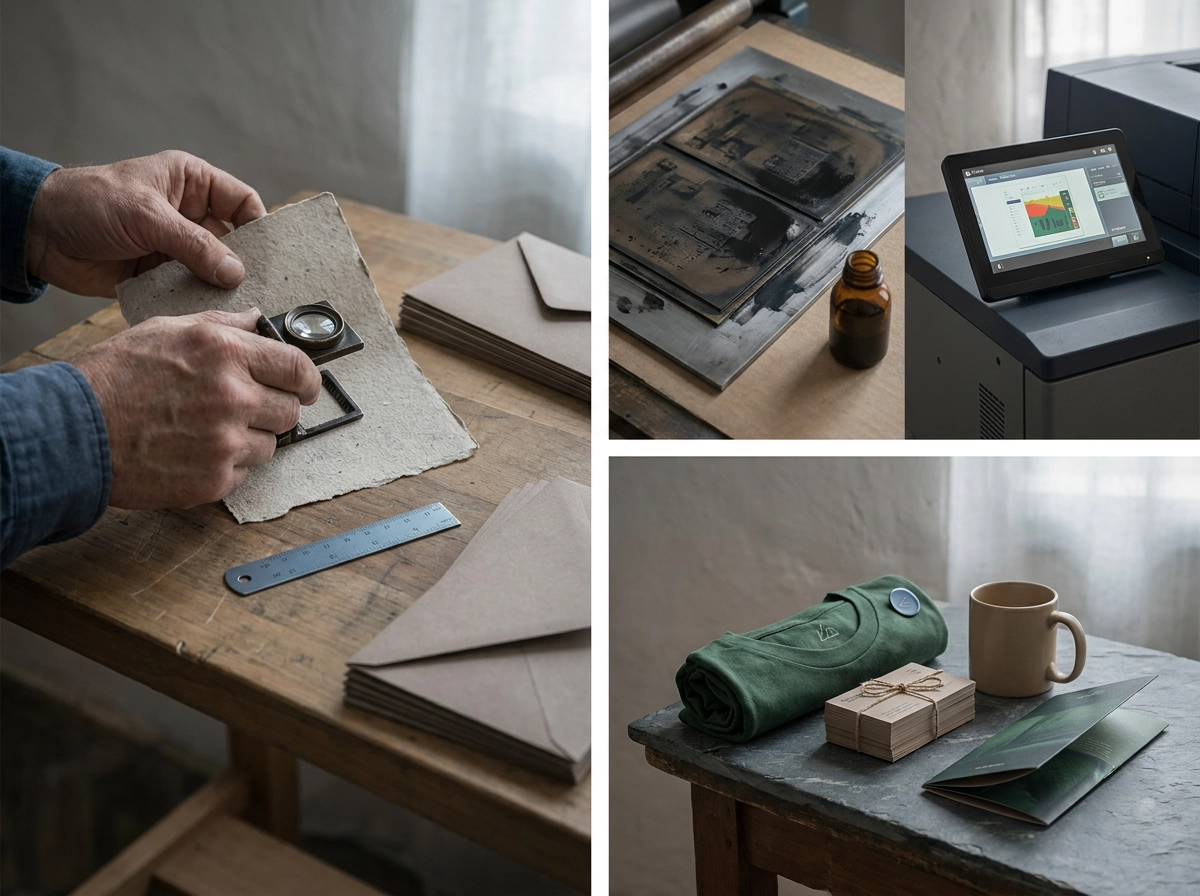
With your spec sheet ready, the question becomes who prices it. A shop that owns one press type quotes the method it runs. A partner with multiple production paths can compare offset and digital on your behalf.
Consolidation saves more than a press decision. Buying promotional products, apparel, signage, and printing from separate vendors costs staff hours in purchase orders, proofs, and reconciliations. A single-source relationship absorbs that work. If you also manage uniforms, the Corporate Apparel Buying Guide for HR and Operations Leaders covers the same consolidation logic.
OneStop Northwest provides custom printing services alongside promotional products, branded apparel, signage, company stores, and fulfillment, serving organizations from Shelton across the Pacific Northwest and nationwide.
Recurring programs benefit most. For an annual report, catalog, or multi-location mail drop, ask how the partner manages versions, reorders, and stored artwork so later printings match the first.
Get Both Quotes Before You Commit
Even with the right partner, the final decision comes down to one concrete comparison. Treat the press method as a variable you control: send the same specification to two providers and ask each to break out setup charges, unit rates, and finishing separately. Then match the method to the job. Digital usually wins on small quantities, many versions, personalized data, and tight deadlines. Offset usually wins on large quantities, heavy or textured stock, and a precise ink match. Do not accept a fixed crossover quantity as a rule. Page count, paper, finishing, and version count all move it, and the only number that matters is the one attached to your actual job. Re-quote whenever quantity, versions, or stock change materially. What was right at 500 pieces can be wrong at 5,000, and a partner who can price both ways should say so before you sign a long-run commitment.
Conclusion
The right press method follows the job, not a fixed quantity rule. Digital often fits short runs, variable data, and tight timelines; offset often fits higher volume, heavier or textured stock, and precise ink matching. The real comparison is the line-item quote: setup charges, unit rates, finishing, paper, and version count all move the crossover point. Send the same specification to two providers, ask each to break out those costs, and re-quote whenever quantity, versions, or stock change materially. OneStop Northwest provides custom printing services alongside promotional products, branded apparel, signage, company stores, and fulfillment. Use their team as one source for a clear, like-for-like quote, then match the method to your actual job. Start with your next print specification and make the comparison before you commit.
Frequently Asked Questions
Is there a set quantity at which offset becomes cheaper than digital?
No. There is no universal crossover number. Page count, paper stock, finishing, color requirements, and the number of versions can all move the point where offset becomes cheaper, so a published threshold does not apply to your job. The reliable way to find it is to get two quotes on the same specification and ask each provider to name the quantity where their recommendation flips.
Why do offset and digital costs change with run length?
Offset has largely fixed setup costs, such as plates, ink setup, registration, wash-up, and press time before the first sellable sheet, which are spread across the whole order. Digital carries a much smaller fixed burden per job. Offset ink and paper costs fall as volume climbs, while digital consumable costs stay close to linear. Offset make-ready also discards sheets, a waste that a long run absorbs more easily than a short one.
When does digital printing usually make more sense?
Digital usually wins on short runs, where make-ready dominates offset's per-unit price, and it keeps reorders economical. It also suits variable data such as names, QR codes, or personalized URLs, which can change on every sheet without remaking plates. Digital is faster from an approved file to press, and small batches let you test, measure response, and replenish inventory as demand arrives.
When does offset printing usually make more sense?
Offset usually wins on high volume, where setup charges are spread across many pieces and the lower per-unit ink cost takes over. It is also often more economical for heavy designs with large solids, dense photos, or full-bleed pages on long runs. Offset accepts a broader stock range, including heavy covers, textured and uncoated sheets, larger sizes, and some specialty stocks. It also offers a stronger spot color match through a dedicated mixed ink.
How does version count affect the offset versus digital decision?
Version count can change the decision substantially. Each distinct artwork version adds offset setup, so 10,000 pieces of one design is a different production plan from 10,000 pieces across eight versions. Digital absorbs versioning with little penalty because adding a version changes the file rather than the plates. Offset can be efficient when versions share a common base, since the shared portion can be printed once and the variable data imprinted.